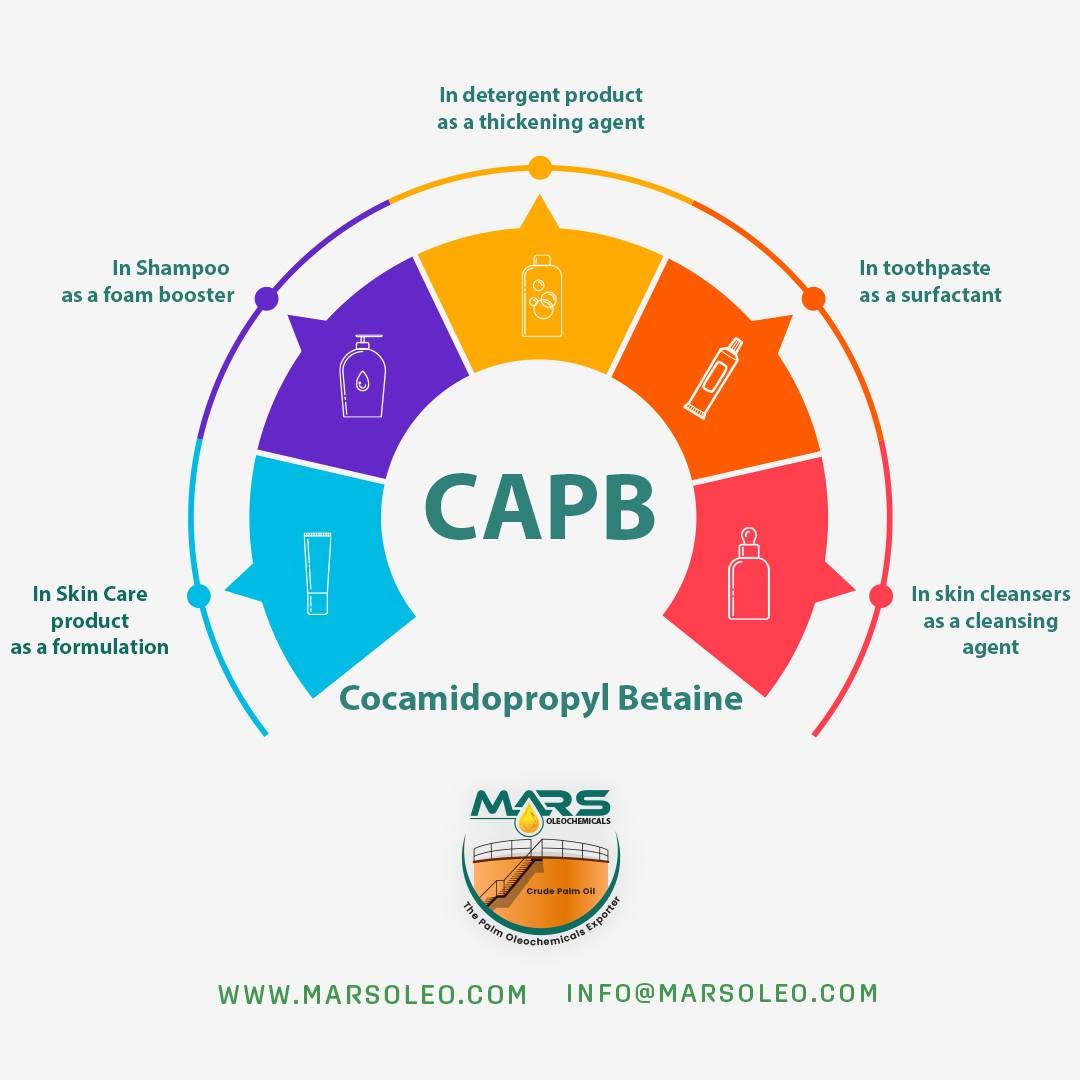
Cocamidopropyl Betaine, commonly known as CAPB, is a multifunctional amphoteric surfactant widely used in personal-care and household-cleaning formulations. Its compatibility with multiple surfactant types allows formulators to incorporate it into shampoos, body washes, facial cleansers, hand washes, detergents and specialty cleansing systems.
CAPB is commonly used as a co-surfactant and foam booster. It can help improve foam quality and support milder cleansing characteristics when combined with suitable primary surfactants. These properties make CAPB particularly useful in shampoos, body washes, shower gels and facial cleansers.

Cocamidopropyl Betaine is a versatile amphoteric surfactant used in shampoos, cleansers, detergents and personal-care formulations.
CAPB can also be used in detergent systems to contribute cleansing, foam and viscosity-support characteristics. In appropriate oral-care grades, it may serve as a surfactant and foaming ingredient in toothpaste formulations. Actual functionality depends on the complete formulation, concentration, pH and compatibility with other ingredients.
Cocamidopropyl Betaine should evaluate active matter, pH, sodium chloride, solids content, appearance, color and required regulatory specifications. Buyers should specify the desired CAPB grade, technical parameters, quantity, packaging, intended application and destination when requesting commercial supply.
What is Cocamidopropyl Betaine? Cocamidopropyl Betaine, or CAPB, is an amphoteric surfactant widely used in personal-care, cleansing and detergent formulations.
What is CAPB used for? CAPB is commonly used for cleansing, foam boosting, foam stabilization, co-surfactant functionality and viscosity support.
Is CAPB used in shampoo? Yes. CAPB is widely used in shampoos as a co-surfactant and foam booster.
Is CAPB used in facial cleansers? Yes. CAPB is commonly incorporated into facial cleansers and other mild cleansing formulations.
Is CAPB a foam booster? Yes. Foam enhancement is one of CAPB's common functions in shampoo and cleansing systems.
Is CAPB a thickening agent? CAPB can contribute to viscosity development in suitable surfactant systems, but it should not be described as a universal standalone thickener.
Can CAPB be used with SLES? Yes. SLES and CAPB are frequently combined in shampoo, body wash and liquid-cleansing formulations.
Is CAPB used in toothpaste? Suitable CAPB grades can be incorporated into oral-care formulations as surfactant and foaming ingredients.
Is CAPB suitable for detergents? Yes. CAPB can be used in selected liquid-detergent and household-cleaning formulations.
Is Cocamidopropyl Betaine an anionic surfactant? No. CAPB is classified as an amphoteric surfactant.
What is CAPB 30? CAPB 30 is a commercial Cocamidopropyl Betaine grade commonly supplied for personal-care and detergent formulations.
What is CAPB 45? CAPB 45 is a more concentrated commercial CAPB grade used where a higher-active product is required.
Does Mars Oleochemicals supply CAPB? Yes. Mars Oleochemicals' surfactant portfolio includes CAPB 30 and CAPB 45.
How can buyers request Cocamidopropyl Betaine? Buyers can provide the required CAPB grade, active matter, specification, quantity, packaging, intended application and destination to info@marsoleo.com.












Home :: Products :: Enquiry :: Contact Us :: Site Map
Copyright All Rights Reserved © 2025. Mars Oleochemicals :: Disclaimer :: Privacy Policy