


Corn Starch is obtained from the starch fraction of corn and consists mainly of polysaccharides such as amylose and amylopectin. When starch is heated or otherwise processed under suitable conditions, its granules can swell and gelatinize, producing viscosity and binding characteristics that are useful in many adhesive systems.
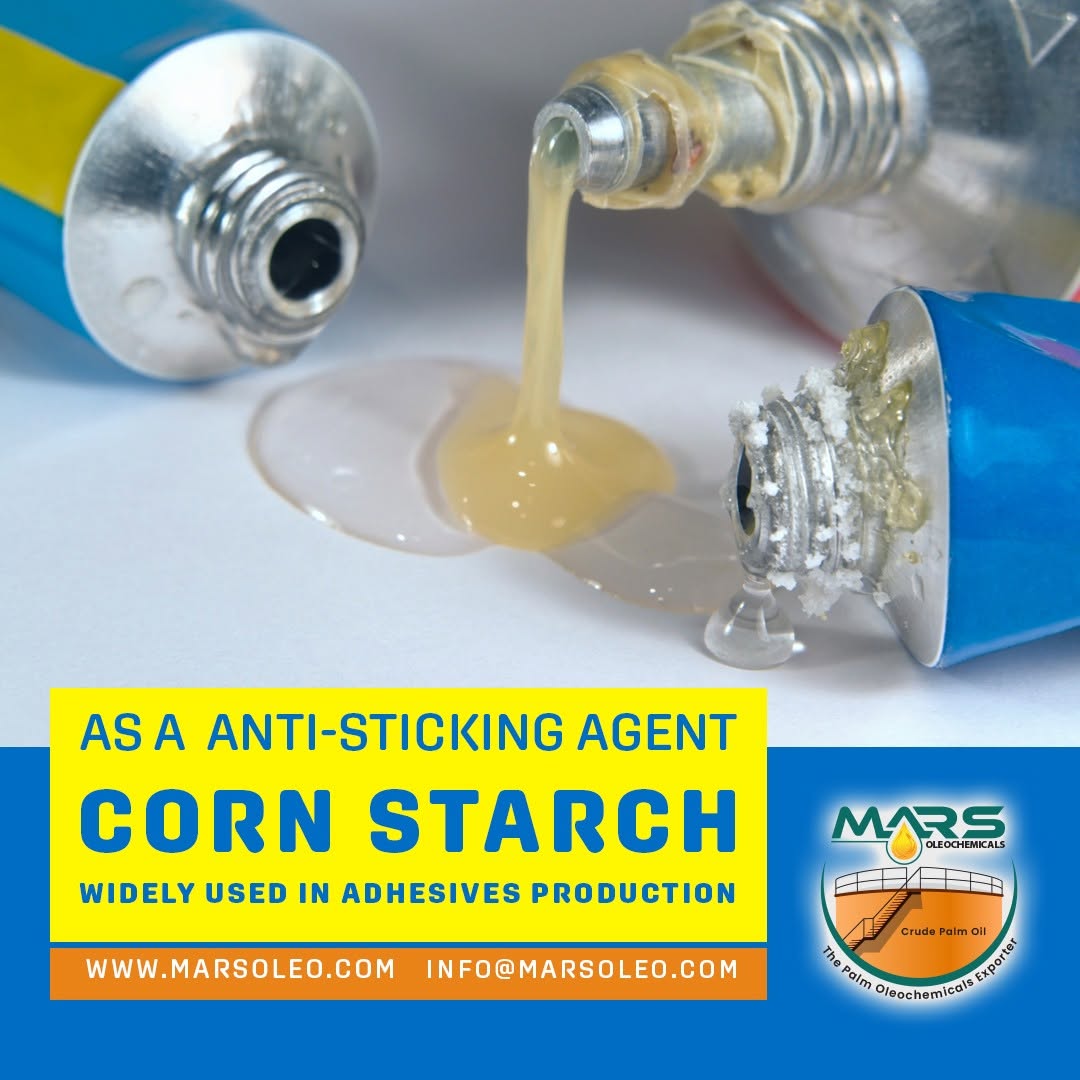
The attached Mars Oleochemicals visual several adhesive tubes with the message “Corn Starch - Widely Used in Adhesives Production.” The industrial adhesive theme is appropriate, but the strongest technical positioning is to describe Corn Starch as a binder, adhesive raw material and viscosity modifier.
Starch-based adhesives are widely associated with paper and packaging applications. Corn Starch can provide the polymeric backbone of an adhesive system, helping create bonding strength after appropriate preparation and application.
starch adhesives may be used for paper, cardboard, corrugated-board and other porous materials. Performance depends on starch type, solids content, viscosity, processing temperature, additives and drying conditions.

Corn starch supports adhesive formulations as a binder, thickener, viscosity modifier and renewable starch-based ingredient.
Corn Starch can also contribute significant viscosity after gelatinization or appropriate processing. This makes it useful where manufacturers need to control adhesive flow, coating behavior and application consistency.
Important formulation factors include : Starch concentration, Water content, Temperature, pH, Degree of gelatinization, Alkali level where applicable, Borate or other additives where permitted, Shear conditions and Required final viscosity.
One of the best-established industrial uses of starch-based adhesives is in paper and packaging production. Corrugated-board manufacturing, paper converting, tube winding and related processes can use starch adhesive systems because they provide practical bonding performance with renewable carbohydrate raw materials.
The exact Corn Starch grade should be selected according to the process, substrate, machinery and required adhesive characteristics.
What is Corn Starch? Corn Starch is a carbohydrate polymer obtained from corn and used in food, paper, textile, adhesive and other industrial applications.
Is Corn Starch used in adhesives? Yes. Corn Starch is widely used in starch-based adhesive systems, especially for paper, packaging and corrugated-board applications.
Is Corn Starch an adhesive? Corn Starch can form the primary polymer base of certain starch adhesives after appropriate processing or gelatinization.
What does Corn Starch do in adhesive formulations? It can provide binding, thickening, viscosity control and formulation body in suitable adhesive systems.
Is Corn Starch an anti-sticking agent? It may serve anti-sticking or dusting functions in specific processes, but its broader role in adhesive manufacturing is as a binder and viscosity-building starch ingredient.
Is Corn Starch used in corrugated-board adhesives? Yes. Starch-based adhesives are widely associated with corrugated-board manufacturing.
Is Corn Starch used in paper adhesives? Yes. Corn Starch and other starches can be used in suitable paper and paper-converting adhesive systems.
Why is starch used in packaging adhesives? Starch offers binding ability, water-based process compatibility, viscosity development and renewable raw-material characteristics.
Does Corn Starch increase adhesive viscosity? Yes. Under appropriate processing conditions, starch gelatinization can significantly increase viscosity.
What is the difference between native and modified Corn Starch? Native starch retains its original structure, while modified starch is altered to provide specific processing or performance characteristics.
Does Mars Oleochemicals supply Corn Starch? Mars Oleochemicals supplies Corn Starch and related starch-derivative products for international commercial requirements.
How can buyers request Corn Starch? Buyers can provide the required starch type, technical specification, quantity, packaging, intended application and destination to info@marsoleo.com.









Home :: Products :: Enquiry :: Contact Us :: Site Map
Copyright All Rights Reserved © 2025. Mars Oleochemicals :: Disclaimer :: Privacy Policy


