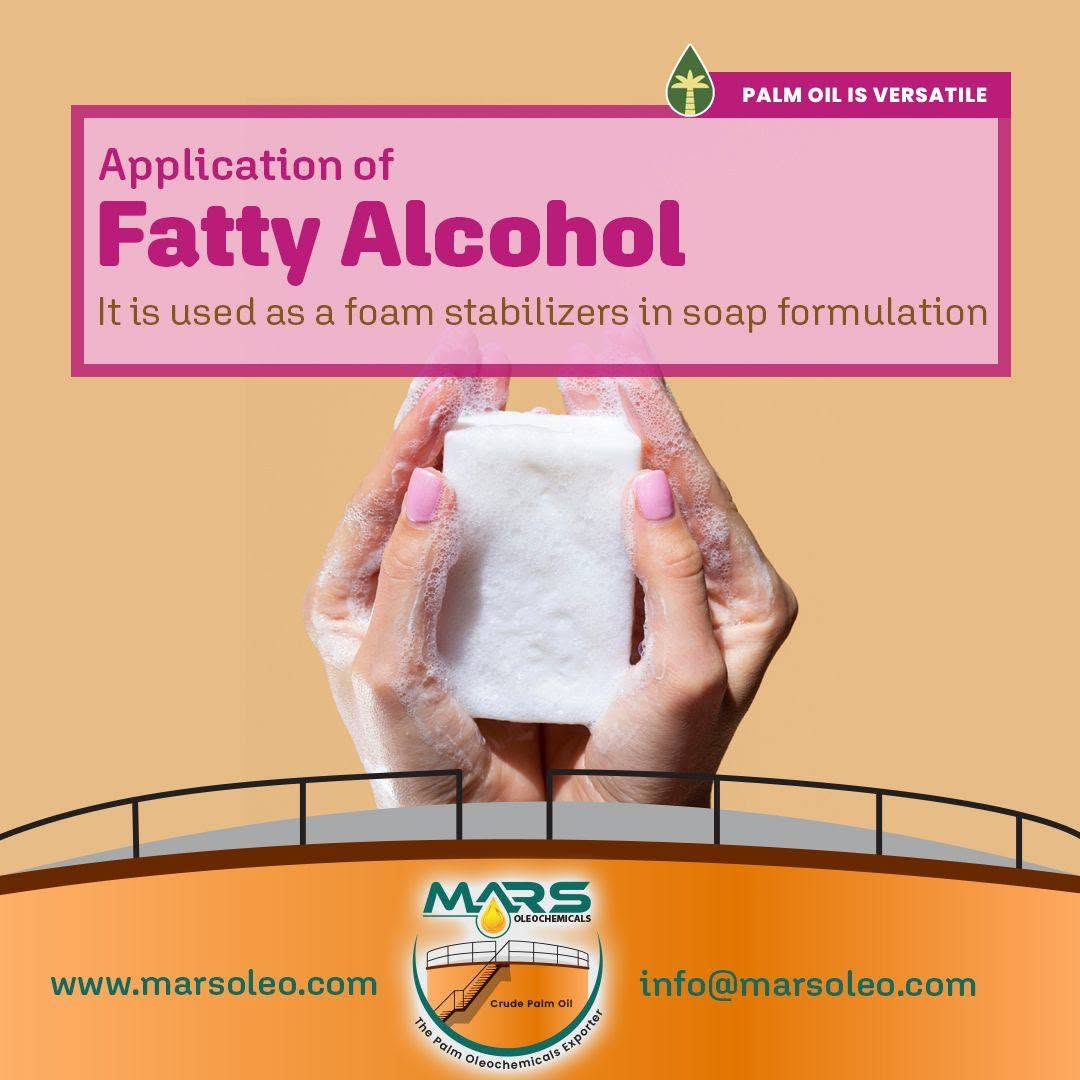
Fatty alcohols are long-chain alcohols that may be obtained from natural vegetable-oil feedstocks, including palm oil and palm-kernel oil. They are available as pure, binary or broad-cut grades with different carbon-chain distributions. Common applications include personal care, home care, soap, detergent and surfactant manufacturing.
Selected fatty alcohols can contribute foam boosting or stabilisation, viscosity control, opacification, emulsion stability and skin-conditioning properties. Cetyl alcohol is recognised for emulsifying, thickening and foam-stabilising functions, while myristyl alcohol can provide foam-boosting, emollient and viscosity-controlling performance. The result depends on the selected grade and complete surfactant system.

Palm-based fatty alcohols support cleansing, foam stability, viscosity and surfactant production across markets.
Fatty alcohols can be chemically converted into anionic and non-ionic surfactants, including alcohol sulfates, alcohol ether sulfates and alcohol ethoxylates. These derivatives provide wetting, cleansing, foaming, emulsifying or soil-removal functions in home-care and personal-care products. Wilmar identifies alcohol ethoxylates as non-ionic surfactants used mainly in cleaning agents, detergents, home care and emulsifier production.
Mars Oleochemicals Sdn. Bhd. supplies natural fatty alcohols derived from palm oil and palm-kernel oil to soap manufacturers, surfactant producers, personal-care formulators, importers and distributors worldwide. Available grades include octyl, decyl, lauryl, myristyl, cetyl, stearyl, cetyl-stearyl and lauryl-myristyl alcohols.
1. What are fatty alcohols used for in soap formulations? Fatty alcohols may be used to support foam stability, viscosity, consistency, emulsion stability and skin feel in suitable soap, cleansing and personal-care formulations. They are also important raw materials for manufacturing surfactants.
2. Are fatty alcohols foam stabilizers? Selected fatty alcohols can help increase or stabilize foam in compatible formulations. Their performance depends on carbon-chain length, concentration, surfactant system, product type and processing method.
3. Are fatty alcohols the same as ethanol or rubbing alcohol? No. Fatty alcohols are long-chain waxy or oily materials that differ from short-chain alcohols such as ethanol or isopropanol. Cetyl, stearyl and cetearyl alcohols are commonly used as emollients, thickeners and formulation aids.
4. Which fatty alcohols are commonly used in cleansing products? Common grades include lauryl alcohol, myristyl alcohol, cetyl alcohol, stearyl alcohol, cetyl stearyl alcohol and lauryl myristyl alcohol. The appropriate grade depends on the formulation and required function.
5. Are fatty alcohols surfactants? Unmodified fatty alcohols are not generally the primary cleansing surfactants. However, they are major raw materials for surfactants such as fatty alcohol sulfates, ether sulfates and alcohol ethoxylates.
6. How do fatty alcohols improve soap and cleanser texture? Long-chain fatty alcohols can increase viscosity, improve structure, support emulsion stability and produce a smoother or creamier sensory profile in compatible cleansing and personal-care formulations.
7. How should manufacturers select a fatty alcohol grade? Manufacturers should evaluate carbon-chain distribution, purity, hydroxyl value, acid value, iodine value, colour, melting range, physical form and compatibility with the intended surfactant or cleansing formulation.
8. Where can buyers source Malaysian fatty alcohols? International buyers can contact Mars Oleochemicals Sdn. Bhd. for Malaysian fatty-alcohol grades, specifications, packing options, documentation, availability and export quotations.








Home :: Products :: Enquiry :: Contact Us :: Site Map
Copyright All Rights Reserved © 2025. Mars Oleochemicals :: Disclaimer :: Privacy Policy