


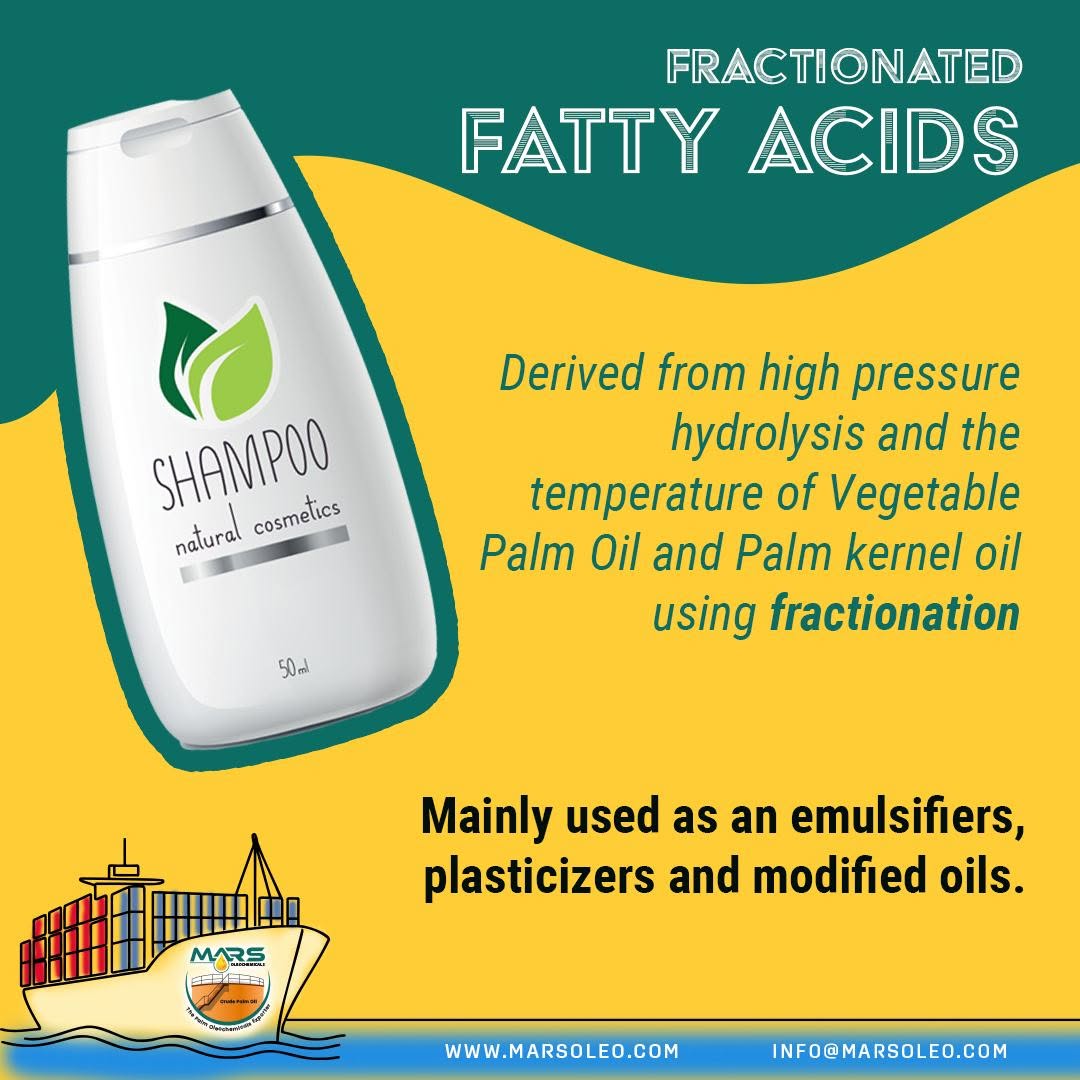
Fractionated fatty acids are important renewable oleochemical building blocks produced from natural oils including palm oil and palm-kernel oil. Industrial fat splitting converts triglycerides into fatty acids and glycerine, after which the fatty acids can be purified and separated into specific carbon-chain fractions.
The standard industrial route uses high-temperature, high-pressure hydrolysis or fat splitting, followed by purification and fractionation. Fractional distillation enables manufacturers to separate fatty-acid mixtures according to differences in volatility, producing higher-purity or narrower-chain products.

High-purity fatty-acid fractions engineered by hydrolysis, purification and fractionation for precise industrial applications.
Commercial fractionated-fatty-acid portfolios may include caprylic, capric, lauric, myristic, palmitic, stearic and oleic acids together with distilled palm and palm-kernel fatty-acid blends. Different chain lengths provide different physical and chemical characteristics for personal care, detergents, rubber, plastics, lubricants, pharmaceuticals and specialty chemicals.
Mars Oleochemicals supports global requirements for a broad portfolio of fatty acids including Lauric Acid, Myristic Acid, Palmitic Acid, Oleic Acid, Stearic Acid and Coconut/Palm-derived fatty-acid grades, depending on required purity, carbon-chain distribution and application.
What are fractionated fatty acids? Fractionated fatty acids are purified fatty-acid mixtures separated into specific carbon-chain ranges or higher-purity individual fatty acids.
How are palm-based fatty acids produced? Palm and palm-kernel oils are commonly split through high-temperature, high-pressure hydrolysis to produce fatty acids and glycerine, followed by purification and fractionation.
What does fatty-acid fractionation mean? Fatty-acid fractionation separates mixed fatty acids into fractions with specific compositions, commonly using fractional distillation.
Which fatty acids can be produced from palm-based feedstocks? Products can include Caprylic, Capric, Lauric, Myristic, Palmitic, Stearic and Oleic acids together with distilled fatty-acid blends.
Are fractionated fatty acids emulsifiers? Fatty acids can have formulation functions, but they are also widely used as raw materials for producing emulsifiers, surfactants and specialty esters.
What are fractionated fatty acids used for? Applications include personal care, cosmetics, soaps, detergents, surfactants, emulsifiers, lubricants, rubber, plastics, pharmaceuticals, textiles, paints and specialty chemicals.










Home :: Products :: Enquiry :: Contact Us :: Site Map
Copyright All Rights Reserved © 2025. Mars Oleochemicals :: Disclaimer :: Privacy Policy


