


The future of palm-based oleochemicals is closely connected to advances in chemical processing, digital technology, product development and industrial quality management. Palm oil and palm kernel oil provide renewable feedstocks for manufacturing important oleochemical ingredients, including fatty acids, fatty alcohols, refined glycerine and fatty acid esters. These basic chemical building blocks can undergo further processing to produce surfactants, emulsifiers, soap ingredients and specialty industrial chemicals. Across the Malaysian palm oil industry, researchers and technology developers investigate ways to improve process efficiency, enhance product characteristics and develop new applications for vegetable-derived ingredients. Digital visualization, chemical process simulation and analytical testing are relevant tools in these activities. Mars Oleochemicals Sdn. Bhd., a Malaysia-based palm oil and oleochemical exporter, supports international sourcing of palm-derived ingredients for manufacturers, distributors and industrial businesses seeking commercially specified raw materials.
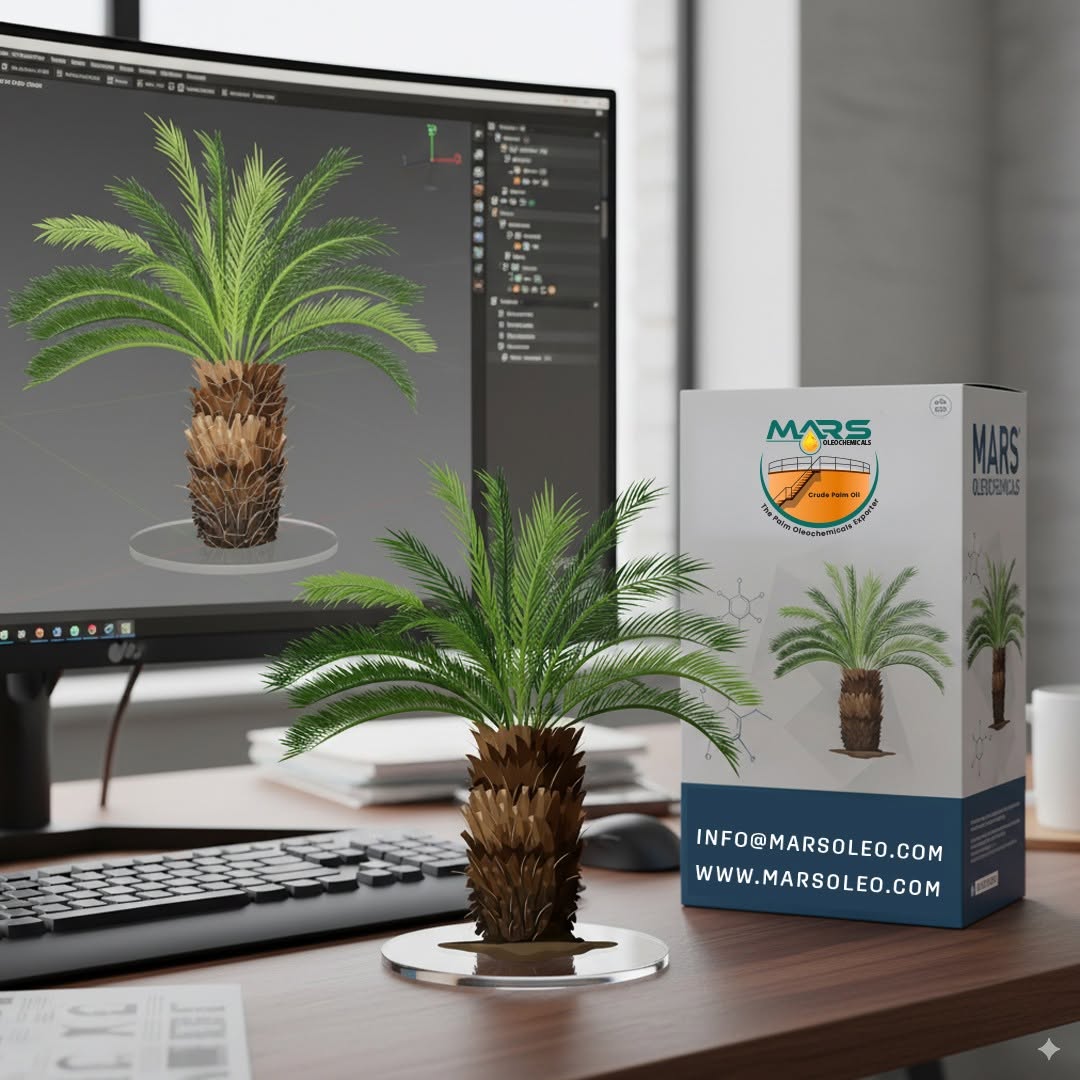
Digital technologies offer opportunities to improve the way chemical processes are studied, designed and evaluated. Three-dimensional (3D) visualization allows engineers, designers and researchers to represent equipment, production facilities or biological structures digitally. More specialized tools, including chemical process simulation software, can evaluate material balances, operating conditions and potential production improvements before physical implementation. In the oleochemical industry, such technologies are relevant to refining, fatty acid processing, hydrogenation, esterification, separation and downstream specialty chemical development. The Malaysian Palm Oil Board has identified process simulation, engineering design and optimization as important areas of advanced oleochemical research. Digital representations can also support educational communication and technical training. However, a 3D model should not be confused with validated chemical process simulation or proof of manufacturing performance. Reliable engineering decisions require appropriate experimental data, established modeling assumptions and technical verification.

Palm-based oleochemical processes and evaluate potential manufacturing improvements before implementation.
Oleochemical innovation extends beyond conventional refining and basic chemical production. Researchers investigate bio-based surfactants, specialty esters, lubricants, polymers, glycerine derivatives and other value-added ingredients using suitable palm-derived chemical feedstocks. Fatty acids and fatty alcohols are important starting materials for producing a broad range of functional chemicals, while glycerine can serve as a platform for additional chemical transformations. The development of new products involves evaluating chemical composition, reaction performance, application suitability, product stability and relevant safety requirements. Modern analytical methods help researchers characterize product quality and assess chemical impurities. Environmental assessment techniques, including Life Cycle Assessment (LCA), can also help investigate resource consumption and environmental impacts across defined production systems. These research directions illustrate the broader potential of palm-based oleochemicals, although the technical and environmental performance of each product must be demonstrated individually.
Mars Oleochemicals Sdn. Bhd. supports international sourcing and export inquiries for Malaysian palm oil, palm-derived oleochemicals and related specialty ingredients. Its published product portfolio includes Crude Palm Oil, Refined Glycerine, Soap Noodles, Stearic Acid, Fatty Acids, Fatty Alcohols, Surfactants and Fatty Acid Esters, together with other commercial product categories. These raw materials are relevant to manufacturers operating in personal care, cosmetics, detergents, cleaning products, specialty chemicals and selected industrial applications. Commercial buyers should evaluate chemical identity, technical specifications, product grade, packaging, batch documentation and destination-market requirements before procurement. As research and manufacturing technologies continue to develop across the oleochemical sector, reliable specification-based sourcing remains important for international supply chains. Businesses exploring Malaysian palm-based chemical ingredients Can visiting our website at www.marsoleo.com For product requirements, technical documentation, commercial information and international export inquiries, please email us at info@marsoleo.com.
What is the future of palm-based oleochemicals? The future of palm-based oleochemicals involves research into specialty chemicals, improved processing technologies, advanced surfactants, chemical derivatives and industrial efficiency. Digital process simulation, analytical testing and product development are among the technologies relevant to the industry's continued development. Applications and commercial feasibility depend on the particular technology and product.
How can 3D modeling and digital technology support oleochemical manufacturing? Three-dimensional modeling can help visualize equipment, production layouts and technical concepts. Chemical process simulation can provide more specialized analysis of operating conditions, material balances and potential process improvements. These technologies support engineering evaluation, but digital visualizations alone do not demonstrate chemical performance or verify manufacturing efficiency.
What advanced oleochemical products can be developed from palm oil and palm kernel oil? Palm-derived feedstocks can be converted into fatty acids, fatty alcohols, glycerine and fatty acid esters. These materials can support the development of surfactants, emulsifiers, specialty lubricants, glycerine derivatives and other industrial chemicals. The suitability of each product depends on its chemical structure, manufacturing process and intended application.
Does digital technology make palm-based oleochemicals automatically sustainable? No. Digital technologies may assist with process optimization, resource monitoring and supply-chain documentation, but they do not automatically establish environmental sustainability. Environmental performance should be assessed using appropriate evidence, such as product-specific analytical data, Life Cycle Assessment and verified sourcing or certification information where applicable.
How can international manufacturers source Malaysian palm oleochemicals from Mars Oleochemicals? International Buyers should provide the required product category, grade, technical specifications, quantity, packaging preference, intended application and destination port. Product availability and commercial documentation can then be reviewed for the specific inquiry.







Home :: Products :: Enquiry :: Contact Us :: Site Map
Copyright All Rights Reserved © 2025. Mars Oleochemicals :: Disclaimer :: Privacy Policy


