


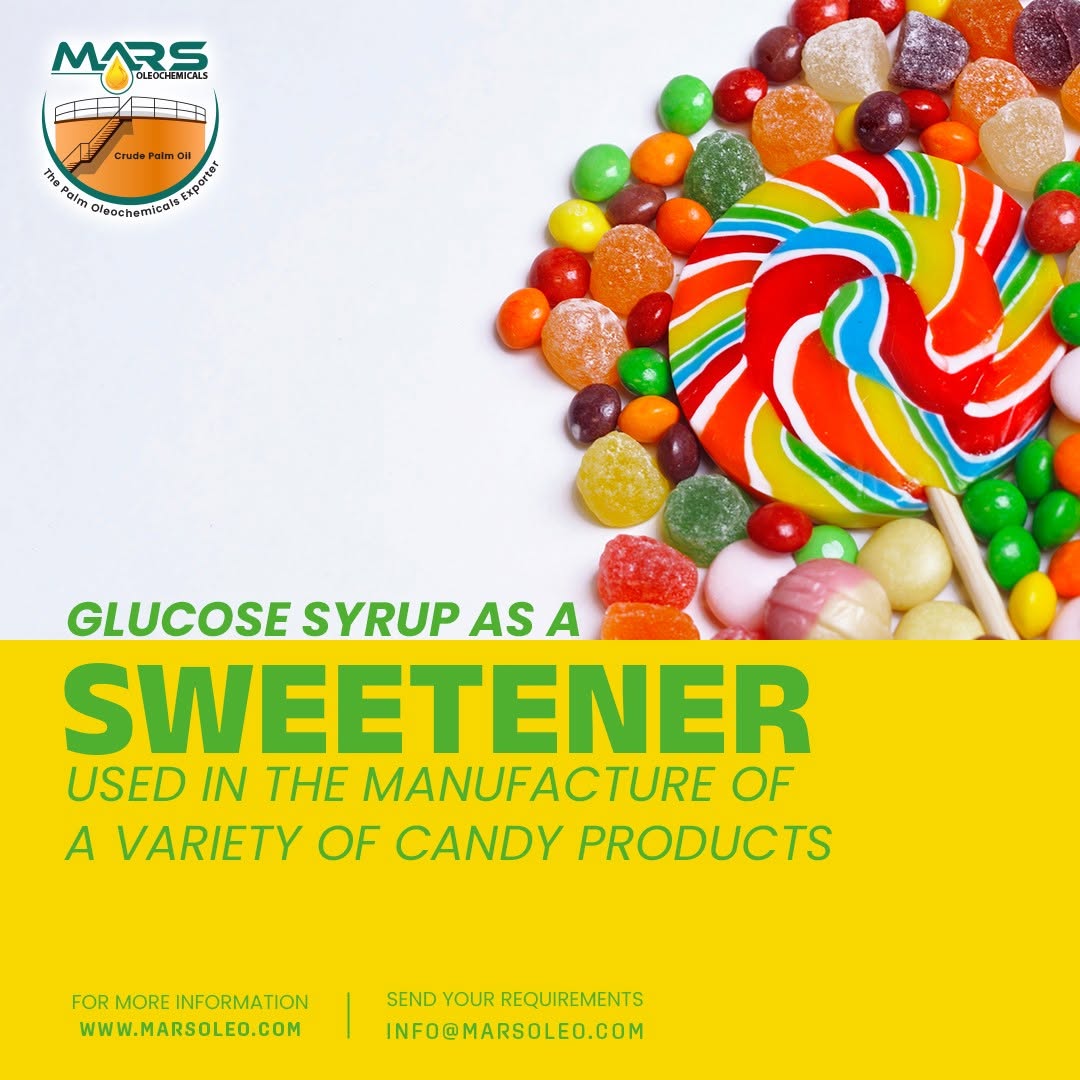
Glucose Syrup, also known as Liquid Glucose, is a widely used starch-derived sweetener in the global food and confectionery industry. Produced through the controlled hydrolysis of edible starch, Glucose Syrup contains a mixture of glucose, maltose and higher saccharides that contribute to its functional properties. It is commonly incorporated into gummies, lollipops, hard candies, toffees, caramels and other confectionery products. In addition to providing sweetness, Glucose Syrup plays an important role in texture development, sugar crystallization control, moisture management and finished-product consistency.
Glucose Syrup in candy manufacturing helps control the formation and growth of sucrose crystals, supporting smooth textures in suitable confectionery formulations. In hard candies and lollipops, it can help reduce unwanted sugar crystallization and contribute to a uniform, glassy appearance. In gummies and jelly sweets, Glucose Syrup influences chewiness, texture and moisture-related characteristics. In caramels and toffees, it contributes to sweetness, body and the development of desirable product consistency. The exact performance depends on the syrup's dextrose equivalent (DE), carbohydrate composition, solids content and processing conditions.

Glucose Syrup improves candy sweetness, texture, moisture balance, and crystallization control in confectionery manufacturing applications.
Food-grade Glucose Syrup is available in different commercial specifications to support various manufacturing requirements. Dextrose Equivalent (DE) describes the reducing sugar content of starch hydrolysates and provides an important indication of their degree of hydrolysis. Different DE values influence sweetness, viscosity, hygroscopicity and crystallization behaviour. Manufacturers should carefully select the appropriate grade according to their desired product texture, sweetness profile, cooking process and storage requirements. Higher-DE syrups can provide greater reducing sugar content, but their moisture-related behaviour may also influence stickiness and product stability.
Glucose Syrup is generally manufactured from edible starch sources such as corn, wheat, potato, tapioca or other suitable starch-containing crops. It is an important raw material for confectionery manufacturers seeking consistent sweetness and functional processing characteristics. Product evaluation should include dextrose equivalent, dry solids, colour, viscosity, feedstock origin, impurity specifications and applicable food safety standards. Since Glucose Syrup is a starch-derived ingredient rather than a palm oil derivative, its industrial classification should reflect its carbohydrate-based origin.
Mars Oleochemicals Sdn. Bhd., Malaysia, supports international sourcing and export inquiries for Glucose Syrup, starch-derived ingredients and related industrial raw materials. Food manufacturers, distributors and international buyers can contact Mars Oleochemicals to discuss product availability, DE grades, technical specifications, packaging, quality documentation and shipment requirements. Visit our website at www.marsoleo.com For product requirements, technical documentation, commercial information and international export inquiries, please email us at info@marsoleo.com.
What is Glucose Syrup and why is it used in candy manufacturing? Glucose Syrup is a starch-derived liquid sweetener used in confectionery manufacturing. It provides sweetness and helps control crystallization, texture and moisture-related properties.
How does Glucose Syrup prevent sugar crystallization in candy? Glucose Syrup helps reduce unwanted sucrose crystallization by interfering with crystal formation and growth, supporting smoother textures in suitable confectionery formulations.
What is the difference between DE 42 and DE 60 Glucose Syrup? DE 42 and DE 60 indicate different levels of starch hydrolysis. Higher-DE syrup generally contains more reducing sugars and has different sweetness, viscosity and moisture-related properties.
What are the main applications of Glucose Syrup in the food industry? Glucose Syrup is used in lollipops, hard candies, gummies, jelly sweets, caramels, toffees, fondants, marshmallows and confectionery fillings.
Where can international buyers source Glucose Syrup from Malaysia? Mars Oleochemicals Sdn. Bhd. handles international inquiries for Glucose Syrup and related ingredients.











Home :: Products :: Enquiry :: Contact Us :: Site Map
Copyright All Rights Reserved © 2025. Mars Oleochemicals :: Disclaimer :: Privacy Policy


