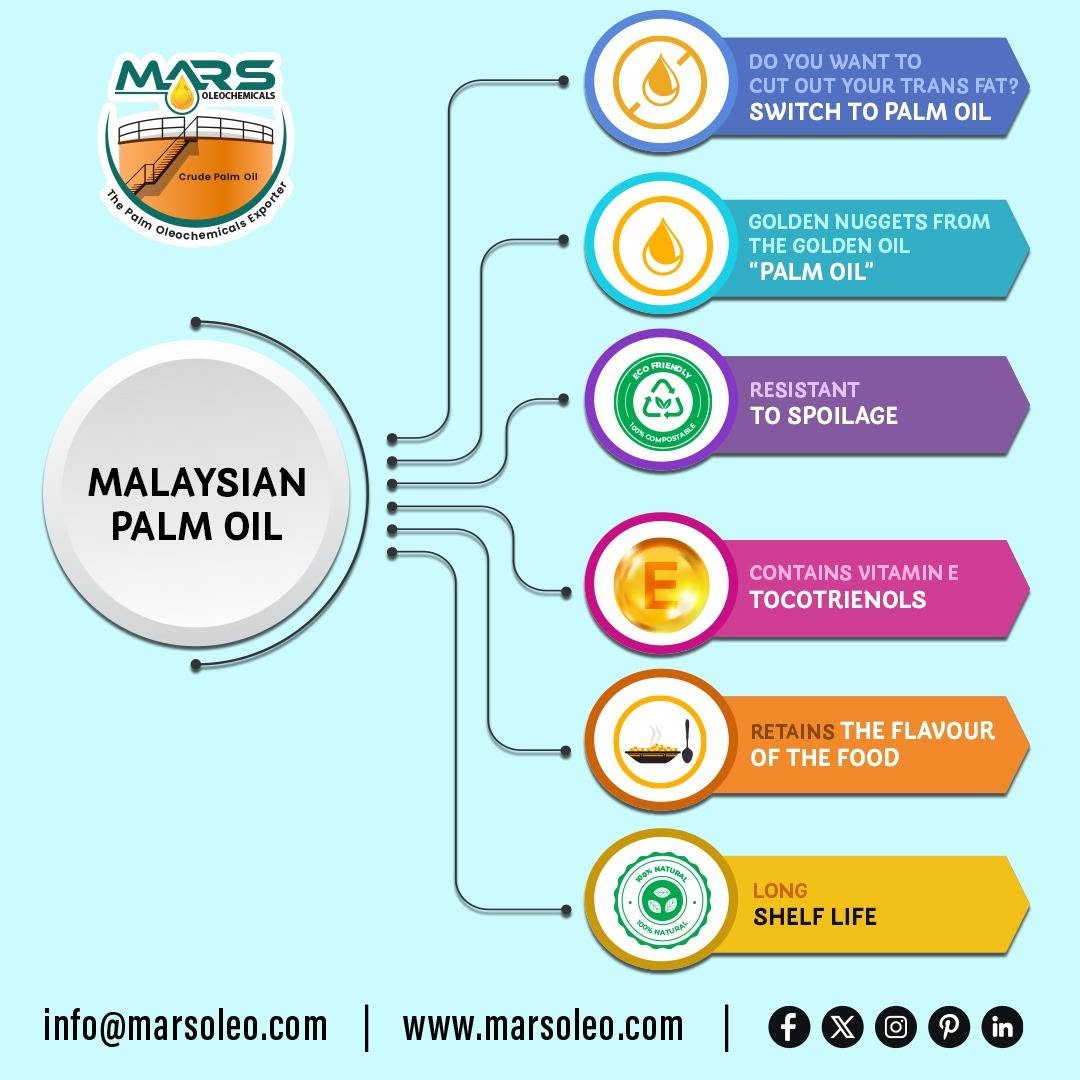
Malaysian Palm Oil is a versatile vegetable oil used by food manufacturers, commercial kitchens, distributors and industrial processors worldwide. Its natural semi-solid characteristics, broad availability and compatibility with different food formulations make it suitable for frying oils, bakery fats, margarine, shortening, confectionery and processed foods. Palm oil can also help manufacturers create structured fats without depending on partially hydrogenated oils, which have historically been a major source of industrial trans fat.
Palm oil and its fractions provide good oxidative and thermal stability in suitable applications. These characteristics can help products resist oxidation, preserve texture and maintain consistent processing performance when handled and stored correctly. Research published through the Malaysian Palm Oil Board describes palm-based oils as having strong thermo-oxidative stability and useful shelf-life characteristics, although prolonged or excessive heating should still be avoided.

Malaysian palm oil and palm-based products to importers, distributors and manufacturers worldwide.
Palm oil naturally contains vitamin E compounds, including tocopherols and tocotrienols, but the amounts retained depend on the oil grade and refining process. Palm oil’s relatively neutral flavour in refined grades and stable physical properties make it useful for frying, bakery, snack, margarine and specialty-fat applications. Claims involving nutrient content, antioxidant levels or shelf life should always be confirmed against the supplied product specification and Certificate of Analysis.
Mars Oleochemicals supplies Malaysian palm oil and palm-based products to importers, distributors and manufacturers worldwide. Available products may include RBD Palm Oil, RBD Palm Olein, RBD Palm Stearin, Crude Palm Oil and palm-based specialty fats, subject to specification and availability. Buyers may send their required grade, quantity, packing type, destination port and shipment schedule to info@marsoleo.com for a customised quotation.
1. Is Malaysian Palm Oil trans-fat-free? Unhydrogenated palm oil is generally very low in trans fat. However, a trans-fat-free claim must be based on the finished product’s laboratory analysis and applicable labelling regulations.
2. Why is palm oil used instead of partially hydrogenated oils? Palm oil is naturally semi-solid, allowing manufacturers to create structure and firmness without necessarily using partial hydrogenation, a process associated with industrial trans-fat formation.
3. Does Malaysian Palm Oil contain vitamin E? Palm oil naturally contains tocopherols and tocotrienols. The amount retained varies according to the product grade, refining process and storage conditions.
4. Does palm oil offer a long shelf life? Palm oil has useful oxidative stability, which may support longer product stability under suitable formulation, packaging and storage conditions. Shelf-life claims must be verified for the finished product.
5. What food products use Malaysian Palm Oil? It is used in cooking oils, frying oils, bakery products, biscuits, margarine, shortening, confectionery, instant noodles, snack foods, cream fillings and specialty-fat formulations.







Home :: Products :: Enquiry :: Contact Us :: Site Map
Copyright All Rights Reserved © 2025. Mars Oleochemicals :: Disclaimer :: Privacy Policy