Malaysian palm oil is an important vegetable-oil ingredient for food manufacturers because it can be refined and fractionated into products with different physical characteristics. RBD Palm Oil, Palm Olein and Palm Stearin each serve different applications, allowing formulators to select the appropriate fraction for frying, cooking, bakery, shortening and specialty-fat systems.
RBD Palm Olein is widely associated with commercial frying and cooking applications. Its fatty-acid composition and functional properties make it suitable for many industrial and food-service frying processes. Fried-product quality ultimately depends on the complete production system, including oil temperature, turnover, food composition and frying management.

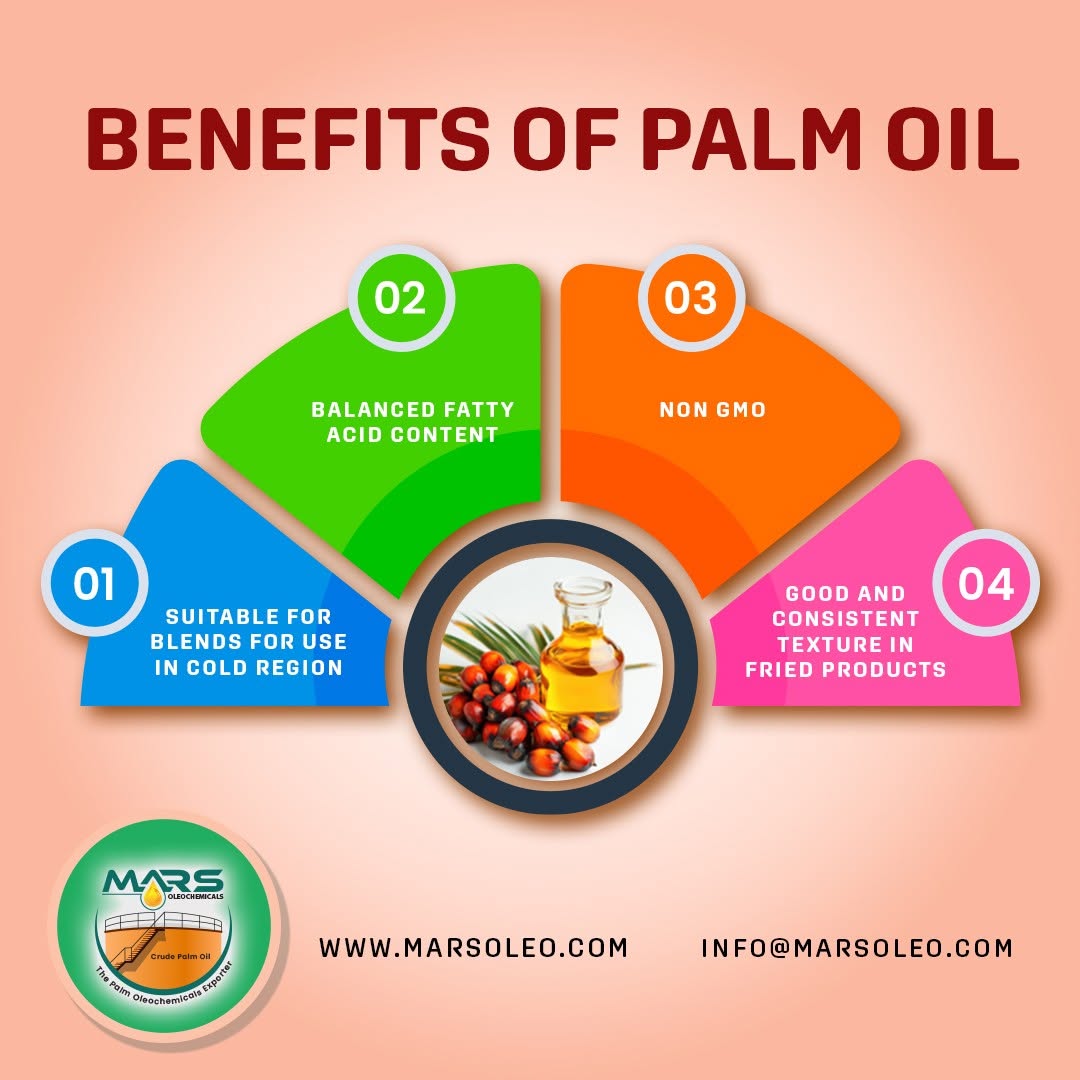
Palm oil frying, blending, texture, and versatile food applications through its balanced fatty-acid profile.
Palm Olein For blended vegetable oils and markets where low-temperature clarity is important, buyers can select Palm Olein according to required cloud point. CP10, CP8 and CP6 grades provide progressively different low-temperature characteristics, helping manufacturers choose an oil appropriate to their climate, distribution chain and product requirements.
Palm oil buyers should consider more than product price alone. Important parameters include product type, cloud point, iodine value, free fatty acid, moisture and impurities, color, packaging, intended application and destination market. Selecting the appropriate palm fraction helps manufacturers achieve more predictable processing and finished-product performance.
What are the main benefits of palm oil? Palm oil offers versatile food-processing properties, high frying functionality, multiple fractionation options and useful physical characteristics for food manufacturing.
Is palm oil suitable for frying? Yes. Palm oil and particularly RBD Palm Olein are widely used in commercial cooking and frying applications.
What is Palm Olein? Palm Olein is the more liquid fraction obtained by fractionating palm oil and is widely used in cooking and frying.
What is Palm Stearin? Palm Stearin is the higher-melting solid fraction obtained during palm-oil fractionation.
Is palm oil suitable for cold regions? Standard palm oil can crystallize in cool conditions. Lower-cloud-point Palm Olein grades such as CP8 or CP6 are more appropriate when improved low-temperature clarity is required.
What does CP10 mean? CP refers to cloud point. CP10 Palm Olein is typically specified around a maximum cloud-point requirement associated with that commercial grade.
What is the difference between CP10, CP8 and CP6? Lower-numbered Palm Olein grades generally provide improved low-temperature clarity because they are further fractionated.
Does palm oil contain saturated and unsaturated fats? Yes. Palm oil contains substantial proportions of both saturated and unsaturated fatty acids, particularly palmitic and oleic acids.
Does palm oil provide consistent texture in fried foods? Palm-based frying oils can support consistent processing and texture, although final product quality also depends on formulation and frying conditions.
Is Malaysian palm oil non-GMO? Commercial Malaysian palm oil is generally derived from conventionally bred oil palm. Formal non-GMO claims should be supported by appropriate product or supply-chain documentation when required.
Does Mars Oleochemicals supply RBD Palm Olein? Yes. Mars Oleochemicals supplies RBD Palm Olein CP10, CP8 and CP6 for international commercial requirements.
Does Mars Oleochemicals supply RBD Palm Oil? Yes. RBD Palm Oil is included in the Mars Oleochemicals palm-oil portfolio.
How can buyers request palm oil? Buyers can send their required product, grade, specification, quantity, packaging, application and destination to info@marsoleo.com.











Home :: Products :: Enquiry :: Contact Us :: Site Map
Copyright All Rights Reserved © 2025. Mars Oleochemicals :: Disclaimer :: Privacy Policy