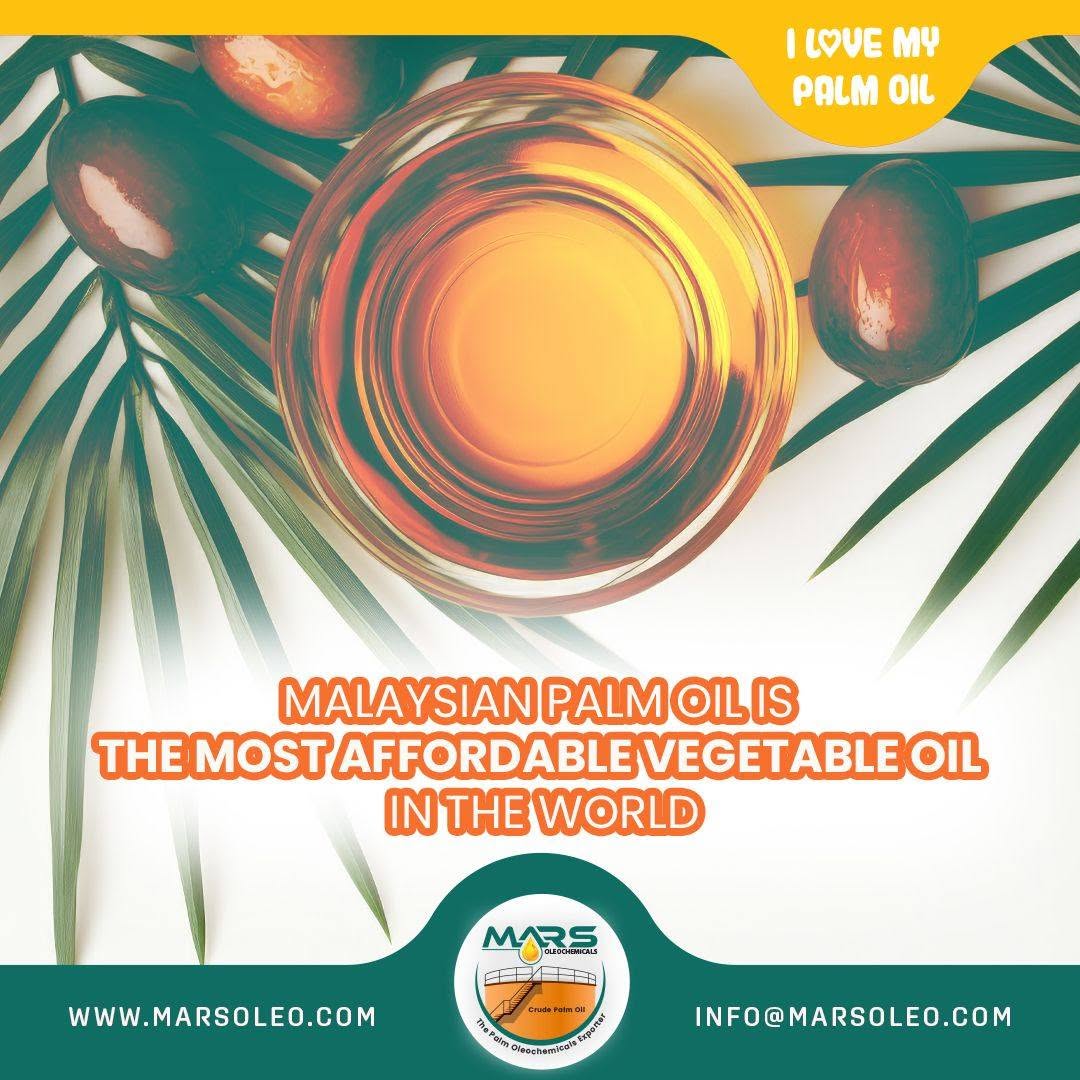
Malaysian palm oil has historically competed strongly with other major vegetable oils because oil palm is a highly productive perennial crop and produces substantial oil output per unit of cultivated land. High productivity, established refining capacity, year-round harvesting and large international trade infrastructure can contribute to competitive production and supply economics. Actual prices still fluctuate according to global vegetable-oil supply, demand, energy markets, currency movements and trade policies.
Palm oil provides several functional characteristics valued by food manufacturers. It can be used for frying, bakery fats, margarine, shortening, confectionery and other processed-food applications. Palm oil can also be blended or fractionated to create products with different melting and solid-fat profiles, helping manufacturers select an appropriate ingredient for specific food formulations. MPOC identifies versatility, stability and competitive pricing among its important commercial qualities.

Palm Oil offers competitive pricing, versatile functionality, year-round supply, and broad food and industrial applications.
Palm-based feedstocks are important raw materials for the oleochemical industry. Palm oil and palm-kernel-derived materials can be processed into fatty acids, fatty alcohols, refined glycerine, stearic acid, esters, surfactants and other chemical intermediates used throughout cosmetics, personal care, detergents and industrial manufacturing. Mars' current portfolio reflects these diverse downstream uses.
No. Palm oil is often highly competitive against soybean, sunflower and rapeseed oils, but relative prices change continually. For example, recent MPOC analysis describes palm oil as the most competitively priced major vegetable oil, while earlier market conditions temporarily made U.S. soybean oil cheaper. For an evergreen webpage, “competitively priced” or “cost-competitive” is therefore more accurate than claiming palm oil is always the world's cheapest vegetable oil.
Is Malaysian palm oil the cheapest vegetable oil in the world? Not permanently. Palm oil is frequently among the most competitively priced major vegetable oils, but prices change according to global market conditions. For evergreen content, “cost-competitive vegetable oil” is the more accurate description.
Why is palm oil competitively priced? Oil palm has high oil productivity per hectare, produces throughout the year and is supported by a mature international refining and supply chain. These factors contribute to its commercial competitiveness.
Which vegetable oils compete with palm oil? Major competing oils include soybean oil, sunflower oil and rapeseed or canola oil. Relative prices between these oils change continually.
What is Malaysian palm oil commonly used for? Malaysian palm oil is commonly used in frying, cooking, bakery products, margarine, shortening, confectionery, specialty fats and industrial processing.
Why do food manufacturers choose palm oil? Food manufacturers use palm oil because of its competitive pricing, versatility, oxidative stability, blending capability and useful physical characteristics for various formulations.
Is palm oil available throughout the year? Oil palm is a perennial crop and produces fruit throughout the year, helping provide a relatively continuous raw-material supply compared with many seasonal annual oilseed crops.
What are the main palm oil fractions? The major refined fractions include Palm Olein, which is relatively liquid, and Palm Stearin, which is a harder fraction used in applications requiring greater solid-fat content.
Is palm oil used outside the food industry? Yes. Palm-derived materials are used in oleochemicals, soaps, detergents, cosmetics, personal care, lubricants, biodiesel and various industrial products.
Does competitive pricing mean palm oil quality is lower? No. Price competitiveness relates to factors such as agricultural productivity, production scale, supply and processing economics. Product quality should instead be evaluated using the relevant specification, standards and Certificate of Analysis.





Home :: Products :: Enquiry :: Contact Us :: Site Map
Copyright All Rights Reserved © 2025. Mars Oleochemicals :: Disclaimer :: Privacy Policy