


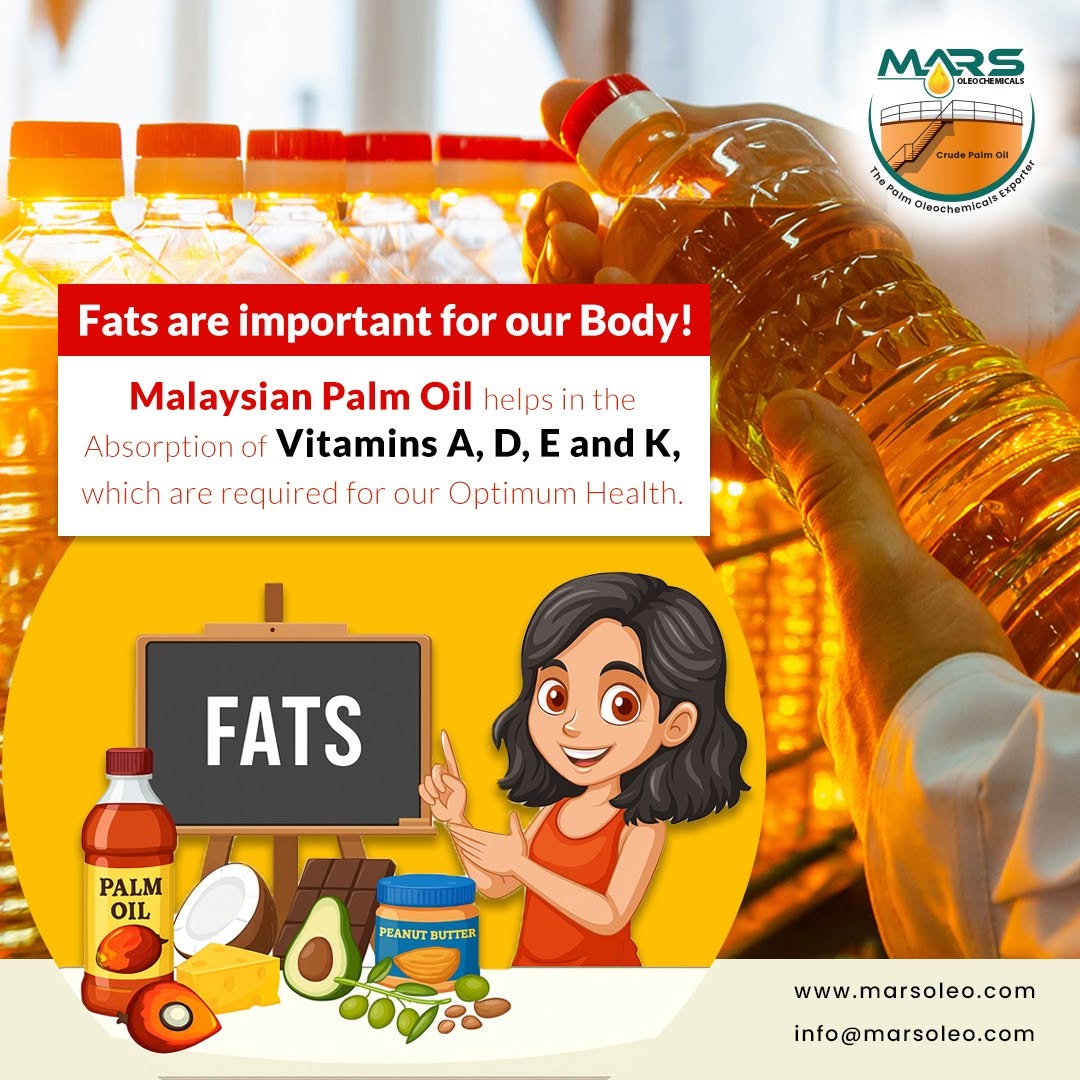
Malaysian palm oil is a widely used vegetable oil obtained from the fleshy portion of oil palm fruit. It contains a combination of saturated and unsaturated fatty acids and serves as an important ingredient in food preparation and manufacturing. One of the established nutritional functions of dietary fat is supporting the absorption of fat-soluble vitamins A, D, E and K. These vitamins are absorbed through digestive processes involving dietary lipids, bile acids and specialized transport mechanisms in the small intestine. Palm oil can contribute to this process when consumed as part of a meal containing fat-soluble nutrients. However, this is a general property of dietary fats rather than a unique benefit of palm oil. Mars Oleochemicals Sdn. Bhd., a Malaysian exporter of palm-based products, supports international trade in palm oil and refined vegetable oil fractions used across food manufacturing industries.
Vitamins A, D, E and K are classified as fat-soluble vitamins because their digestion, absorption and transport are associated with dietary lipids. Vitamin A contributes to normal vision and immune function, vitamin D supports calcium metabolism and bone health, vitamin E participates in antioxidant protection, and vitamin K is essential for normal blood clotting. During digestion, dietary fats and bile acids help form structures called mixed micelles, which assist in making fat-soluble nutrients available for absorption in the small intestine. Edible vegetable oils, including palm oil, olive oil and other suitable sources of dietary fat, can support these processes. The amount of each vitamin absorbed depends on several factors, including the food matrix, digestive function, nutritional status and overall meal composition. Palm oil itself should not be confused with a supplement containing vitamins A, D, E and K.

Malaysian palm oil contributes Dietary fats, including palm oil, absorb vitamins A, D, E, and K during digestion.
Palm oil naturally contains minor components of nutritional and scientific interest, including tocopherols, tocotrienols and carotenoids. Crude palm oil contains carotenoids that give it a characteristic reddish-orange appearance, while specially processed red palm oil can retain significant quantities of these compounds. Certain carotenoids, including beta-carotene, act as provitamin A precursors. Palm-derived vitamin E compounds include tocopherols and tocotrienols, although their concentrations vary according to the product grade and refining process. Conventional refining substantially reduces carotenoids, so ordinary RBD palm oil should not automatically be promoted as a rich source of vitamin A. Palm oil also contains a considerable proportion of saturated fatty acids. Dietary recommendations therefore emphasize the overall quality of fat intake and generally favor replacing saturated fats with unsaturated fats where practical.
Mars Oleochemicals Sdn. Bhd. supports international sourcing and export inquiries for Malaysian palm oil and palm-derived products. Its published portfolio includes RBD Palm Oil, RBD Palm Olein CP10, CP8 and CP6, along with other vegetable oil products for commercial applications. These refined grades are relevant to food manufacturers, edible oil importers, distributors and companies developing food formulations. Businesses selecting palm oil products should evaluate the intended application, fatty acid composition, quality specifications, processing characteristics and applicable food safety requirements. Nutritional claims should also reflect the specific product grade and available analytical documentation. Importers and manufacturers seeking information about Malaysian palm oil products can visit visiting our website at www.marsoleo.com For product requirements, technical documentation, commercial information and international export inquiries, please email us at info@marsoleo.com. with their required product grade, quantity, packaging preference and destination port.
How does Malaysian palm oil help the body absorb vitamins A, D, E and K? Malaysian palm oil contains dietary fat, which supports the absorption of fat-soluble vitamins A, D, E and K. During digestion, dietary lipids and bile acids help make these nutrients available for absorption in the small intestine. Other edible fats and oils can perform the same function.
Does palm oil naturally contain vitamins A, D, E and K? Palm oil naturally contains vitamin E compounds, including tocopherols and tocotrienols. Crude and specially refined red palm oil also contain carotenoids that can act as vitamin A precursors. However, ordinary refined palm oil is not necessarily a significant source of vitamins A, D or K. Nutrient content depends on the product and processing method.
What is the difference between red palm oil and refined palm oil in nutritional composition? Red palm oil is specially processed to retain more naturally occurring carotenoids and vitamin E compounds. Conventional RBD palm oil undergoes refining that substantially reduces carotenoids. The nutritional composition of each product should be evaluated using its specific technical and analytical information.
Does consuming Malaysian palm oil automatically improve immunity and overall health? No. Vitamins A, D, E and K have important physiological functions, but consuming palm oil does not automatically improve immunity or overall health. Palm oil contains a significant amount of saturated fat, and dietary recommendations generally favor replacing saturated fats with unsaturated fats. Overall dietary quality matters.
Where can international buyers purchase Malaysian refined palm oil? International buyers can contact Mars Oleochemicals through www.marsoleo.com or info@marsoleo.com. The company lists RBD Palm Oil and RBD Palm Olein grades, including CP10, CP8 and CP6. Buyers should specify the required product grade, quantity, packaging, quality specifications and destination port.











Home :: Products :: Enquiry :: Contact Us :: Site Map
Copyright All Rights Reserved © 2025. Mars Oleochemicals :: Disclaimer :: Privacy Policy


