


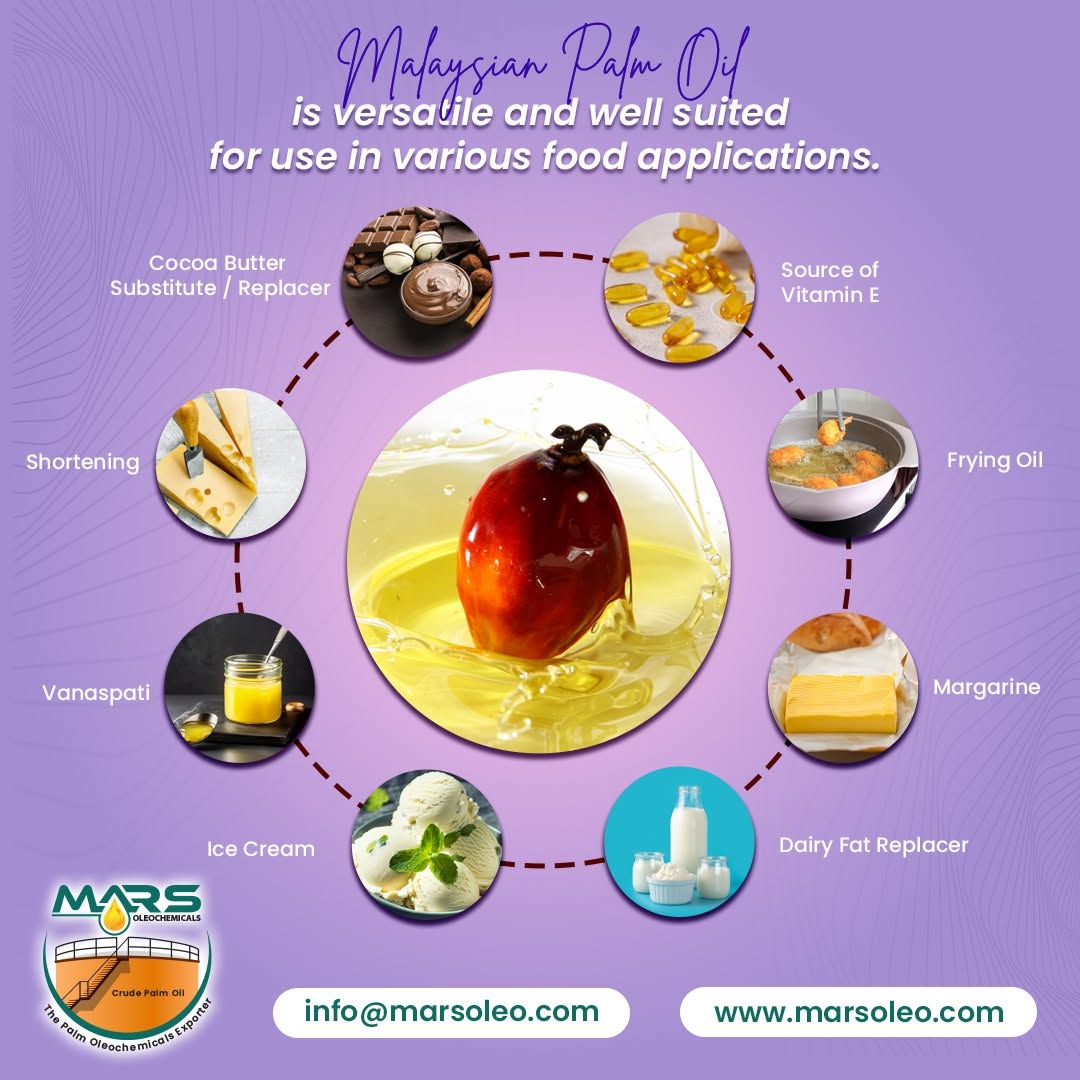
Malaysian Palm Oil is a versatile vegetable oil widely used in food manufacturing because of its functional characteristics, processing flexibility and availability in different refined and fractionated grades. Extracted from the fleshy mesocarp of the oil palm fruit (Elaeis guineensis), palm oil naturally contains a mixture of saturated and unsaturated fatty acids that contribute to its physical consistency and crystallization behavior. Through refining and fractionation, manufacturers obtain commercially important ingredients such as RBD Palm Oil, RBD Palm Olein and RBD Palm Stearin, each offering different characteristics for specific food applications. These palm-derived products are used in cooking oils, industrial frying, margarine, bakery shortenings, confectionery fats, vanaspati and specialty food formulations. Palm oil and its appropriate fractions can also be blended with other edible oils to achieve selected melting profiles, texture and processing requirements. According to research published by the Malaysian Palm Oil Board (MPOB), the versatility of palm oil and palm kernel oil enables manufacturers to formulate a wide variety of edible fats for commercial food production. Selecting the correct product grade is essential because different food applications require different chemical, physical and processing characteristics.
RBD Palm Olein is commonly used as a cooking and frying oil because of its relatively high oxidative stability and suitability for compatible commercial frying operations. Its liquid characteristics make it useful in snack food production, instant noodles, fried foods and selected industrial frying applications. In contrast, RBD Palm Oil and Palm Stearin are valuable ingredients for food products requiring greater structure or controlled melting behavior. These products can be used in the manufacture of margarine, vegetable shortenings, pastry fats, bakery fats and vanaspati, depending on the formulation and intended end use. Palm-based shortening contributes functional characteristics such as fat structure, aeration and tenderness in suitable bakery formulations, while margarine manufacturers use carefully selected vegetable fat blends to obtain desired spreadability, consistency and melting properties. Palm-based fat systems can also provide solid-fat functionality without necessarily requiring partial hydrogenation, although the final formulation and processing history must be verified. Successful food manufacturing depends on understanding technical parameters such as Solid Fat Content (SFC), Slip Melting Point (SMP), Iodine Value (IV), fatty acid composition and crystallization behavior. These characteristics help manufacturers select appropriate edible fats for consistent processing and product performance.

Malaysian palm oil fractions frying, margarine, shortening, confectionery and selected dairy alternative formulations worldwide.
Malaysian Palm Oil and Palm Kernel Oil fractions play important roles in confectionery and specialty food-fat manufacturing. Suitable palm mid fractions can be used in certain Cocoa Butter Equivalent (CBE) formulations, while palm kernel-derived lauric fats are widely used in Cocoa Butter Substitute (CBS) systems for compound chocolate, confectionery coatings, wafer coatings and related products. Other specialty fat blends are developed for ice cream, frozen desserts, non-dairy creamers, dairy-alternative products and selected fat replacement applications. These formulations are designed to provide specific melting, texture, stability and processing characteristics. Palm oil is also a natural source of Vitamin E compounds, including tocopherols and tocotrienols, although the concentrations vary according to the original oil, refining conditions, fractionation and subsequent processing. Vitamin E-rich palm-derived ingredients may be used in suitable food and nutritional formulations, subject to product specifications and regulatory requirements. The presence of vitamin E does not mean that all refined palm oil grades contain the same micronutrient levels or qualify for specific nutrition claims. Furthermore, food manufacturers should consider palm oil's saturated fat content when evaluating the nutritional composition of finished products. Ingredient functionality, nutritional characteristics and sustainability certification must be assessed separately to ensure accurate technical and commercial descriptions.
Mars Oleochemicals Sdn. Bhd. supports international sourcing and export enquiries for Malaysian Palm Oil, RBD Palm Oil, RBD Palm Olein, RBD Palm Stearin, Palm Kernel Oil and Palm Oil Specialty Fats used across different food manufacturing applications. The company's published specialty fat portfolio includes Shortening, Margarine, Cocoa Butter Substitutes, Coating Fats and Ice Cream Fats, with available grades intended for different physical and processing requirements. International buyers researching edible vegetable fats should identify their intended application, required product grade, desired melting characteristics, fatty acid profile, quantity, packaging and destination port before requesting commercial information. Buyers should also review applicable Technical Data Sheets (TDS), Certificates of Analysis (COA), food safety documentation and relevant certification records. Where RSPO, MSPO, Halal, Kosher or other product-specific certifications are required, their availability and scope should be confirmed for the intended transaction. Manufacturers developing confectionery fats, frozen desserts, frying oils, bakery shortenings or dairy-alternative formulations should evaluate finished-product performance and applicable regulatory labeling requirements. Businesses researching Malaysian Palm Oil Food Applications, Cocoa Butter Alternatives, Palm Oil Shortening, Margarine Fats, Frying Oils and Specialty Fat Suppliers from Malaysia can visit our website at www.marsoleo.com For product requirements, technical documentation, commercial information and international export inquiries, please email us at info@marsoleo.com.
What are the main food applications of Malaysian Palm Oil? Malaysian Palm Oil and its fractions are used in frying oils, margarine, bakery shortenings, vanaspati, confectionery fats, frozen desserts and selected dairy-alternative products. Specific applications depend on the refined or fractionated grade, melting characteristics and required food formulation.
Why is RBD Palm Olein commonly used for cooking and frying? RBD Palm Olein is the lower-melting liquid fraction of refined palm oil. Its fatty acid composition and oxidative stability make it suitable for selected cooking and industrial frying applications. Actual performance depends on the product grade, frying temperature, operating conditions and appropriate oil-quality management.
Can Malaysian Palm Oil be used as a Cocoa Butter Substitute? Yes, but the appropriate specialty fat must be selected. Palm mid fractions are used in certain Cocoa Butter Equivalent formulations, while palm kernel-derived fractions are commonly used to produce lauric Cocoa Butter Substitutes. CBS, CBR and CBE have different properties and should not be treated as identical or universally interchangeable.
Does Malaysian Palm Oil naturally contain Vitamin E? Yes. Palm oil naturally contains vitamin E compounds, including tocopherols and tocotrienols. However, their concentrations vary with refining, fractionation and further processing. Manufacturers should verify the actual vitamin E content through product specifications and appropriate analytical documentation before making nutritional claims.
How can international food manufacturers source Malaysian Palm Oil and Specialty Fats from Mars Oleochemicals? Enquiries should include the required product grade, intended application, melting characteristics, technical specifications, quantity, packaging and destination port. Product availability, food-grade suitability, technical documentation and relevant certifications should be confirmed for each transaction.











Home :: Products :: Enquiry :: Contact Us :: Site Map
Copyright All Rights Reserved © 2025. Mars Oleochemicals :: Disclaimer :: Privacy Policy


