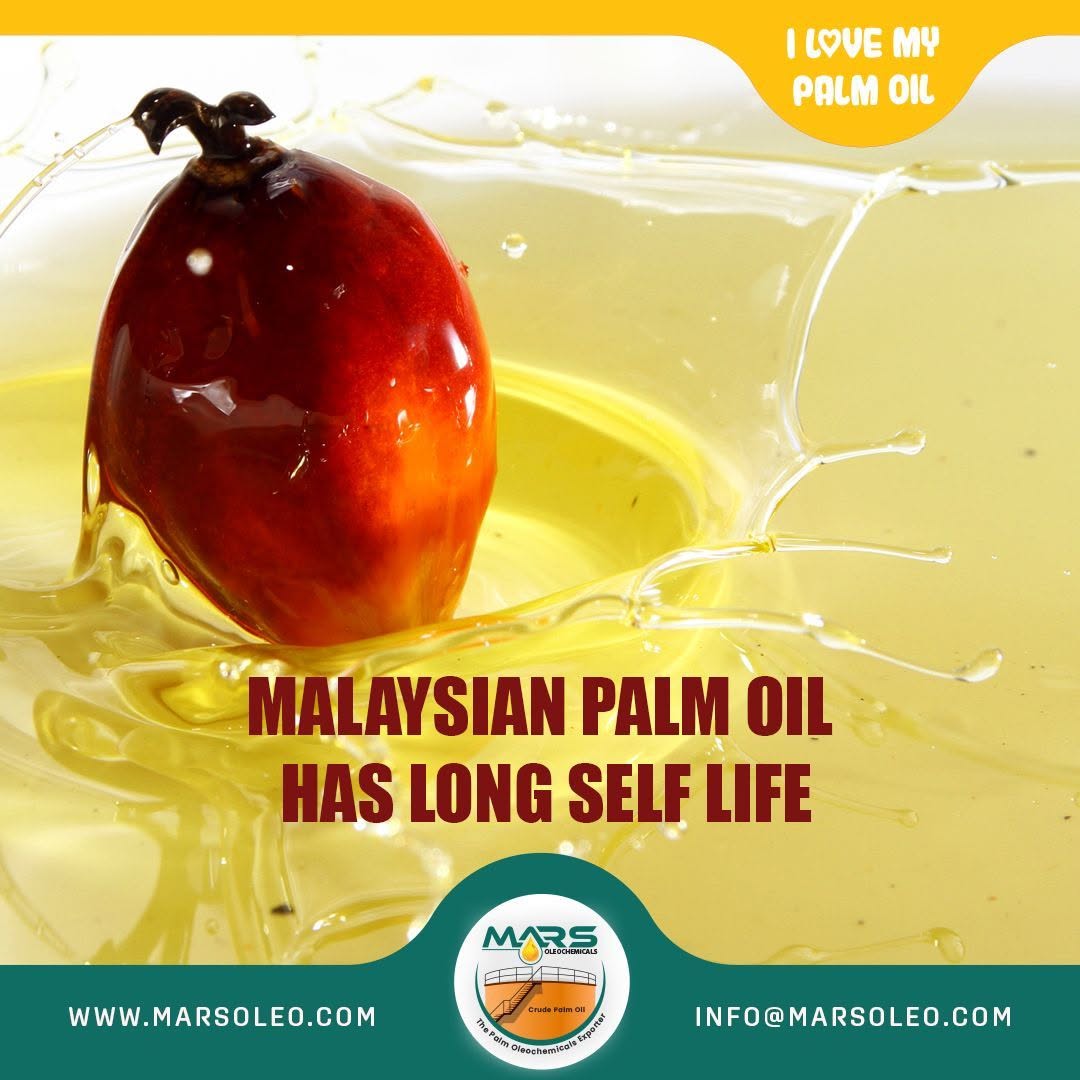
Malaysian palm oil has a fatty-acid composition and naturally occurring minor components that contribute to its resistance to oxidation. Palm oil and palm olein contain vitamin E compounds, including tocopherols and tocotrienols, which provide natural oxidative protection. MPOB notes that these antioxidants contribute to the stability of palm oil, although their concentration varies according to the oil grade and refining process.
Good oxidative stability can help an oil resist deterioration and may support longer product stability, but there is no single universal shelf life for Malaysian palm oil. The actual period depends on the grade, moisture, oxygen exposure, packaging, storage temperature, light exposure and handling. For this reason, specific shelf-life statements should always follow the supplier's technical specification and storage recommendations.

Malaysian palm oil provides useful oxidative and thermal stability for frying, bakery and processed-food applications.
Palm oil and palm olein perform well in many high-temperature applications because of their useful thermal and oxidative stability. MPOB research found palm olein to remain comparatively stable under normal cooking conditions, while other research shows that adding palm olein to softer vegetable oils can improve oxidative stability. These characteristics make palm-based oils useful for commercial frying, snack production and large-scale food manufacturing.
Proper storage is essential for protecting oil quality. Palm oil should be kept in clean, suitable containers and protected from excessive heat, moisture, oxygen, contamination and unnecessary light exposure. Storage requirements can differ between Crude Palm Oil, RBD Palm Oil, Palm Olein and Palm Stearin, so buyers should follow the relevant specification, TDS and supplier instructions rather than assuming one shelf-life period applies to every palm-oil grade. Mars likewise recommends suitable clean and controlled storage for its palm-oil products.
Does Malaysian palm oil have a long shelf life? Malaysian palm oil has useful oxidative stability that can support longer product stability. Actual shelf life depends on the grade, formulation, packaging, storage temperature and handling conditions.
Why is palm oil resistant to oxidation? Its fatty-acid composition and naturally occurring antioxidants, including tocopherols and tocotrienols, contribute to oxidative stability.
What is oxidative stability? Oxidative stability describes an oil's resistance to chemical deterioration caused by oxygen, heat and other environmental factors.
Is palm oil suitable for frying? Yes. Palm oil and palm olein are widely used for frying because of their thermal and oxidative stability under suitable cooking conditions.
Does palm oil contain natural antioxidants? Palm oil naturally contains vitamin E compounds, including tocopherols and tocotrienols, which provide some oxidative protection.
Does every palm-oil grade have the same shelf life? No. Shelf life varies between products such as Crude Palm Oil, RBD Palm Oil, Palm Olein and Palm Stearin and depends on processing, specification, packaging and storage.
What can shorten palm oil shelf life? Excessive heat, oxygen exposure, moisture, contamination, unsuitable packaging and poor storage conditions can accelerate deterioration.
How should Malaysian palm oil be stored? It should be stored according to the applicable product specification in clean, suitable conditions and protected from excessive heat, moisture and contamination.
Is RBD Palm Oil suitable for shelf-stable foods? RBD Palm Oil is widely used in bakery, frying, margarine, shortening and processed-food applications where oxidative stability and consistent physical properties are valuable.












Home :: Products :: Enquiry :: Contact Us :: Site Map
Copyright All Rights Reserved © 2025. Mars Oleochemicals :: Disclaimer :: Privacy Policy