


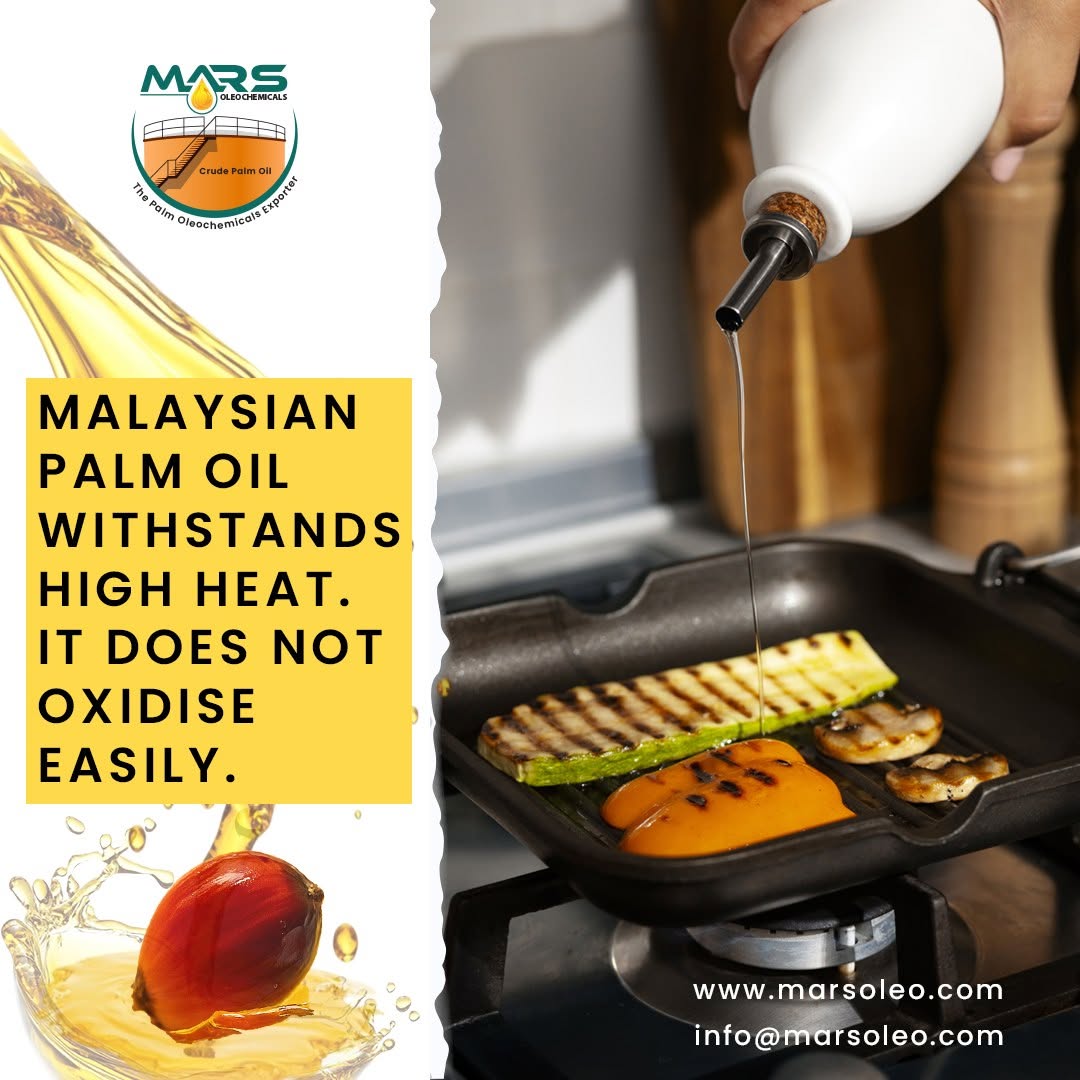
Malaysian palm oil is an important vegetable oil used in cooking, food preparation and food manufacturing worldwide. Obtained from the fleshy portion of oil palm fruit (Elaeis guineensis), palm oil can be refined into different edible grades suitable for specific culinary applications. Refined, bleached and deodorized (RBD) palm oil and RBD palm olein are particularly relevant to everyday cooking, pan-frying and other high-temperature preparation methods. Palm olein, the liquid fraction of refined palm oil, is valued for its oxidative stability, generally neutral flavor and versatile cooking characteristics. Malaysia's established palm oil refining industry supports the production and international supply of these edible vegetable oils. Mars Oleochemicals Sdn. Bhd. offers Malaysian palm oil products for businesses seeking appropriate grades for commercial food applications.
One of the principal characteristics of refined palm oil and palm olein is their ability to maintain useful cooking performance under suitable heating conditions. Their fatty acid composition includes saturated and monounsaturated fatty acids, which contribute to oxidative stability compared with some more highly polyunsaturated vegetable oils. During cooking, oils are exposed to heat, oxygen and moisture, which can gradually cause chemical deterioration. Research published by the Malaysian Palm Oil Board (MPOB) has demonstrated favorable oxidative stability for palm olein under specific heating and frying conditions. However, no edible cooking oil is completely resistant to oxidation. Repeated heating, excessive temperatures and extended exposure to oxygen can increase oxidation products and affect oil quality. Appropriate cooking temperatures, suitable storage and oil quality monitoring remain important.

Refined palm olein offers useful heat stability for grilling, frying, and everyday cooking applications worldwide.
Food-grade refined palm oil and palm olein have applications in pan-frying, sautéing, shallow frying, deep frying and selected food processing operations. Refined palm olein is valued for its relatively neutral flavor, functional heat stability and ability to act as an effective cooking medium. These characteristics can support consistent food preparation when the correct cooking conditions are maintained. Palm oil fractions can also be used in processed foods, cooking oil blends and certain bakery formulations. The selection of a cooking oil should consider oxidative stability, nutritional composition, flavor, price, availability and intended use. Although palm oil provides useful processing characteristics, its saturated fat content should also be considered within an overall balanced dietary pattern. For cardiovascular health, established dietary guidance generally favors replacing saturated fats with unsaturated fats.
Mars Oleochemicals Sdn. Bhd. supports international trade in Malaysian palm oil and palm-derived products, including refined palm oil fractions for commercial applications. Its published product portfolio includes RBD Palm Oil and RBD Palm Olein CP10, which are relevant to edible oil processing, cooking and food manufacturing. Importers, distributors and manufacturers should evaluate product grades, technical specifications, packaging options, applicable certifications and destination-market requirements before purchasing. Important quality considerations include free fatty acid content, peroxide value, moisture, impurities and other grade-specific parameters. Mars Oleochemicals provides product information and commercial export inquiries for businesses interested in sourcing Malaysian palm-based materials. For additional information, visit www.marsoleo.com or info@marsoleo.com with the required product grade, quantity, packaging preference and destination port.
Why is Malaysian palm oil suitable for high-temperature cooking? Malaysian refined palm oil and RBD palm olein have useful oxidative stability because of their fatty acid composition. This makes them suitable for various cooking methods, including frying and sautéing. However, their stability depends on temperature, heating duration and oil quality, and they can deteriorate under excessive or repeated heating.
Does palm oil oxidize when heated? Yes. Palm oil and palm olein can oxidize when exposed to heat, oxygen and prolonged cooking conditions. They may be more resistant to oxidation than some highly polyunsaturated vegetable oils under comparable conditions, but no edible oil is completely resistant to thermal or oxidative deterioration.
What is the difference between crude palm oil and RBD palm olein for cooking? Crude palm oil is extracted from the flesh of oil palm fruit before refining. RBD palm olein is the liquid fraction obtained from refined palm oil through fractionation. Food-grade RBD palm olein is widely used as a cooking and frying oil because refining produces a suitable appearance, flavor and quality profile.
Is Malaysian palm oil a heart-healthy cooking oil? Palm oil contains both saturated and unsaturated fatty acids. Although it offers useful heat stability, this does not automatically make it heart-healthy. Dietary guidance generally recommends limiting saturated fat and replacing it with unsaturated fats where practical. Overall cardiovascular health depends on the broader dietary pattern.
How can international buyers source Malaysian refined palm oil for cooking applications? International buyers can contact Mars Oleochemicals through www.marsoleo.com or info@marsoleo.com to inquire about refined palm oil and RBD palm olein. Buyers should specify the required grade, product specifications, quantity, packaging preference and destination port when requesting commercial supply information.











Home :: Products :: Enquiry :: Contact Us :: Site Map
Copyright All Rights Reserved © 2025. Mars Oleochemicals :: Disclaimer :: Privacy Policy


