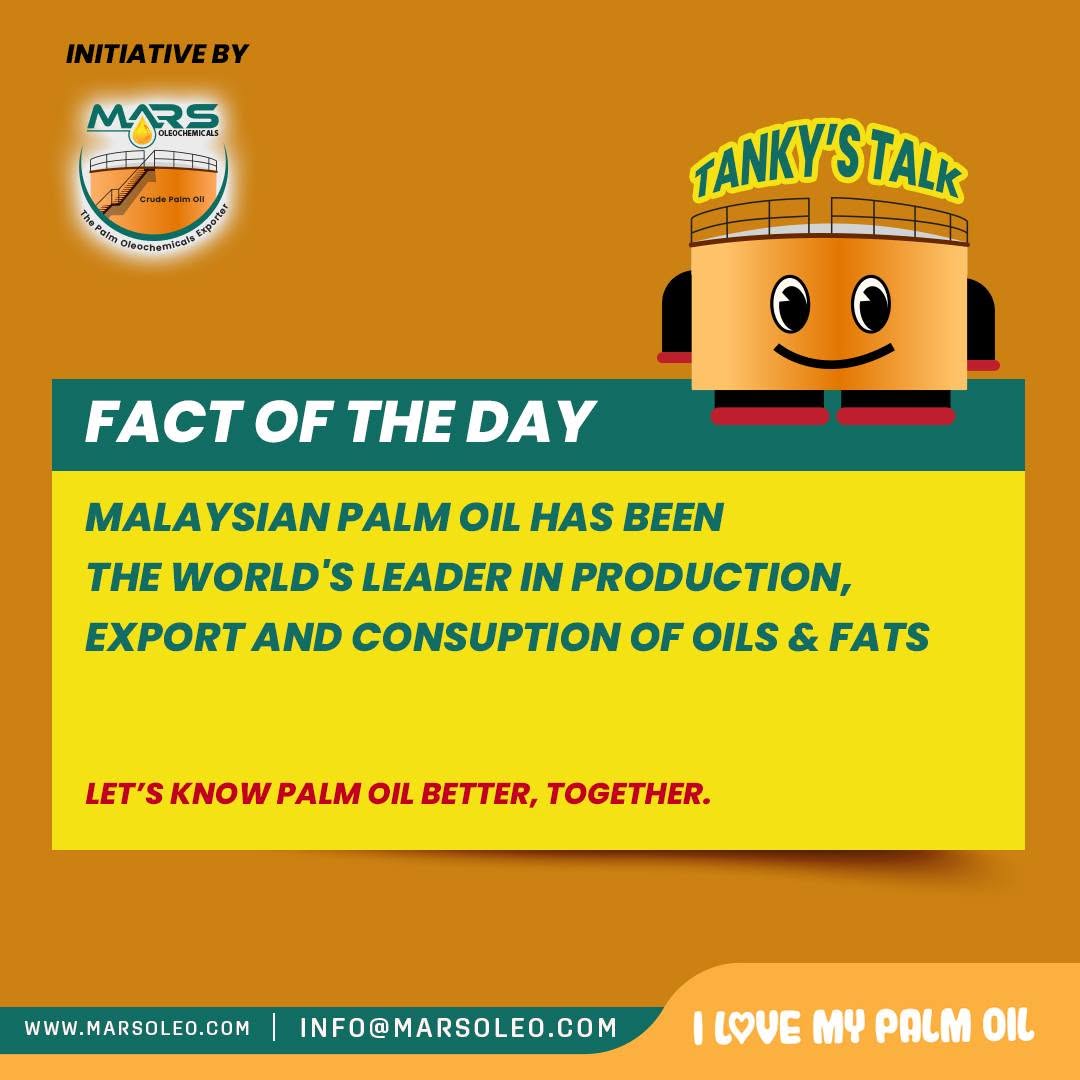
Malaysia remains one of the world's most significant palm-oil producing and exporting countries. Official MPOB figures show that Malaysian CPO production reached 20.28 million tonnes in 2025, while palm-oil exports reached approximately 15.27 million tonnes. This substantial production and export base supports Malaysia's continued importance to international food, ingredient and industrial markets.
Malaysia is not currently the world's largest palm-oil producer; USDA places Indonesia first and Malaysia second in 2025/26 production. Nevertheless, Malaysia remains a major global supplier supported by established plantations, mills, refineries, storage facilities, ports and export networks.

Malaysia remains a major palm-oil producer and exporter by established refining and oleochemical industries.
Malaysia's palm sector extends far beyond crude-oil production. Refineries and fractionation facilities transform palm oil into RBD Palm Oil, Palm Olein and Palm Stearin, while oleochemical facilities manufacture Fatty Acids, Fatty Alcohols, Glycerine and other higher-value derivatives. These materials supply sectors including food processing, detergents, cosmetics, personal care and industrial manufacturing.
International buyers can source a broad range of Malaysian palm-oil and oleochemical products according to technical specification and intended application. Buyers should identify the required product, grade, quality parameters, packaging, quantity and destination before requesting commercial supply.
Is Malaysia the world's largest palm-oil producer? No. Current USDA data identify Indonesia as the largest producer and Malaysia as the second-largest.
How much palm oil does Malaysia produce? MPOB reported Malaysian CPO production of approximately 20.28 million tonnes in 2025.
How much palm oil does Malaysia export? MPOB recorded approximately 15.27 million tonnes of palm-oil exports during 2025.
Is Malaysia the world's largest palm-oil exporter? No. Indonesia is currently the largest producer and exporter, while Malaysia remains one of the world's major exporters.
Is Malaysia the world's largest consumer of palm oil? No. Malaysia has significant domestic industrial consumption, but it is not the world's largest palm-oil consumption market. USDA estimates Malaysian domestic consumption at about 4.2 million tonnes for MY2025/26.
What palm-oil products does Malaysia produce? Malaysia produces CPO, RBD Palm Oil, Palm Olein, Palm Stearin, Palm Kernel Oil and numerous downstream palm-based products.
What are Malaysian palm oleochemicals? They include products such as Fatty Acids, Fatty Alcohols, Refined Glycerine, Esters and surfactant-related ingredients manufactured from palm- and palm-kernel-derived feedstocks.
Why is Malaysia important in oleochemicals? Malaysia has established refining, fractionation and oleochemical manufacturing infrastructure that converts palm oil into higher-value ingredients for consumer and industrial markets.
What are Malaysia's major palm-oil export markets? In 2025, major destinations included India, Kenya, the EU, China, Türkiye, the Philippines and Japan.
Does Mars Oleochemicals supply Malaysian palm-oil products? Yes. The Mars Oleochemicals portfolio includes multiple palm-oil, palm-kernel and oleochemical products for international requirements.
How can buyers request Malaysian palm products? Buyers can provide the required product, grade, specification, quantity, packaging and destination to info@marsoleo.com.







Home :: Products :: Enquiry :: Contact Us :: Site Map
Copyright All Rights Reserved © 2025. Mars Oleochemicals :: Disclaimer :: Privacy Policy