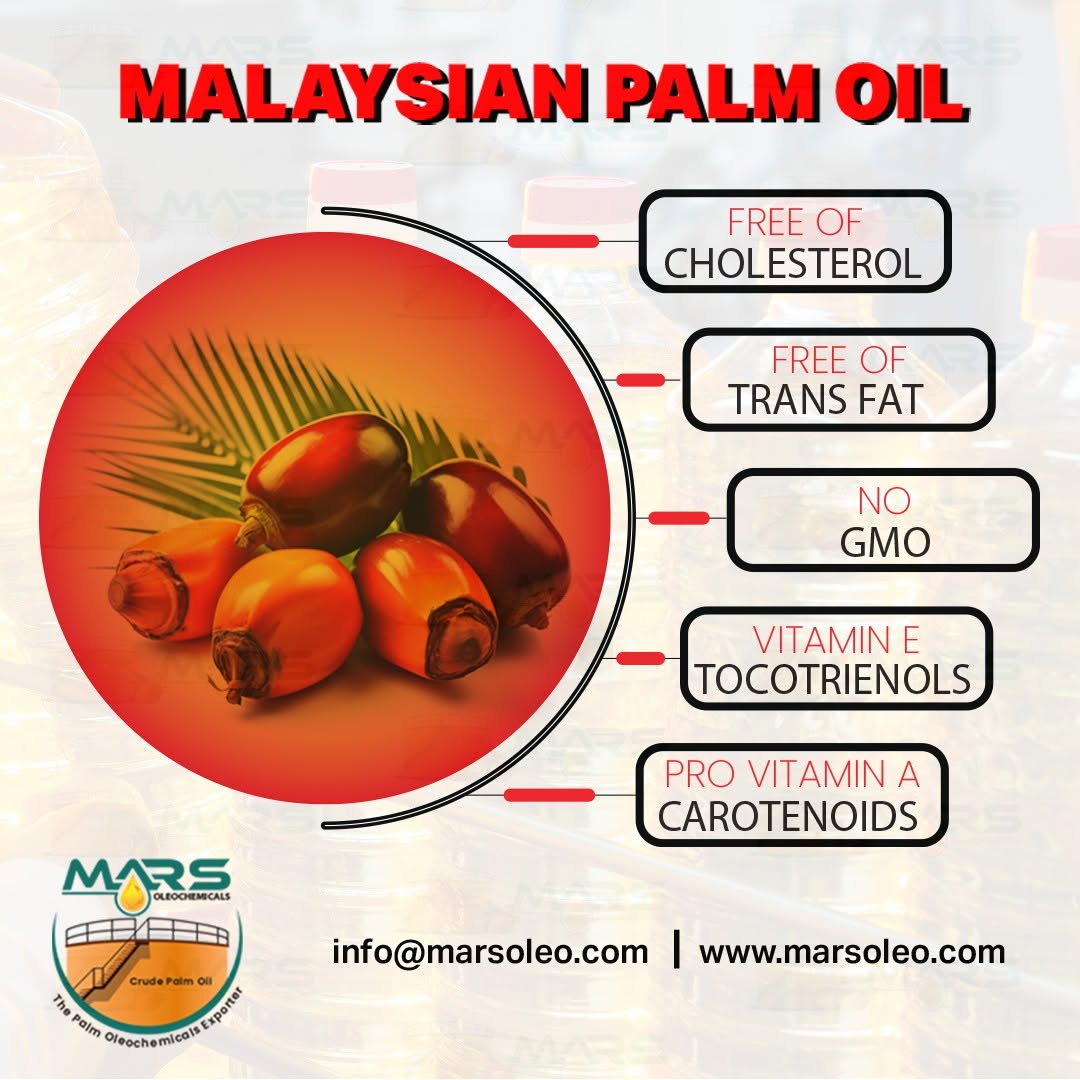
Malaysian Palm Oil is a widely used vegetable oil obtained from the fleshy mesocarp of oil palm fruits (Elaeis guineensis). Recognized for its versatility, functional properties and established global supply chain, palm oil plays an important role in household cooking, food manufacturing, bakery products, margarine, shortening and oleochemical production. Naturally cholesterol-free and essentially free of trans fatty acids when non-hydrogenated, Malaysian palm oil provides manufacturers with a vegetable-derived ingredient suitable for numerous food processing applications. Its balanced combination of saturated and unsaturated fatty acids contributes to its characteristic semi-solid consistency and functional stability.
One of the distinguishing characteristics of Malaysian Palm Oil is the presence of naturally occurring minor components, particularly Vitamin E Tocopherols, Tocotrienols and Carotenoids. Crude palm oil contains orange-red pigments, including beta-carotene and alpha-carotene, which possess provitamin A activity. Specially processed Red Palm Oil retains substantial amounts of these carotenoids and vitamin E compounds, while conventional refining removes most carotenoids and can reduce vitamin E concentrations. These nutritional properties are important for understanding the differences between crude, red and refined palm oil products.

Malaysian palm oil's nutritional properties, vitamin E, carotenoids, advantages and food industry applications.
Palm Oil Advantages and Applications extend across the food and industrial sectors. Its natural consistency makes it useful for producing cooking oils, bakery fats, confectionery ingredients, margarine, vegetable shortening and specialty fat blends. Palm oil can be fractionated into products such as Palm Olein and Palm Stearin, providing additional flexibility for manufacturers seeking specific melting characteristics and processing performance. Beyond food production, palm-based feedstocks support the manufacturing of Fatty Acids, Fatty Alcohols, Refined Glycerine, Soap Noodles, Surfactants and other Oleochemical Derivatives.
Mars Oleochemicals Sdn. Bhd., a Malaysian palm oil and oleochemicals exporter, connects international markets with a diversified portfolio of palm-based products and industrial raw materials. The company supports global buyers seeking suitable vegetable oils, specialty fats and oleochemical ingredients for food, personal care and industrial applications. Through product knowledge, specification-based sourcing and export services, Mars Oleochemicals contributes to the international supply of Malaysian palm-derived products while recognizing the importance of responsible sourcing, traceability and product quality.
Visit our website at www.marsoleo.com For product requirements, technical documentation, commercial information and international export inquiries, please email us at info@marsoleo.com.
What are the main nutritional advantages of Malaysian Palm Oil? Malaysian Palm Oil is naturally cholesterol-free and essentially trans-fat-free when non-hydrogenated. It also contains naturally occurring vitamin E compounds. Crude and specially refined red palm oil contain carotenoids with provitamin A activity.
Is Malaysian Palm Oil naturally free from cholesterol and trans fats? Yes. Palm oil is a plant-derived vegetable oil and naturally contains no dietary cholesterol. Non-hydrogenated palm oil is essentially free from trans fatty acids. However, palm oil contains saturated fat, which should be considered as part of overall dietary intake.
Does Malaysian Palm Oil contain Vitamin E Tocotrienols? Yes. Palm oil naturally contains vitamin E compounds, including tocotrienols and tocopherols. Their concentrations depend on the oil's processing history, with crude and specially processed red palm oil generally retaining more of these components than heavily refined products.
What is the difference between Red Palm Oil and Refined Palm Oil? Red Palm Oil undergoes processing designed to preserve its natural orange-red carotenoid pigments and other minor components. Conventionally refined palm oil is generally pale yellow because much of its carotenoid content is removed during bleaching and deodorization.
What are the main food and industrial applications of Malaysian Palm Oil? Malaysian Palm Oil is used in cooking oils, margarine, shortening, bakery fats, confectionery ingredients, specialty vegetable fat blends and processed foods. It also supplies feedstocks for fatty acids, fatty alcohols, glycerine, soap noodles, surfactants and other oleochemical products.







Home :: Products :: Enquiry :: Contact Us :: Site Map
Copyright All Rights Reserved © 2025. Mars Oleochemicals :: Disclaimer :: Privacy Policy