


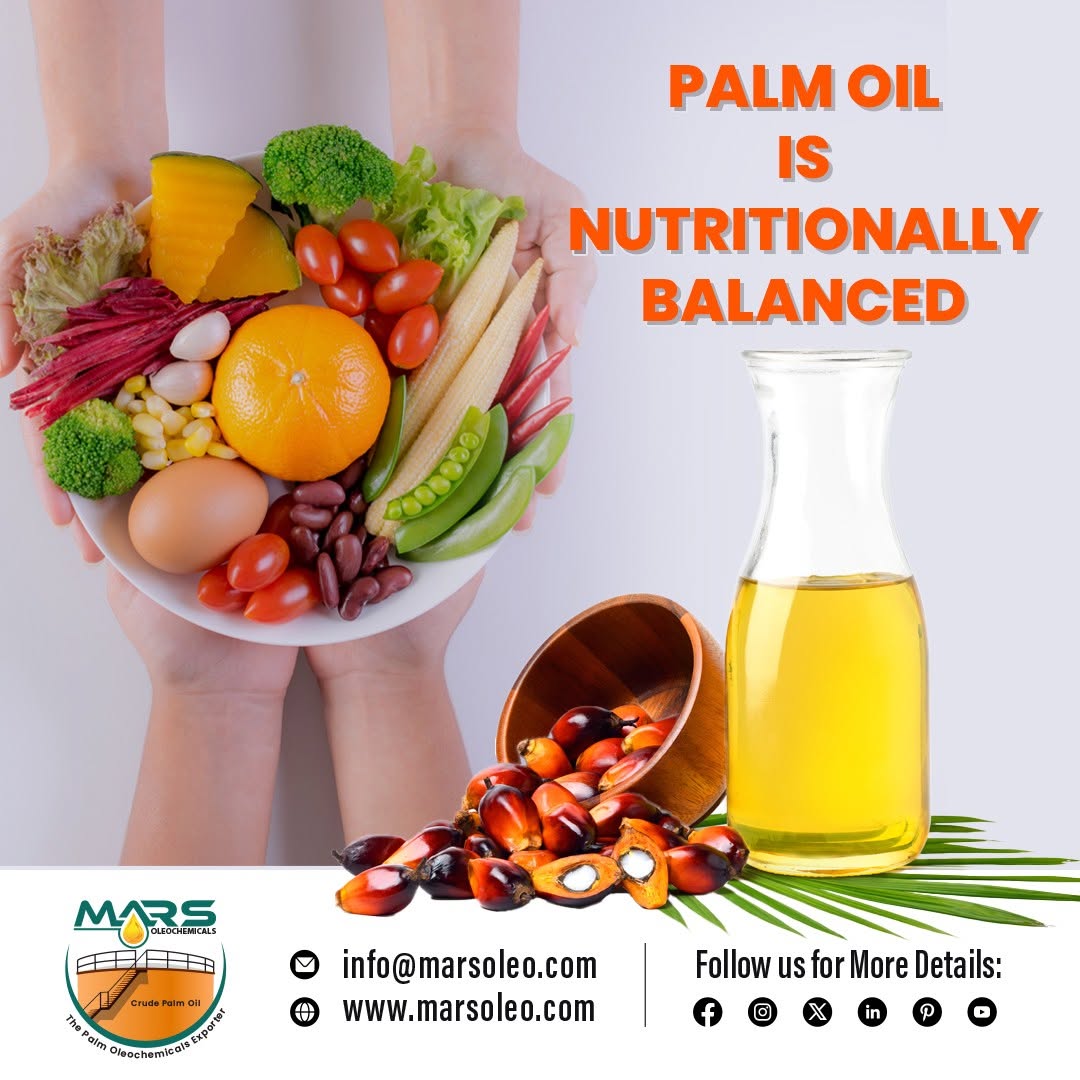
Malaysian Palm Oil is a plant-derived vegetable oil extracted from the fleshy mesocarp of oil palm fruit (Elaeis guineensis). It contains a combination of saturated and unsaturated fatty acids that contributes to its physical characteristics and wide range of food manufacturing applications. According to the Malaysian Palm Oil Council (MPOC), conventional palm oil contains approximately 50% saturated fatty acids and 50% unsaturated fatty acids, including around 40% monounsaturated fat and 10% polyunsaturated fat. Its principal fatty acids include palmitic acid, oleic acid, linoleic acid and stearic acid. This composition contributes to palm oil's semi-solid consistency and its functionality in cooking oils, margarines, bakery shortenings and specialty food fats. Palm oil is naturally cholesterol-free and supplies dietary energy like other edible oils. However, its approximate balance between saturated and unsaturated fatty acids should not be interpreted as evidence that it is nutritionally superior to oils containing a higher proportion of unsaturated fats.
Palm oil naturally contains compounds belonging to the vitamin E family, including tocopherols and tocotrienols, which are studied for their antioxidant properties and roles in food science. Crude Palm Oil also contains naturally occurring carotenoid pigments, particularly beta-carotene and alpha-carotene, which contribute to its distinctive orange-red appearance. Certain carotenoids possess provitamin A activity because the human body can convert them into vitamin A. The retention of these compounds depends substantially on the oil's processing method. Red Palm Oil is produced using specialized refining techniques designed to preserve more naturally occurring carotenoids and other minor components. In contrast, conventional Refined, Bleached and Deodorized (RBD) Palm Oil undergoes processing that removes most natural carotenoid pigments and may reduce some vitamin E compounds. Consequently, nutritional descriptions such as rich in carotenoids or vitamin E should be linked to the actual commercial grade and supported by suitable analytical information.

Palm oil combines saturated and fats nutritional suitability depends on processing and dietary context.
The nutritional suitability of palm oil depends on its fatty acid composition, the quantity consumed, the foods it replaces and the overall dietary pattern. Although palm oil contains oleic and linoleic acids, it also contains a substantial proportion of saturated fatty acids, principally palmitic acid. The World Health Organization (WHO) recommends limiting saturated fatty acid intake to no more than 10% of total dietary energy and emphasizes replacing saturated fats with appropriate unsaturated fats. The American Heart Association (AHA) similarly recommends prioritizing unsaturated fat sources for cardiovascular health. Palm oil should therefore not be promoted as preventing heart disease or automatically improving cardiovascular health. Like other edible fats, palm oil can contribute to the absorption of fat-soluble vitamins when included in suitable foods. Its nutritional role is best described through factual information about fatty acid composition, vitamin E, carotenoid retention and food functionality rather than broad therapeutic claims.
Mars Oleochemicals Sdn. Bhd. supports international sourcing and export enquiries for Malaysian palm oil, palm-derived oleochemicals and related specialty ingredients. Its published palm oil portfolio includes Crude Palm Oil, RBD Palm Oil, RBD Palm Olein and RBD Palm Stearin, which serve different refining, food manufacturing and industrial processing requirements. Refined palm oil and palm olein are used in selected cooking and frying applications, while palm stearin provides higher-melting characteristics relevant to bakery shortenings, margarines and specialty fat formulations. Food manufacturers should select the appropriate grade based on its fatty acid composition, physical properties, refining specifications, intended application and applicable food safety requirements. Where nutritional claims are required, the actual product composition and regulatory labeling requirements should be verified. Businesses researching Malaysian palm oil nutrition, vegetable oil characteristics and palm oil export products can visit our website at www.marsoleo.com For product requirements, technical documentation, commercial information and international export inquiries, please email us at info@marsoleo.com.
Is Malaysian palm oil nutritionally balanced? Malaysian palm oil has an approximate fatty acid composition of 50% saturated and 50% unsaturated fats. This describes its chemical profile rather than proving that palm oil is nutritionally superior to other oils. Its suitability within a diet depends on the overall eating pattern, the foods it replaces and saturated-fat intake.
What are the main fatty acids found in Malaysian palm oil? The main fatty acids are palmitic acid, oleic acid, linoleic acid and stearic acid. Typical palm oil contains approximately 44-45% palmitic acid, 39-40% oleic acid, 9-11% linoleic acid and 4-5% stearic acid. Actual composition depends on the oil grade and processing.
Does Malaysian palm oil contain vitamin E and carotenoids? Palm oil naturally contains vitamin E compounds, including tocopherols and tocotrienols. Crude Palm Oil and specially processed Red Palm Oil also contain carotenoids such as alpha-carotene and beta-carotene. Conventional RBD Palm Oil contains substantially fewer natural carotenoids because they are largely removed during refining.
Is Malaysian palm oil good for heart health? Palm oil contains both saturated and unsaturated fatty acids, but its substantial saturated-fat content means it should not automatically be described as heart-healthy. WHO and AHA recommend limiting saturated fats and prioritizing unsaturated fat sources. Cardiovascular health depends on the overall diet and other relevant factors.
How can food manufacturers source Malaysian palm oil from Mars Oleochemicals? Buyers should provide their required palm oil grade, technical specifications, quantity, packaging preference, intended application and destination port. Product availability, quality documentation and commercial arrangements should be confirmed for each transaction.











Home :: Products :: Enquiry :: Contact Us :: Site Map
Copyright All Rights Reserved © 2025. Mars Oleochemicals :: Disclaimer :: Privacy Policy


