


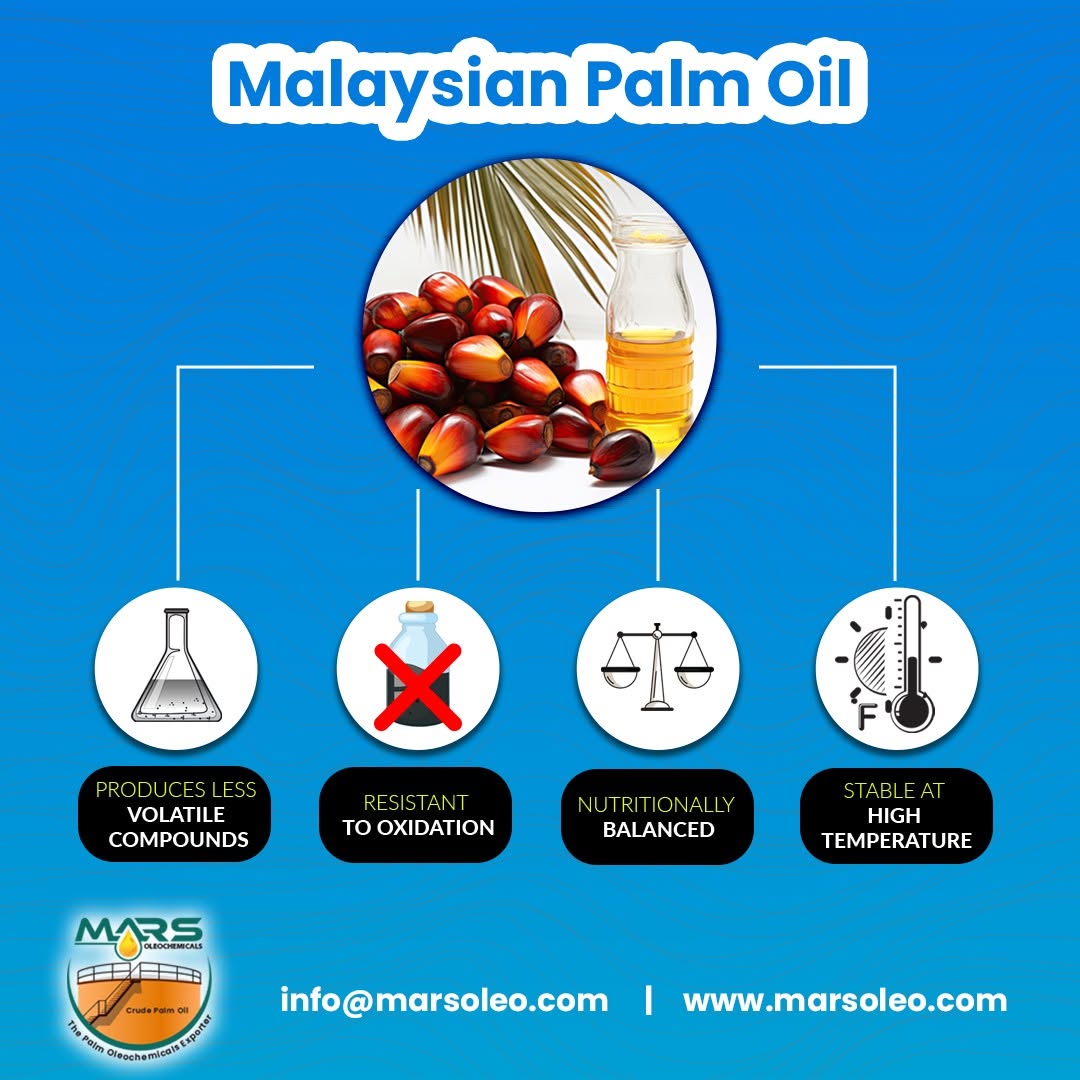
Malaysian palm oil is widely used across food manufacturing because of its functional versatility and ability to be refined and fractionated into products with different physical properties. RBD Palm Oil, Palm Olein and Palm Stearin can serve applications ranging from cooking oils and frying to margarine, shortening and specialty fats.
One important functional characteristic of palm oil is its useful oxidative stability. Its fatty-acid composition contains substantial saturated and monounsaturated components with comparatively moderate polyunsaturated content. This can provide useful resistance to oxidative deterioration during suitable food-processing conditions, although all edible oils gradually degrade during repeated heating.

Malaysian palm oil frying stability, oxidation resistance, functionality and balanced fatty-acid composition for manufacturers.
RBD Palm Olein is widely used in commercial frying because it remains liquid under normal operating conditions and provides useful thermal and oxidative performance. Frying quality still depends on good process management, including temperature control, oil turnover, removal of food debris and timely replacement of deteriorated oil.
The correct palm product depends on the intended application. Frying-oil manufacturers may require a specific Palm Olein cloud point, while bakery or shortening manufacturers may need Palm Oil, Palm Stearin or a specialty-fat system. Buyers should therefore specify product type, grade, technical parameters, volume, packaging and destination when requesting commercial supply.
What are the main functional benefits of Malaysian palm oil? Malaysian palm oil provides useful oxidative stability, high-temperature functionality, versatile fractionation and broad food-manufacturing applications.
Is palm oil resistant to oxidation? Palm oil has useful oxidative stability but is not completely resistant to oxidation. All edible oils oxidize progressively depending on processing and storage conditions.
Why does palm oil have good oxidative stability? Its fatty-acid composition contains significant saturated and monounsaturated fatty acids and comparatively moderate levels of polyunsaturated fatty acids.
Is palm oil stable at high temperatures? Palm oil and palm olein can perform well at typical frying temperatures, but prolonged or repeated heating still causes deterioration.
Is palm oil nutritionally balanced? A more precise description is that palm oil contains substantial proportions of both saturated and unsaturated fatty acids. Nutritional suitability depends on the complete diet and application.
Does palm oil produce fewer volatile compounds? Volatile-compound formation depends on the oil, temperature, duration, oxidation and frying conditions. Palm oil's oxidative stability can influence the formation of oxidation products.
Is Palm Olein suitable for frying? Yes. RBD Palm Olein is widely used for commercial cooking and frying applications.
What is the difference between Palm Oil and Palm Olein? Palm Olein is the more liquid fraction produced by fractionating palm oil and is particularly common in cooking and frying.
What is Palm Stearin? Palm Stearin is the more solid fraction obtained during palm-oil fractionation.
What is CP10 Palm Olein? CP10 is a commercial Palm Olein grade defined partly by its cloud-point requirement and is widely used for cooking and frying.
What is the difference between CP10, CP8 and CP6? Lower-cloud-point grades such as CP8 and CP6 provide improved low-temperature clarity compared with CP10.
Does Mars Oleochemicals supply Malaysian Palm Oil? Yes. Mars Oleochemicals supplies multiple Malaysian palm-oil products for international commercial requirements.
What Palm Olein grades does Mars Oleochemicals supply? The portfolio includes RBD Palm Olein CP10, CP8 and CP6.
How can buyers request Malaysian Palm Oil? Buyers can provide the required product, grade, specification, quantity, packaging, intended application and destination to info@marsoleo.com.











Home :: Products :: Enquiry :: Contact Us :: Site Map
Copyright All Rights Reserved © 2025. Mars Oleochemicals :: Disclaimer :: Privacy Policy


