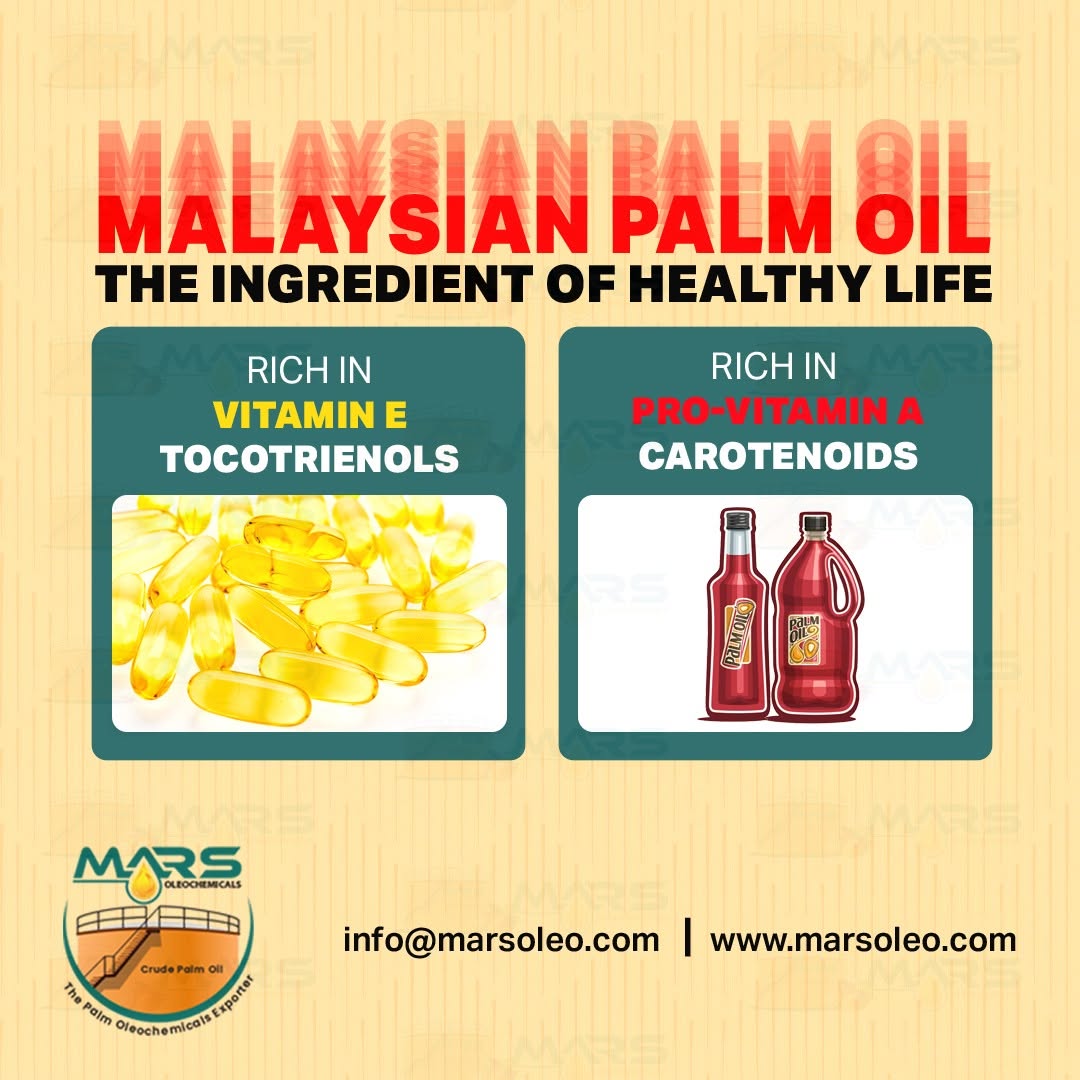
Malaysian Palm Oil is a widely used vegetable oil valued for its versatility, processing characteristics and naturally occurring nutritional components. Extracted from the fleshy part of the oil palm fruit (Elaeis guineensis), palm oil contains a combination of saturated and unsaturated fatty acids along with minor components such as Vitamin E Tocopherols, Tocotrienols and Carotenoids. These nutrients have attracted scientific interest because of their antioxidant-related functions and potential applications in food and nutritional formulations. Mars Oleochemicals Sdn. Bhd., Malaysia, promotes the versatility of palm oil and palm-based products for international food manufacturing and industrial markets.
Vitamin E Tocotrienols are naturally occurring compounds found in palm oil alongside tocopherols. They belong to the vitamin E family, which contains eight naturally occurring forms. Vitamin E compounds have antioxidant activity and contribute to the protection of cells against oxidative damage. Red palm oil is particularly interesting because specialized refining processes can preserve significant quantities of the vitamin E compounds originally found in crude palm oil. The concentrations of tocotrienols and tocopherols depend on the palm oil grade, refining conditions, processing methods and storage history. These distinctions are important when evaluating palm oil products for nutritional or functional food applications.

Malaysian palm oil's vitamin E tocotrienols, red palm oil carotenoids, nutritional benefits and applications.
Provitamin A Carotenoids, particularly Beta-Carotene and Alpha-Carotene, are responsible for much of the distinctive red-orange colour of crude and red palm oil. The human body can convert these carotenoids into vitamin A, an essential nutrient involved in normal vision, immune function and growth. Unlike conventional Refined, Bleached and Deodorized (RBD) Palm Oil, specially processed Red Palm Oil is designed to retain a substantial proportion of its original carotenoids. This makes red palm oil a potential ingredient for selected food fortification, specialty nutrition and functional food applications. Nutrient retention depends on processing and cooking conditions, and nutritional value should be assessed alongside the oil's saturated fat content and the overall dietary pattern.
At Mars Oleochemicals Malaysia, our palm-based product portfolio supports international buyers seeking Palm Oil Products, Refined Vegetable Oils, Specialty Fats, Fatty Acids, Fatty Alcohols, Refined Glycerine and other Oleochemical Derivatives. Through specification-focused sourcing, export documentation and international trade coordination, the company connects global manufacturers with suitable Malaysian palm-based raw materials. The nutritional significance of palm oil's natural minor components demonstrates the diverse value of the oil palm fruit, while responsible sourcing and appropriate processing remain important considerations. Mars Oleochemicals continues to support international awareness of Malaysian palm oil, its industrial versatility and its applications across food and chemical manufacturing.
Visit our website at www.marsoleo.com For product requirements, technical documentation, commercial information and international export inquiries, please email us at info@marsoleo.com.
What are the main nutritional advantages of Malaysian Palm Oil? Malaysian palm oil naturally contains vitamin E compounds, including tocotrienols and tocopherols. Crude and specially refined red palm oil also contain provitamin A carotenoids, particularly alpha-carotene and beta-carotene. The amounts depend on the type of oil and refining process.
What are Vitamin E Tocotrienols, and why are they important? Tocotrienols belong to the vitamin E family and occur naturally in palm oil. They have antioxidant properties and are studied for various biological functions. However, potential health effects should not be interpreted as proof that consuming palm oil prevents or treats diseases.
How do Provitamin A Carotenoids in Red Palm Oil benefit nutrition? Red palm oil contains provitamin A carotenoids, including beta-carotene and alpha-carotene. The human body can convert these compounds into vitamin A, which is important for normal vision, immune function and growth. The nutritional contribution depends on the amount consumed and the product's carotenoid content.
Does conventional refined palm oil contain the same carotenoids as red palm oil? No. Conventional refining removes or degrades most of the carotenoids naturally present in crude palm oil. Red palm oil is specially processed to preserve substantial carotenoid concentrations, giving it its characteristic red-orange appearance.
What are the major applications of Malaysian Palm Oil? Malaysian palm oil is used in cooking oils, food manufacturing, bakery fats, margarines, shortenings and edible oil blends. Specialty red palm oil can be used in selected food and nutrition-oriented products. Palm oil and its fractions also serve as important feedstocks for soap and oleochemical manufacturing.











Home :: Products :: Enquiry :: Contact Us :: Site Map
Copyright All Rights Reserved © 2025. Mars Oleochemicals :: Disclaimer :: Privacy Policy