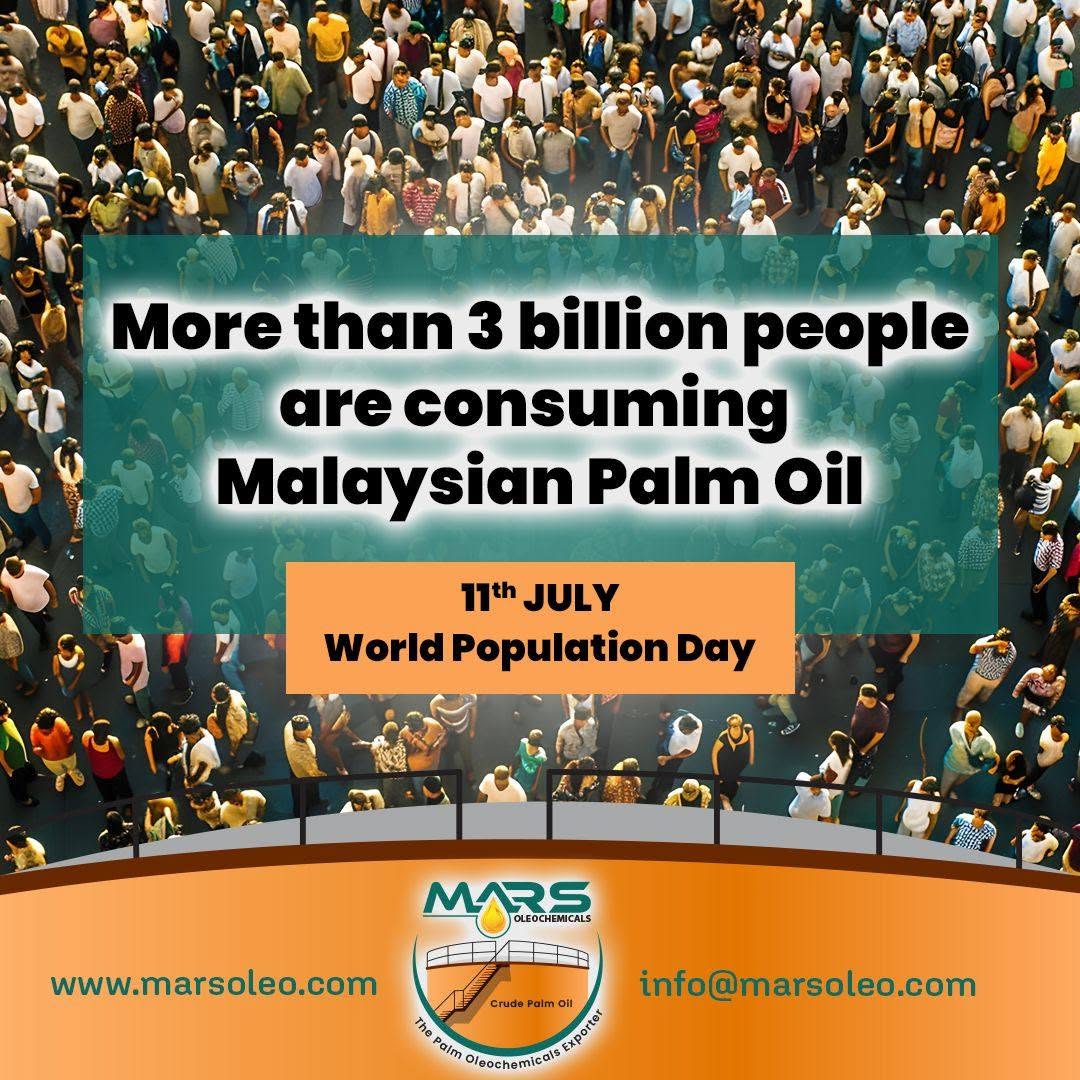
World Population Day is observed annually on 11 July. The United Nations established the observance to increase awareness of population-related questions and their links with development, health, resources and the environment. It also provides an opportunity to consider how essential products, food systems and international trade serve growing and changing populations.
The Malaysian Palm Oil Council reports that Malaysian palm oil feeds more than 3 billion people in over 150 countries. This figure demonstrates the industry's broad reported international reach, but it should be attributed to MPOC rather than presented as a precise live count of individual consumers. Market demand and consumption patterns vary substantially between countries.

Malaysian palm oil reportedly feeds over three billion people across more than 150 countries worldwide.
Palm oil is versatile because it can be refined, fractionated and blended into products with different physical characteristics. Palm olein provides a liquid fraction commonly used for cooking and frying, while palm stearin supports margarine, shortening, bakery fats and solid-food formulations. Palm-based ingredients are also used in confectionery, ice cream, bakery products and convenience foods.
Mars Oleochemicals Sdn. Bhd. supplies Malaysian palm oil and palm-based oleochemical products to international manufacturers, importers and distributors. Buyers can request specifications, packing options, product availability and export quotations for RBD Palm Oil, RBD Palm Olein, RBD Palm Stearin and related palm-based products.
1. What is World Population Day? World Population Day is a United Nations observance that promotes awareness of population issues and their relationship with development, health, resources and the environment.
2. When is World Population Day observed? World Population Day is observed annually on 11 July.
3. Does Malaysian palm oil reach more than three billion people? The Malaysian Palm Oil Council reports that Malaysian palm oil feeds more than three billion people across more than 150 countries. The figure should be presented as an industry-reported estimate rather than an independently verified live consumer count.
4. Why is Malaysian palm oil used across many countries? Malaysian palm oil is used internationally because it can be refined, fractionated and blended into liquid and solid products suitable for cooking, frying, bakery, confectionery and processed-food applications.
5. Which food products commonly use palm oil? Palm oil and its fractions are used in cooking oils, frying oils, margarine, shortening, bakery products, confectionery, instant noodles, ice cream, spreads and other processed foods.
6. What is the difference between RBD Palm Oil, Palm Olein and Palm Stearin? RBD Palm Oil is refined palm oil. Palm olein is its liquid fraction and is commonly used for cooking and frying, while palm stearin is its more solid fraction and is used in margarine, shortening and bakery-fat formulations.
7. Does the three-billion figure mean every consumer uses the same amount? No. The figure describes estimated international reach across many markets. Consumption quantities, product types and purchasing patterns vary by country and population.
8. Where can buyers source Malaysian palm oil products? International buyers can contact Mars Oleochemicals Sdn. Bhd. for Malaysian palm-oil specifications, packing options, documentation, product availability and export quotations.







Home :: Products :: Enquiry :: Contact Us :: Site Map
Copyright All Rights Reserved © 2025. Mars Oleochemicals :: Disclaimer :: Privacy Policy