


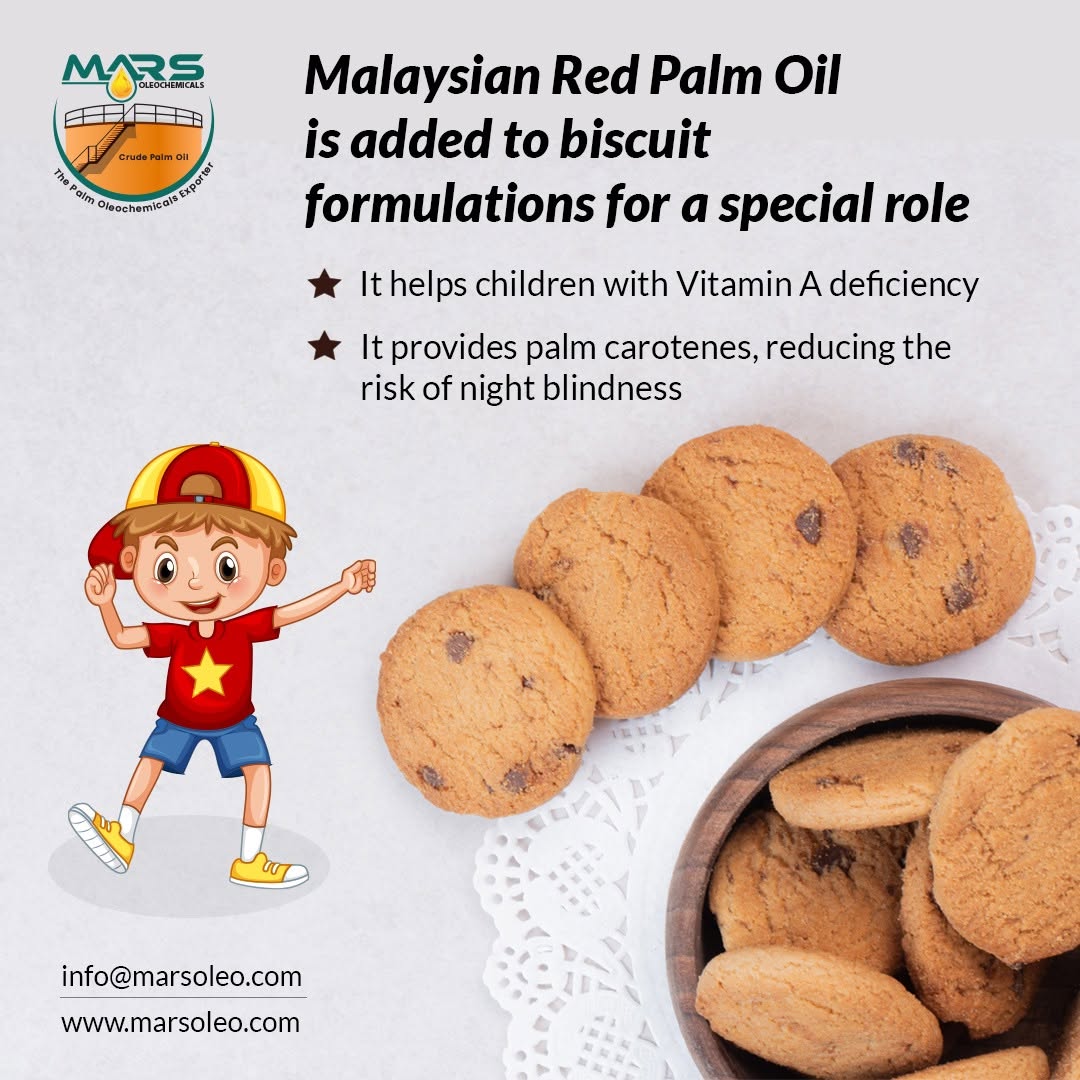
Malaysian Red Palm Oil is a carotenoid-rich edible vegetable oil derived from the fleshy mesocarp of oil palm fruit. Its distinctive orange-red appearance comes primarily from naturally occurring beta-carotene and alpha-carotene, which have provitamin A activity. These compounds can be converted by the human body into vitamin A, an essential nutrient involved in normal vision, immune function, growth and development. Unlike conventional refined palm oil, red palm oil and specially processed red palm olein are produced using methods designed to retain more naturally occurring carotenoid pigments. Food researchers have investigated the incorporation of red palm oil into biscuits, cookies and other bakery products as a way to introduce carotenoids into commonly consumed foods. The ingredient also contributes fat functionality, color and characteristics relevant to food formulation. Actual nutritional value depends on the grade of red palm oil, the amount used, its processing conditions and the carotenoid concentration remaining in the finished biscuit.
The use of red palm oil in biscuit formulations has been investigated in controlled studies involving schoolchildren with inadequate vitamin A status. A randomized trial published in 2001 found that biscuits containing red palm oil-derived beta-carotene improved vitamin A status compared with control biscuits, with results similar to biscuits containing a synthetic beta-carotene source. More recent research conducted in Malaysia and published in 2024 examined red palm olein-enriched biscuits among children with vitamin A deficiency. The study reported greater increases in circulating alpha- and beta-carotene levels in the experimental group, although improvements in serum retinol were not consistently superior to those observed in the control group. A 2025 Malaysian study also reported promising results for preventing certain vitamin A deficiency-related eye conditions. Vitamin A deficiency can cause night blindness, making adequate vitamin A intake important for normal visual function. However, these research findings relate to specific tested formulations and nutritional interventions. They do not mean that all commercially produced red palm oil biscuits prevent, cure or treat vitamin A deficiency or night blindness.

Red palm oil adds provitamin A carotenoids to biscuits, with nutritional outcomes depending on formulation.
Developing carotenoid-enriched biscuits with red palm oil requires careful evaluation of ingredient composition, baking performance, finished-product quality and shelf-life stability. Red palm oil and red palm olein can contribute natural pigmentation and fat functionality to suitable bakery formulations, but carotenoids are sensitive to oxidation and processing conditions. Baking temperature, heating duration, oxygen exposure, ingredient interactions and storage conditions may affect the amount of beta-carotene and alpha-carotene retained in the final product. Food manufacturers should therefore distinguish the carotenoid concentration of the original oil from the verified nutrient content of the baked biscuit. Relevant quality assessments may include total carotenoid analysis, beta-carotene and alpha-carotene measurement, peroxide value, fatty acid composition, sensory evaluation and packaging stability. The finished biscuit should also be evaluated for its overall nutritional composition, including saturated fat, sugar and energy content. Any statement describing the product as a source of vitamin A must be supported by actual nutrient analysis and comply with the labeling requirements of the destination market.
Mars Oleochemicals Sdn. Bhd. is a Malaysia-based exporter of palm oil, palm-derived oleochemicals and related industrial ingredients. The company's published portfolio includes Crude Palm Oil, RBD Palm Oil, RBD Palm Olein, RBD Palm Stearin and various palm-based chemical products serving different industrial sectors. Malaysian red palm oil and red palm olein are subjects of established research into carotenoid-containing edible oils and their potential use in specialized bakery formulations. Food manufacturers researching these ingredients should specify the required oil grade, carotenoid concentration, application, quantity, packaging preference, technical specifications and applicable food safety documentation. Product-specific availability, nutritional suitability and regulatory requirements must be verified before procurement. Businesses researching Malaysian Red Palm Oil, provitamin A carotenoids, bakery fat ingredients and specialized biscuit formulations can visit our website at www.marsoleo.com For product requirements, technical documentation, commercial information and international export inquiries, please email us at info@marsoleo.com.
Why is Malaysian red palm oil used in biscuit formulations? Malaysian red palm oil contains naturally occurring provitamin A carotenoids, particularly beta-carotene and alpha-carotene. Researchers have investigated its use in biscuits to provide carotenoids alongside the oil's fat functionality and natural color. The nutritional contribution depends on the ingredient grade, formulation and carotenoid retention during processing.
Can red palm oil biscuits help improve vitamin A status in children? Controlled studies have investigated red palm oil and red palm olein biscuits in children with inadequate vitamin A status. Some trials reported improved vitamin A-related measures, while results differed between studies and comparison groups. Findings from specially formulated research biscuits should not be generalized to ordinary commercial biscuits.
Can red palm oil biscuits prevent or treat night blindness? Vitamin A deficiency can cause night blindness, and adequate vitamin A intake is important for normal vision. Research has explored red palm olein-enriched biscuits for certain deficiency-related eye outcomes. However, ordinary red palm oil biscuits should not be promoted as independently preventing or treating night blindness. Children with suspected deficiency require appropriate medical assessment.
Does beta-carotene remain in biscuits after baking? Some beta-carotene and other carotenoids can remain in finished biscuits, but the retained amount depends on ingredient concentration, baking conditions, oxygen exposure, formulation and storage. Food manufacturers should test the final baked product rather than assuming the original oil's carotenoid content remains unchanged.
How can food manufacturers enquire about red palm oil and palm-based ingredients from Mars Oleochemicals? Enquiries should identify the required ingredient, carotenoid specifications, intended bakery application, quantity, packaging and destination. Availability of a particular red palm oil grade and its supporting documentation must be confirmed separately.










Home :: Products :: Enquiry :: Contact Us :: Site Map
Copyright All Rights Reserved © 2025. Mars Oleochemicals :: Disclaimer :: Privacy Policy


