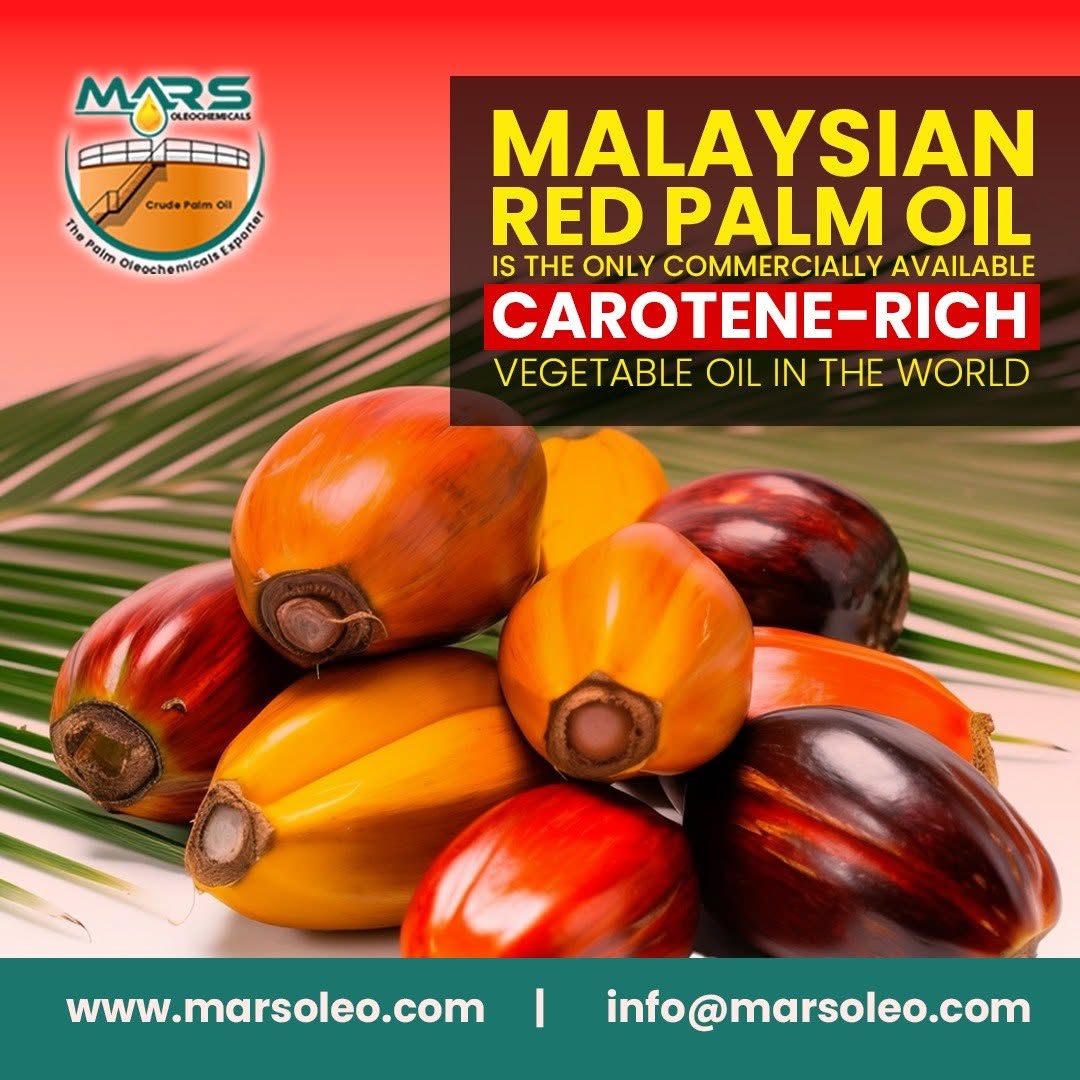
Malaysian Red Palm Oil is an edible palm oil produced using specialised refining techniques designed to retain more of the naturally occurring carotenoids and vitamin E compounds found in crude palm oil. Its characteristic red-orange colour comes mainly from carotenoids, including alpha-carotene and beta-carotene. Unlike conventional fully refined palm oil, which loses much of its natural colour during processing, red palm oil is processed under milder conditions to preserve valuable minor components.
Oil palm fruits naturally contain high concentrations of carotenoid pigments. Research on commercial Malaysian red palm olein reported average carotene content of approximately 665 ppm, with alpha- and beta-carotene contributing around 80% of the total identified carotenoids. Exact levels depend on the source of the oil, processing method, storage conditions and final product specification.

Red palm oil also contains vitamin E compounds, primarily tocopherols and tocotrienols.
Red palm oil also contains vitamin E compounds, primarily tocopherols and tocotrienols. Malaysian Palm Oil Board research describes red palm olein as containing substantial vitamin E, much of it in tocotrienol form. Other naturally occurring minor constituents may include phytosterols, squalene and coenzyme Q10. Their concentration varies according to the oil grade and processing conditions.
Red palm oil may be used in cooking oils, spreads, shortenings, bakery products, sauces, soups, nutritional food products and food formulations where its natural colour and oil characteristics are desirable. Manufacturers must evaluate colour intensity, flavour, oxidative stability, melting profile and nutritional composition according to the intended application. Mars Oleochemicals supplies Malaysian palm oil products for commercial buyers, subject to grade, specification and availability.
1. Why is red palm oil red? Its red-orange colour comes from naturally occurring carotenoids, mainly alpha-carotene and beta-carotene, retained through specialised processing.
2. Does red palm oil contain beta-carotene? Yes. Commercial red palm olein contains beta-carotene and alpha-carotene, which together represent a major proportion of its total carotenoid content.
3. Does red palm oil contain vitamin E? Yes. Red palm oil naturally contains vitamin E compounds, including tocopherols and tocotrienols. The amount varies according to grade and processing.
4. Is red palm oil the only carotene-rich vegetable oil? It is better described as a commercially available carotene-rich vegetable oil. The absolute claim that it is the only one available worldwide cannot be reliably substantiated.
5. What is Malaysian Red Palm Oil used for? It may be used in cooking oils, spreads, margarine, shortening, bakery products, sauces, soups, nutritional formulations and speciality food products.









Home :: Products :: Enquiry :: Contact Us :: Site Map
Copyright All Rights Reserved © 2025. Mars Oleochemicals :: Disclaimer :: Privacy Policy