


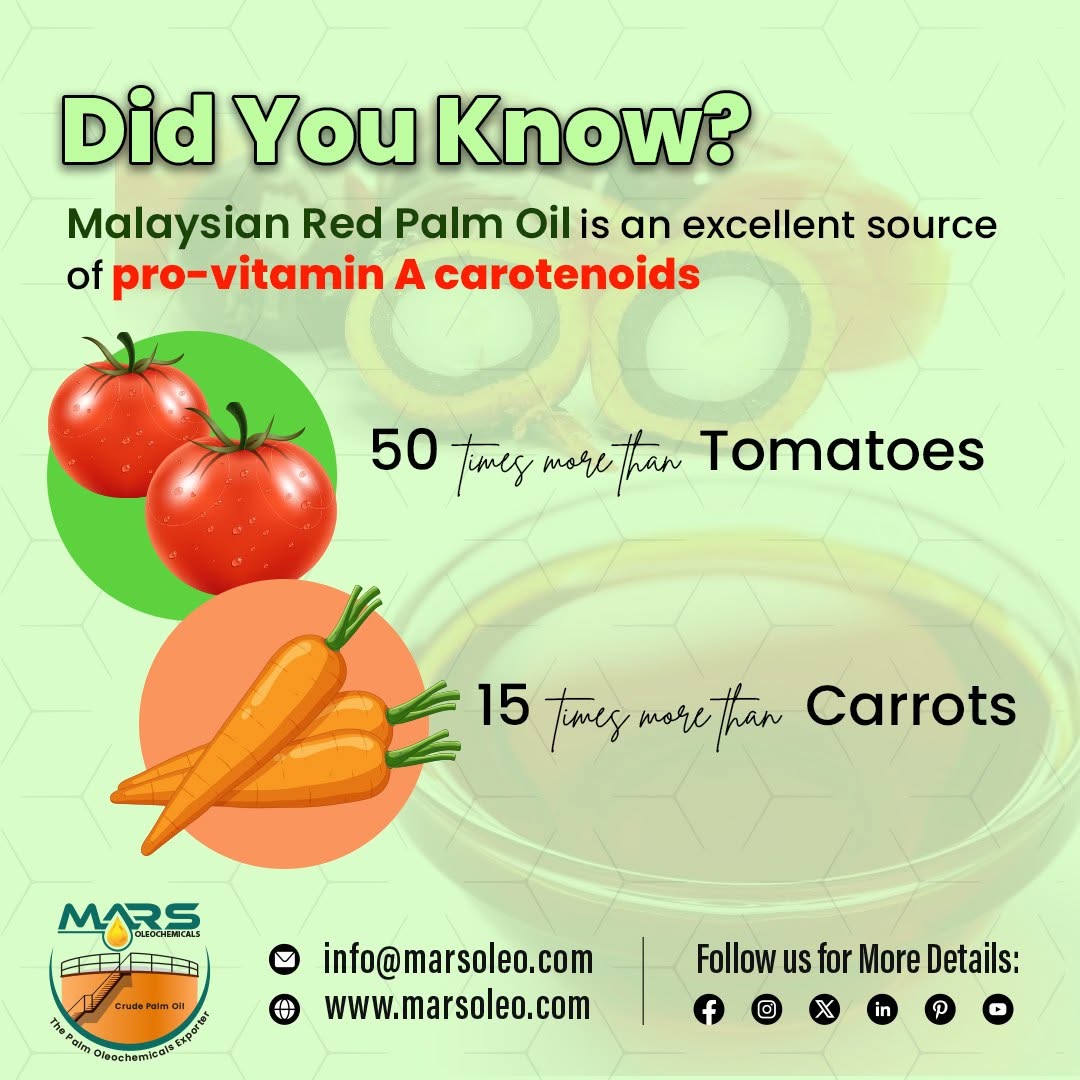
Malaysian Red Palm Oil is a distinctive edible vegetable oil obtained from the mesocarp of oil palm fruit. Its characteristic orange-red colour results primarily from naturally occurring carotenoid pigments, especially beta-carotene and alpha-carotene. These compounds belong to the provitamin A carotenoid family because the human body can convert them into vitamin A, an essential nutrient involved in normal vision, immune function, growth and development. Unlike conventional refined, bleached and deodorized palm oil, red palm oil is produced using specialized refining techniques designed to retain a greater proportion of naturally occurring carotenoids and vitamin E compounds. Published research has identified palm oil as a concentrated natural source of these pigments, making red palm oil an interesting ingredient for food science, nutritional research and specialty edible oil applications. Its actual carotenoid concentration depends on the original feedstock, processing conditions, storage and final product grade.
The carotenoid content of red palm oil compared with carrots and tomatoes has attracted interest because of its potential contribution to provitamin A nutrition. The Malaysian Palm Oil Council (MPOC) publishes a comparison indicating that red palm oil provides approximately 15 times the provitamin A retinol equivalents of carrots and 50 times those of tomatoes, when comparing equivalent quantities. These figures illustrate the high provitamin A activity associated with certain red palm oil compositions, but they should not be interpreted as fixed nutrient ratios for every commercial product. Other scientific publications report different comparative values, particularly for tomatoes, because food composition, analytical methods and reference measurements can vary. It is also important to distinguish total carotenoid concentration from provitamin A activity. For example, tomatoes contain lycopene, which contributes to their red colour but cannot be converted into vitamin A. Accurate scientific comparisons should therefore identify the nutrient being measured, the quantity compared and the applicable analytical basis.

Red palm oil retains carotenoids including beta-carotene that the body can convert into vitamin A.
Beta-carotene and alpha-carotene are important components of the natural carotenoid profile of red palm oil. Both have provitamin A activity, although beta-carotene has greater vitamin A activity per unit of mass than alpha-carotene under standard dietary conversion factors. Vitamin A contributes to normal visual function, immune function and growth and development, while carotenoids are studied for their antioxidant characteristics. Red palm oil also contains naturally occurring vitamin E compounds, including tocopherols and tocotrienols, depending on the processing method. Scientific research has investigated the use of red palm oil in food-based strategies intended to improve vitamin A status, but the results depend on the population, dietary intake and product composition. A high carotenoid concentration does not establish that red palm oil prevents illness or enhances immune performance. Its nutritional contribution should be evaluated within an overall balanced diet, taking into account its energy and saturated fatty acid content.
Red palm oil is used in selected food applications where its natural carotenoid pigments, characteristic colour and edible oil properties are desirable. Suitable grades may be incorporated into cooking oil blends, margarine, spreads, bakery products, sauces, prepared foods and specialty nutrition-oriented formulations. Food manufacturers evaluating carotenoid-rich palm oil should review the actual beta-carotene and alpha-carotene concentrations, total carotenoid content, fatty acid profile, free fatty acid level, peroxide value and applicable food safety specifications. Nutrient retention during processing and storage should also be considered, particularly when developing formulations that emphasize provitamin A activity. Mars Oleochemicals Sdn. Bhd. is a Malaysian exporter of palm oil and palm-derived products, supporting international business interest in Malaysia's palm oil industry. Manufacturers, distributors and ingredient buyers researching red palm oil and related vegetable oil products can visit our website at www.marsoleo.com For product requirements, technical documentation, commercial information and international export inquiries, please email us at info@marsoleo.com.
Does Malaysian red palm oil contain 15 times more carotenoids than carrots and 50 times more than tomatoes? The Malaysian Palm Oil Council publishes a comparison indicating approximately 15 times the provitamin A retinol equivalents of carrots and 50 times those of tomatoes for equal quantities of red palm oil. These are published comparative estimates, not guaranteed ratios for every product. Total carotenoids and provitamin A activity are different measurements, and other scientific publications report different comparison figures.
What are the main provitamin A carotenoids in Malaysian red palm oil? The main provitamin A carotenoids in Malaysian red palm oil include beta-carotene and alpha-carotene. These natural pigments contribute to its orange-red colour and can be converted by the human body into vitamin A. Beta-carotene generally has greater vitamin A activity per unit of mass than alpha-carotene.
How much carotenoid content can Malaysian red palm oil contain? Carotenoid concentrations depend on oil palm fruit composition, refining conditions, storage and finished-product grade. MPOB has reported approximately 500-700 ppm carotenoids in crude palm oil, while studies of specially processed red palm oil and red palm olein have reported varying concentrations. The actual content of a commercial product should be verified using appropriate analytical documentation.
Is red palm oil more nutritious than conventional RBD Palm Oil? Red palm oil generally retains substantially more natural carotenoids than conventional RBD Palm Oil because it undergoes specialized processing designed to preserve those pigments. It can therefore provide more provitamin A carotenoids. However, overall nutritional suitability depends on the complete fatty acid composition, serving size and wider dietary context; greater carotenoid content does not establish that it is universally healthier.
How can international food manufacturers inquire about Malaysian red palm oil and related products? Commercial inquiries should specify the required oil grade, carotenoid content, quantity, packaging preference, intended food application, destination port and relevant documentation requirements. Product-specific red palm oil availability and specifications must be confirmed before procurement.










Home :: Products :: Enquiry :: Contact Us :: Site Map
Copyright All Rights Reserved © 2025. Mars Oleochemicals :: Disclaimer :: Privacy Policy


