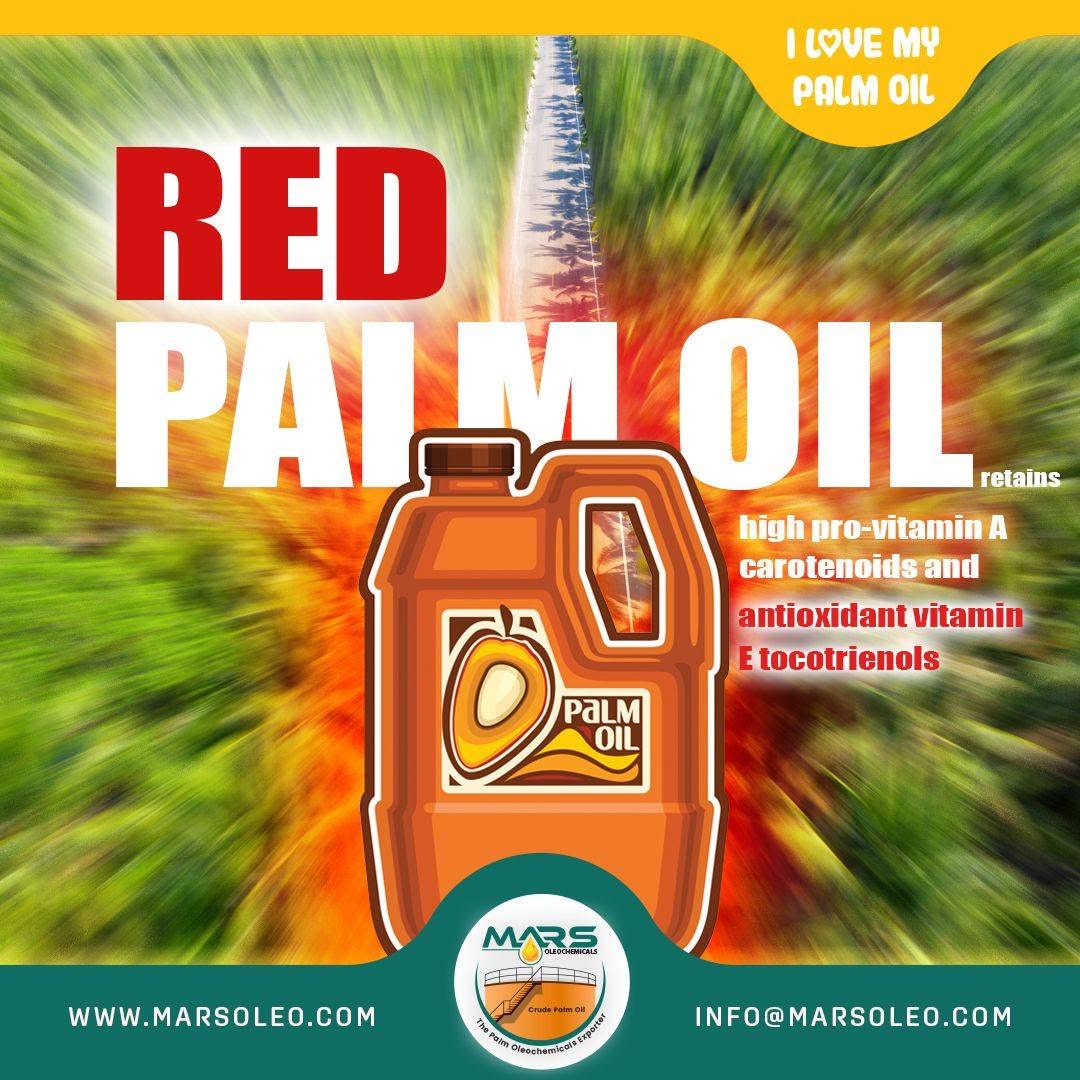
Malaysian red palm oil is an edible palm oil produced using specialised processing designed to retain more of the naturally occurring minor components found in crude palm oil. These include carotenoids and vitamin E compounds. The retained pigments give red palm oil its distinctive red-orange appearance and distinguish it from conventional fully refined palm oil, where much of the natural carotenoid colour is removed.
Palm oil naturally contains several carotenoids, with alpha-carotene and beta-carotene among the major forms. Both possess provitamin A activity, meaning the human body can convert them into vitamin A according to physiological needs. MPOB research on commercial red palm olein found an average carotene content of around 665 ppm, with alpha- and beta-carotene together accounting for approximately 80% of the measured carotenoids.

Malaysian Red Palm Oil carotenoids and vitamin E tocotrienols through specialised refining and processing.
Red palm oil naturally contains members of the vitamin E family, including tocopherols and tocotrienols. MPOB research measured approximately 717–863 ppm vitamin E in commercial red palm olein, with alpha-, gamma- and delta-tocotrienols representing a substantial portion. Exact levels vary by raw material, processing method, storage and commercial product specification.
Red palm oil can provide edible-oil functionality together with distinctive natural colour in appropriate formulations. Applications can include cooking oils, bakery fats, margarine, spreads, shortening, sauces, soups and specialty nutritional foods. Manufacturers should select grades according to required flavour, colour, melting properties, oxidative stability and documented nutrient composition.
What is Malaysian Red Palm Oil? Malaysian Red Palm Oil is an edible palm oil processed to retain more naturally occurring carotenoids and vitamin E compounds than conventional fully refined palm oil.
Why is red palm oil red? Its characteristic red-orange colour comes mainly from naturally occurring carotenoids retained during specialised processing.
What are the main carotenoids in red palm oil? Alpha-carotene and beta-carotene are major carotenoids in red palm oil and both have provitamin A activity.
What are provitamin A carotenoids? Provitamin A carotenoids are carotenoid compounds that the body can convert into vitamin A. Alpha-carotene and beta-carotene are examples.
Does Malaysian Red Palm Oil contain vitamin E? Yes. Red palm oil naturally contains vitamin E compounds, including tocopherols and tocotrienols.
What are tocotrienols? Tocotrienols are members of the vitamin E family. Palm oil is notable among vegetable oils for containing naturally occurring tocotrienols.
How much carotene can red palm olein contain? MPOB research on commercial red palm olein found an average carotene content of approximately 665 ppm, although actual product levels vary.
How much vitamin E can red palm olein contain? The same MPOB study reported total vitamin E levels of approximately 717-863 ppm in the commercial red palm olein samples examined.
What is Malaysian Red Palm Oil used for? Typical applications include cooking oils, margarine, spreads, shortening, bakery products, sauces, soups and selected nutritional formulations.
Is red palm oil the same as conventional RBD Palm Oil? No. Conventional refining removes much of palm oil's natural carotenoid colour, whereas red palm oil processing is designed to retain more carotenoids and vitamin E compounds.










Home :: Products :: Enquiry :: Contact Us :: Site Map
Copyright All Rights Reserved © 2025. Mars Oleochemicals :: Disclaimer :: Privacy Policy