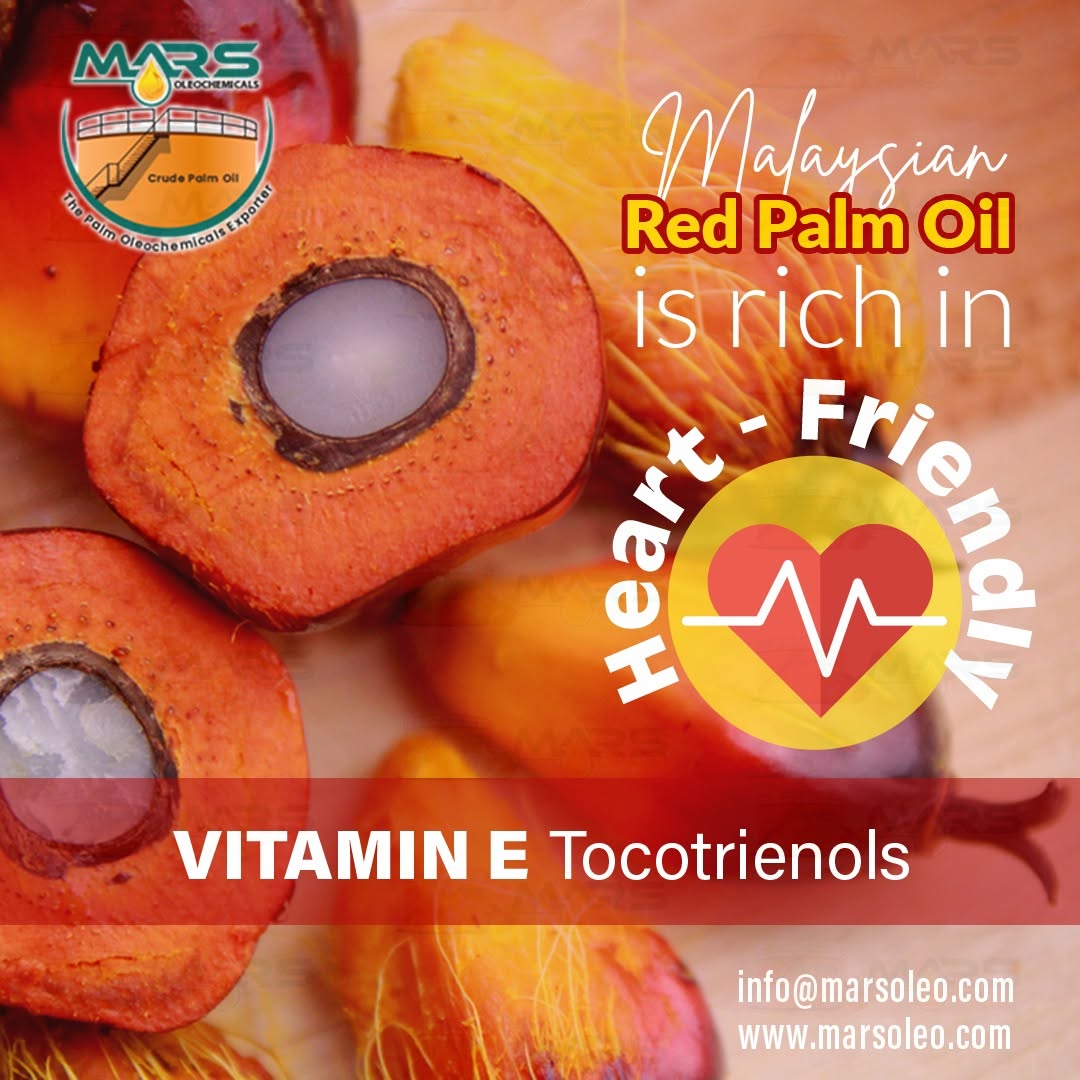
Malaysian Red Palm Oil is a distinctive palm-based vegetable oil recognized for its red-orange color and naturally occurring nutritional components.
Obtained from the fleshy mesocarp of oil palm fruit, Red Palm Oil contains carotenoids and Vitamin E compounds, including tocotrienols and tocopherols.
Unlike conventional refining processes that substantially reduce natural pigments, specialized Red Palm Oil processing methods help preserve important phytonutrients.
These characteristics make Red Palm Oil a subject of interest in food science, nutritional research and the development of selected specialty food products.
At Mars Oleochemicals Sdn. Bhd., Malaysia, we highlight the nutritional characteristics and industrial versatility of Malaysian palm oil and its derivatives.
Malaysian Red Palm Oil is a vegetable oil derived from the fruit of the African oil palm, scientifically known as Elaeis guineensis.
Its characteristic orange-red appearance comes primarily from naturally occurring carotenoids. The oil also contains Vitamin E compounds in the form of tocopherols and tocotrienols.
Specialized refining methods can preserve a greater proportion of these compounds compared with conventional refining processes. The concentration of individual nutrients depends on fruit quality, refining conditions, storage and product specifications.
Vitamin E refers to a family of fat-soluble compounds that includes tocopherols and tocotrienols. Red Palm Oil contains naturally occurring members of both groups.
These compounds contribute to the nutritional characteristics of the oil and are studied for their antioxidant activities.
Vitamin E plays a role in protecting cells against oxidative damage, although the effects of specific tocotrienols in human health continue to be investigated.
Tocotrienols are members of the Vitamin E family. Their chemical structures differ from tocopherols, particularly in the structure of their hydrocarbon side chains.
Palm oil is a recognized dietary source of several tocotrienol forms, including alpha-, gamma- and delta-tocotrienols. These compounds are investigated for their antioxidant activities and possible effects on biological processes.
Research into their potential cardiovascular, neurological and metabolic applications is ongoing.
The presence of tocotrienols in Red Palm Oil does not establish that consuming the oil will prevent or treat any specific disease.

Malaysian Red Palm Oil naturally contains Vitamin E tocotrienols and carotenoids, nutrients studied for their antioxidant.
Red Palm Oil naturally contains carotenoids and Vitamin E compounds associated with antioxidant activity. Alpha-carotene and beta-carotene contribute to its recognizable color.
These carotenoids can act as provitamin A compounds, meaning the body can convert them into Vitamin A according to physiological needs. Vitamin E compounds also contribute to antioxidant functions.
Together, these nutrients give Red Palm Oil a distinctive nutritional profile.
However, nutrient composition alone cannot establish specific clinical health outcomes.
Tocotrienols have attracted scientific interest because of their potential biological effects.
Experimental and clinical investigations have explored their relationship with oxidative stress, lipid metabolism and cardiovascular health indicators.
Evidence remains insufficient to conclude that ordinary Red Palm Oil consumption prevents cardiovascular disease. Red Palm Oil also contains saturated fatty acids, making overall dietary composition important.
Its nutritional role should therefore be assessed in the context of a balanced diet rather than as an isolated heart-protective ingredient.
Malaysian Red Palm Oil offers a combination of naturally occurring carotenoids, Vitamin E compounds and functional vegetable oil properties.
Its red-orange color provides a distinctive visual characteristic in selected food applications.
Controlled processing helps retain phytonutrients that may otherwise be reduced through conventional refining.
Its vegetable origin also makes it relevant to certain plant-based food formulations. Product quality and suitability depend on the manufacturing process and the intended application.
Malaysia has an established palm oil industry with processing expertise and international trade infrastructure.
Red Palm Oil is valued for its distinctive composition, including carotenoids and naturally occurring Vitamin E compounds.
When evaluating Red Palm Oil for commercial purposes, buyers should examine relevant product specifications, nutritional analyses, food safety requirements and sourcing documentation.
Mars Oleochemicals Sdn. Bhd. is an MPOB-licensed Malaysian exporter specializing in palm oil and palm-based oleochemical products.
We provide information on palm oil, its derivatives and their various industrial and food-related applications.
Visit our website at www.marsoleo.com For product requirements, technical documentation, commercial information and international export inquiries, please email us at info@marsoleo.com.
What makes Malaysian Red Palm Oil rich in Vitamin E? Malaysian Red Palm Oil naturally contains Vitamin E compounds, including tocotrienols and tocopherols. Specialized refining methods help preserve these compounds along with carotenoids, contributing to its distinctive nutritional composition.
What are tocotrienols in Red Palm Oil? Tocotrienols are members of the Vitamin E family found naturally in palm oil. They include alpha-, gamma- and delta-tocotrienols and are studied for antioxidant activity and other potential biological effects.
Is Malaysian Red Palm Oil good for heart health? Red Palm Oil contains Vitamin E compounds that are being researched for possible cardiovascular effects. However, there is insufficient evidence that consuming Red Palm Oil prevents heart disease. Its contribution to health depends on overall dietary patterns, including saturated fat intake.
What are the main nutritional benefits of Red Palm Oil? Red Palm Oil provides naturally occurring carotenoids, Vitamin E compounds and dietary fats. Alpha-carotene and beta-carotene can serve as provitamin A sources, while Vitamin E compounds contribute antioxidant activity. The specific nutritional impact depends on intake and dietary context.
What are the applications of Malaysian Red Palm Oil? Malaysian Red Palm Oil is used or investigated in selected cooking oils, food manufacturing, specialty food products, plant-based food formulations, nutritional research and functional food development. Applications depend on the product grade and technical requirements.











Home :: Products :: Enquiry :: Contact Us :: Site Map
Copyright All Rights Reserved © 2025. Mars Oleochemicals :: Disclaimer :: Privacy Policy