Myristic Acid is a straight-chain saturated fatty acid also known as tetradecanoic acid. It contains 14 carbon atoms, has the molecular formula C14H28O2 and CAS number 544-63-8, and normally appears as a white crystalline solid. C14-99 identifies a high-purity commercial grade containing at least 99% C14 fatty acid.
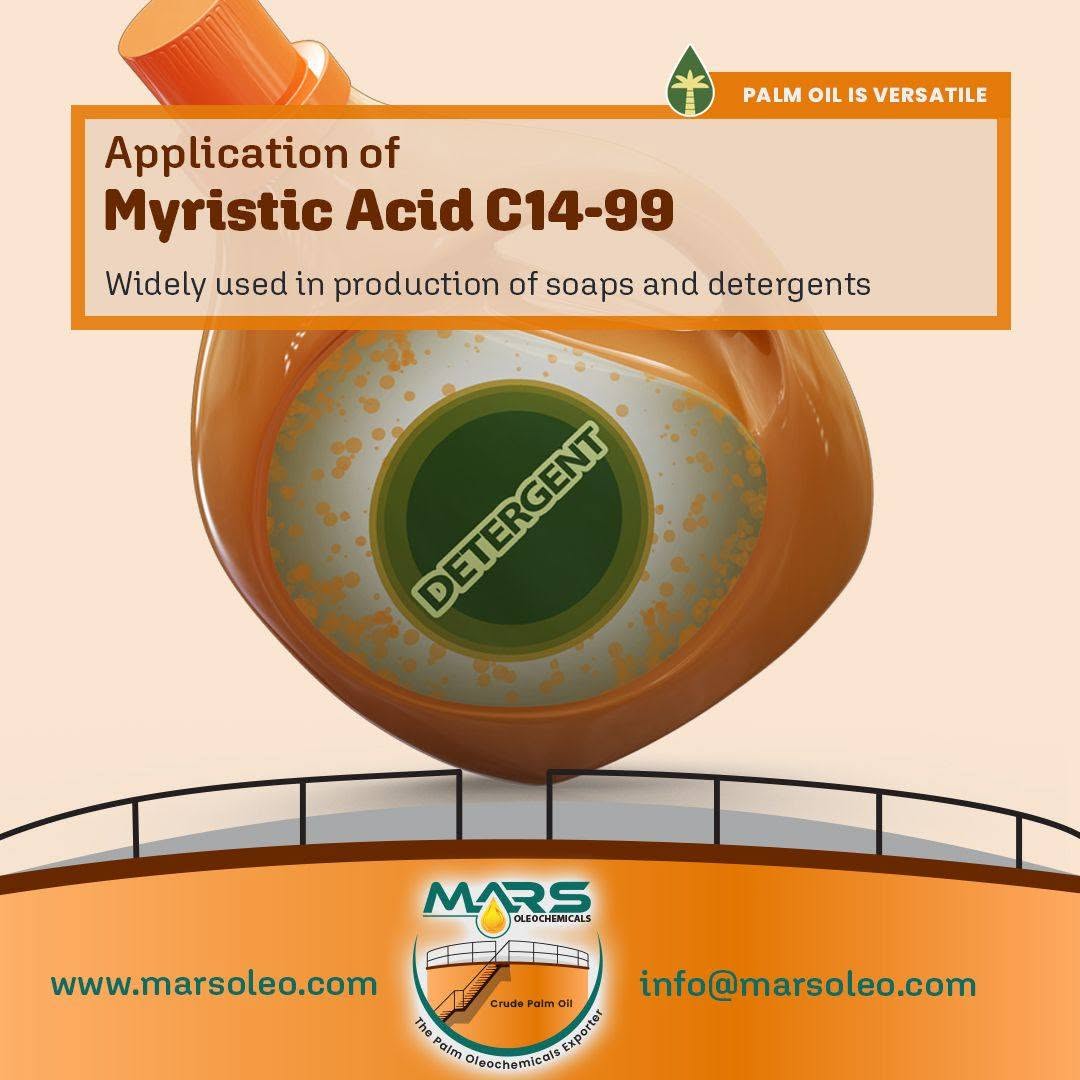
Myristic Acid can be neutralized with sodium or potassium alkali to produce myristate soaps. Sodium myristate provides cleansing and surface-active functions and may also support emulsification in compatible products. Manufacturers normally blend C14 fatty acid with other fatty acids to achieve the required cleansing, foam, structure and processing characteristics.

Myristic Acid supports soap production, cleansing surfactants, foam, texture and formulation performance worldwide.
Myristic Acid serves as a raw material for soaps and several surfactant or ester derivatives used in personal care and cleaning products. Potential applications include facial cleansers, shaving creams, shampoos, body-cleansing products, household cleaners and emulsion-based cosmetics. The free acid and its derivatives perform different functions, so manufacturers must select the appropriate chemical form.
Mars Oleochemicals Sdn. Bhd. supplies vegetable-derived Myristic Acid C14-99 produced from palm kernel oil or coconut oil feedstocks. Buyers can request the current specification, SDS, TDS, certificate of analysis, packing information, product availability and export quotation from Malaysia.
1. What is Myristic Acid C14-99? Myristic Acid C14-99 is a high-purity saturated fatty acid containing at least 99 percent C14 fatty acid. It is also known as tetradecanoic acid and is generally supplied as white crystalline flakes or powder.
2. What is Myristic Acid used for in soap and detergent manufacturing? Myristic Acid is used as a fatty-acid raw material for soaps, cleansing surfactants, detergent intermediates and selected personal-care formulations.
3. Is Myristic Acid itself a cleansing surfactant? Free Myristic Acid may provide formulation benefits, but its neutralized salts and chemical derivatives generally deliver the main cleansing and surface-active functions. Sodium myristate is a recognized cleansing and emulsifying surfactant.
4. How is Myristic Acid converted into soap? Myristic Acid reacts with an alkali such as sodium hydroxide or potassium hydroxide to produce myristate salts. Sodium myristate is used in solid cleansing products, while potassium myristate may be used in softer or liquid systems.
5. What does Myristic Acid contribute to soap formulations? When properly neutralized, Myristic Acid can contribute cleansing, surface activity, emulsification and foam performance. The finished product also depends on the complete fatty-acid blend, surfactants, additives and processing method.
6. Which products may use Myristic Acid or myristate derivatives? Applications may include bar soaps, facial cleansers, shaving products, shampoos, body washes, household cleaners, detergent intermediates, creams, lotions and other personal-care formulations.
7. Is all Myristic Acid derived from palm kernel oil or coconut oil? Not every commercial grade has the same origin. Mars Oleochemicals describes its Myristic Acid C14-99 as vegetable derived from palm-kernel-oil or coconut-oil feedstocks.
8. How should manufacturers select a Myristic Acid grade? Manufacturers should evaluate C14 purity, acid value, iodine value, saponification value, titre, colour, moisture, physical form, feedstock origin and compatibility with the intended formulation.
9. Where can buyers source Myristic Acid C14-99 from Malaysia? International buyers can contact Mars Oleochemicals Sdn. Bhd. for Myristic Acid C14-99 specifications, packing options, quality documentation, product availability and export quotations from Malaysia.




Home :: Products :: Enquiry :: Contact Us :: Site Map
Copyright All Rights Reserved © 2025. Mars Oleochemicals :: Disclaimer :: Privacy Policy