


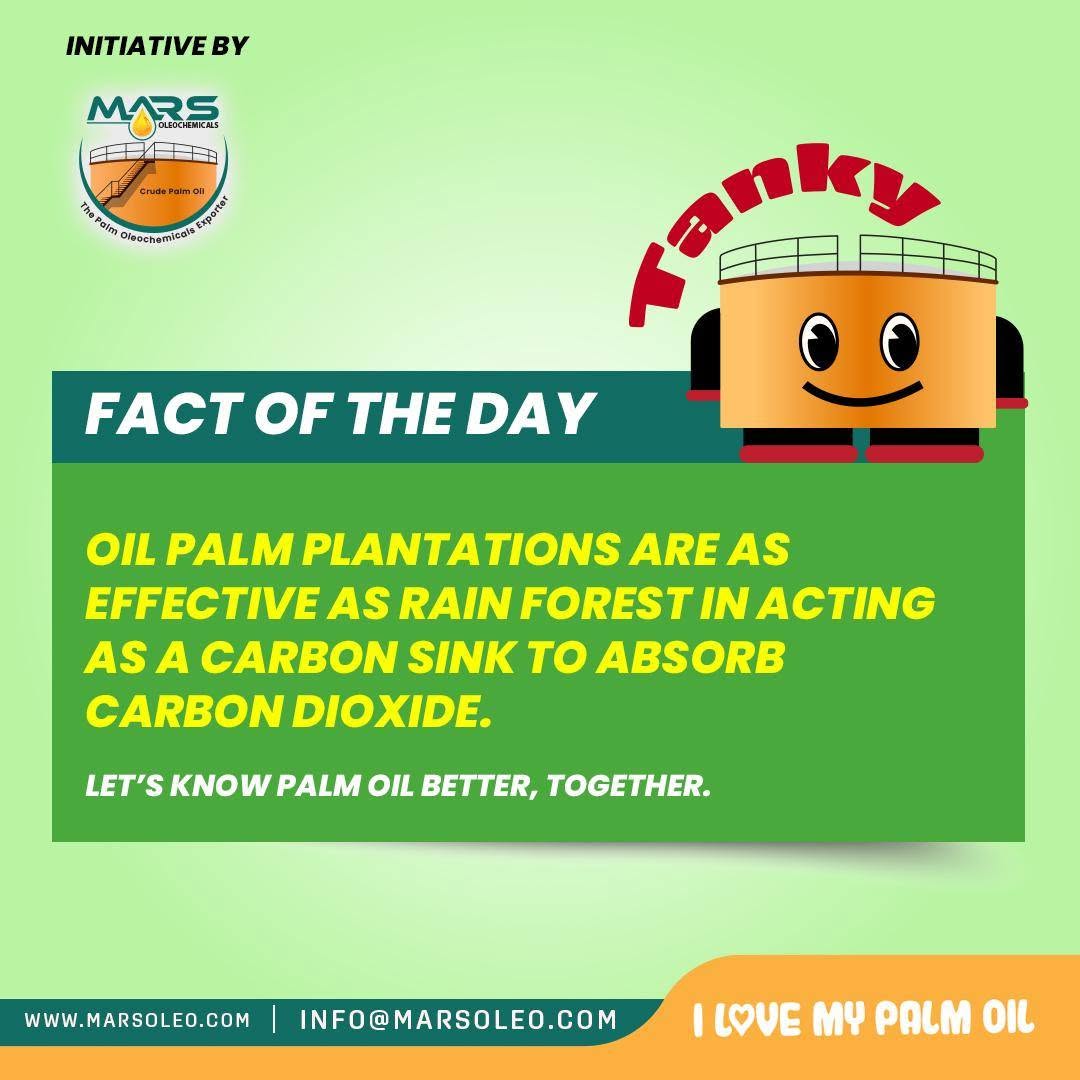
Oil palms, like other green plants, perform photosynthesis. They absorb carbon dioxide from the atmosphere and use carbon to build plant biomass while releasing oxygen as part of the photosynthetic process. As a plantation develops, carbon accumulates in trunks, fronds, roots and other plant material.
A fast-growing crop or plantation can accumulate carbon relatively quickly during part of its growth cycle, but this does not necessarily mean it contains the same total carbon stock as a mature natural forest.
Natural tropical forests contain carbon in large trees, smaller vegetation, roots, dead organic matter and soils accumulated over long periods. Oil-palm plantations also contain biomass and soil carbon, but research generally finds lower total ecosystem carbon stocks than natural forests.

Oil palm plantations absorb carbon dioxide, but natural rainforests generally store substantially more carbon overall.
The climate impact of an oil-palm plantation depends heavily on what occupied the land beforehand.
Establishing oil palm on previously cleared or degraded land is very different from clearing carbon-rich natural rainforest or peatland. Conversion of rainforest to oil-palm plantations can release carbon stored in vegetation and soils, creating a carbon debt that plantation growth does not immediately replace. Research in Indonesia has documented significant reductions in ecosystem carbon following rainforest conversion to plantation systems.
This distinction is important when discussing palm oil sustainability because carbon sequestration by growing palms should not be considered independently from land-use change.
Oil-palm landscapes can still benefit from practices that conserve carbon and biodiversity. Protecting natural forests, maintaining riparian areas and conservation set-asides, avoiding conversion of high-carbon ecosystems and improving plantation management can help reduce environmental impacts.
Research within certified oil-palm plantations has found that conservation set-asides store substantially more above-ground carbon than surrounding oil-palm areas, illustrating the importance of retaining natural vegetation within agricultural landscapes.
Do oil palm plantations absorb carbon dioxide? Yes. Oil palms absorb atmospheric carbon dioxide through photosynthesis and store some of that carbon within trunks, fronds, roots and other biomass.
Are oil palm plantations carbon sinks? Growing oil palms can accumulate carbon in biomass, but whether an entire plantation represents a net carbon sink depends on plantation age, soils, previous land use, management and the timeframe considered.
Do oil palm plantations store as much carbon as rainforests? Generally, no. Natural tropical forests typically maintain substantially larger total ecosystem carbon stocks than oil-palm plantations.
Why do rainforests store more carbon? Natural tropical forests contain large amounts of carbon in mature trees, diverse vegetation, roots, dead organic matter and soils accumulated over long periods.
Does plantation age affect carbon storage? Yes. Young plantations contain less biomass, and biomass carbon generally increases as oil palms mature.
What happens when rainforest is converted to oil palm? Forest conversion removes substantial biomass and can reduce ecosystem carbon stocks, creating greenhouse-gas emissions associated with land-use change.
Does soil store carbon in oil-palm plantations? Yes. Soil can represent a major carbon pool, although soil-carbon levels depend on soil type, previous land use and plantation management.
Why is peatland important in palm oil carbon accounting? Peat soils can contain very large quantities of stored carbon. Drainage and conversion can cause continuing greenhouse-gas emissions, making peatland protection particularly important.
Can conservation areas improve carbon storage in plantations? Yes. Forest fragments and conservation set-asides within plantation landscapes can retain significantly more carbon than oil-palm stands alone.
What is the difference between carbon sequestration and carbon storage? Carbon sequestration describes the process of removing carbon dioxide from the atmosphere, while carbon storage describes the amount of carbon retained in biomass, soils and other ecosystem pools.















Home :: Products :: Enquiry :: Contact Us :: Site Map
Copyright All Rights Reserved © 2025. Mars Oleochemicals :: Disclaimer :: Privacy Policy


