


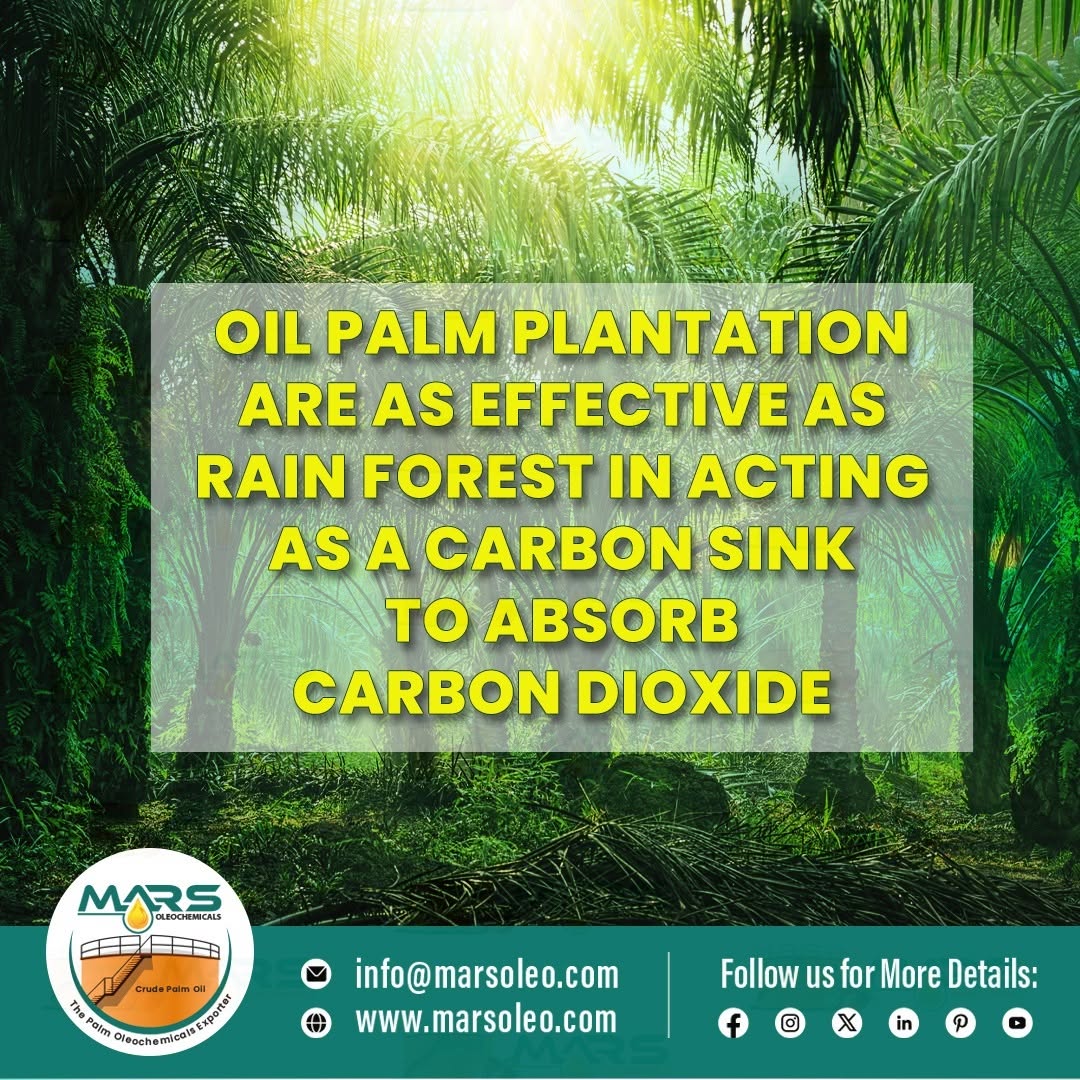
Oil palm plantations play an important role in global vegetable oil production and participate in the natural carbon cycle through photosynthesis. Like other green plants, oil palm trees absorb atmospheric carbon dioxide (CO₂) and use sunlight to produce carbohydrates that support growth, fruit development and biomass formation. Some of this carbon is stored in trunks, leaves, roots and other plant tissues. The process of carbon sequestration in oil palm plantations is an important subject in agricultural research, particularly when evaluating plantation productivity, land management and environmental performance.
oil palm carbon absorption has identified substantial photosynthetic activity in productive plantations. Certain field studies have measured higher daytime carbon dioxide uptake or net primary productivity in oil palm plantations than in nearby tropical rainforest sites. However, these measurements should not be interpreted as proof that oil palm plantations provide equivalent long-term carbon storage or environmental functions. Natural tropical forests generally maintain much larger carbon stocks and provide additional ecological services, including biodiversity conservation, habitat protection and water regulation. The environmental consequences of oil palm cultivation depend heavily on previous land use, soil conditions and plantation management.

Oil palm plantations absorb atmospheric carbon dioxide while responsible land management supports sustainable agricultural production.
Sustainable palm oil production requires more than carbon dioxide absorption by growing trees. Responsible plantation development should prioritize the protection of natural forests, conservation of peatlands, prevention of unnecessary land conversion and effective management of existing agricultural land. The carbon balance of an oil palm plantation must consider emissions associated with land-use change, soil disturbance, fertilization, processing, transportation and other agricultural activities. Expanding production on appropriate previously cleared or degraded agricultural land can help avoid some of the carbon losses associated with converting natural forests.
Mars Oleochemicals Sdn. Bhd., Malaysia, supports international sourcing and export inquiries for crude palm oil, palm kernel oil, vegetable oil derivatives and palm-based oleochemical products. Businesses evaluating palm-based raw materials should consider product specifications, sourcing information, traceability, environmental documentation and applicable sustainability certifications. Visit our website at www.marsoleo.com For product requirements, technical documentation, commercial information and international export inquiries, please email us at info@marsoleo.com.
Do oil palm plantations absorb carbon dioxide? Yes. Oil palm trees absorb atmospheric carbon dioxide through photosynthesis and store some carbon in plant biomass. The amount varies with plantation age, soil and management conditions.
Are oil palm plantations as effective as tropical rainforests in absorbing CO2? Some studies have measured higher daytime CO2 uptake in oil palm plantations than in nearby rainforests. However, rainforests generally store more carbon over the long term and provide greater biodiversity and ecosystem benefits.
Can oil palm plantations be considered carbon sinks? Growing oil palms accumulate biomass carbon. Whether an entire plantation is a net carbon sink depends on its land-use history, soil emissions, agricultural activities and overall greenhouse gas balance.
How can sustainable oil palm plantation management reduce environmental impacts? Responsible management includes avoiding deforestation, protecting peatlands, improving agricultural efficiency, reducing emissions and applying appropriate traceability and sustainability standards.
How does Mars Oleochemicals support the global palm oil and oleochemical industry? Mars Oleochemicals Sdn. Bhd. supports international sourcing and export inquiries for palm oil, palm kernel oil and related oleochemical products.











Home :: Products :: Enquiry :: Contact Us :: Site Map
Copyright All Rights Reserved © 2025. Mars Oleochemicals :: Disclaimer :: Privacy Policy


