


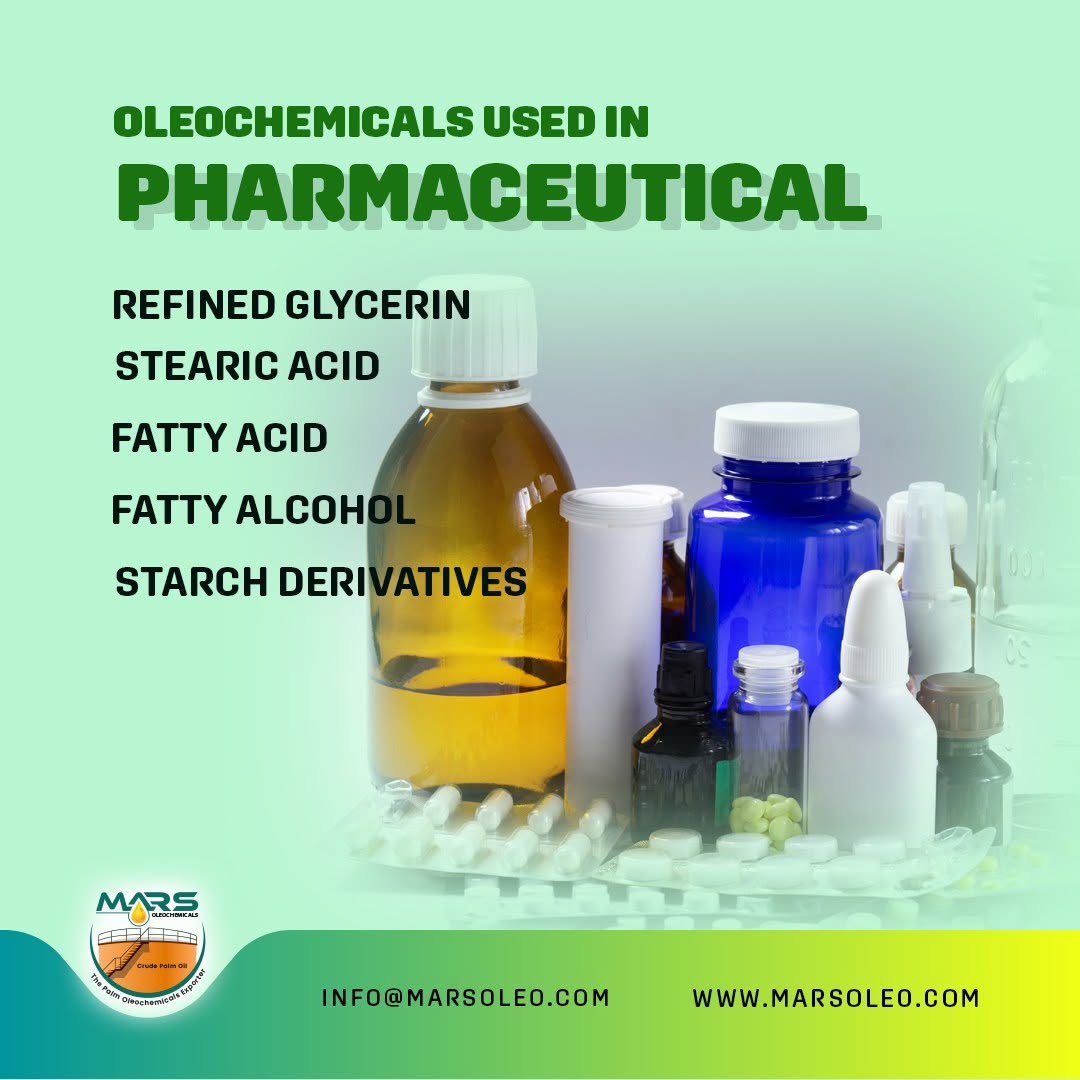
Oleochemicals derived from vegetable oils can serve important pharmaceutical and excipient functions when supplied in suitable grades. Refined Glycerine, Stearic Acid, selected Fatty Acids and Fatty Alcohols can provide moisture management, lubrication, structuring, emulsification and other formulation functionality across different dosage forms.
Pharmaceutical-grade Refined Glycerine can serve as a humectant, solvent and formulation ingredient in suitable oral and topical preparations. Stearic Acid and selected Fatty Alcohols such as Cetyl Alcohol and Stearyl Alcohol can provide lubrication, thickening, emollience and consistency in appropriate pharmaceutical systems.

Pharmaceutical oleochemicals provide excipient, emulsification, lubrication, moisture-control and formulation.
Starch derivatives form a separate ingredient category from oleochemicals but can also play important pharmaceutical roles. Suitable grades of Sorbitol, Dextrose, Maltodextrin and other starch-derived products may provide bulking, binding, sweetening, carrier or processing functionality depending on the intended application.
Mars Oleochemicals commercial requirements for selected pharmaceutical-related oleochemicals and starch-derived ingredients. Buyers should provide the required product, pharmacopoeial specification, purity, quantity, packing, intended application and destination so suitable grades and documentation can be evaluated.
What Oleochemicals are used in pharmaceutical applications? Selected pharmaceutical-grade oleochemicals can include Refined Glycerine, Stearic Acid, certain Fatty Acids, Fatty Alcohols and Fatty Acid derivatives.
Are Starch Derivatives Oleochemicals? No. Starch Derivatives are carbohydrate-derived materials and form a separate ingredient family, although suitable grades can have pharmaceutical applications.
What is pharmaceutical-grade Glycerine used for? Suitable pharmaceutical-grade Glycerine can function as a humectant, solvent, moisture-retaining ingredient and formulation aid in oral and topical preparations.
What is Glycerine USP? Glycerine USP refers to Glycerine supplied to meet applicable requirements of the United States Pharmacopeia specification.
Is Stearic Acid used in pharmaceuticals? Suitable grades of Stearic Acid can be used in pharmaceutical formulation and processing applications, including lubrication and structuring roles.
Are Fatty Alcohols used in pharmaceutical formulations? Suitable Cetyl Alcohol, Stearyl Alcohol and Cetearyl Alcohol grades can be used in topical and semi-solid pharmaceutical formulations.
Is Sorbitol used in pharmaceuticals? Suitable pharmaceutical-grade Sorbitol can be used in oral liquids, chewable products and other formulations for sweetening, humectancy, bulking and texture.
Are pharmaceutical excipients the same as APIs? No. Active Pharmaceutical Ingredients provide therapeutic activity, while excipients generally support formulation and dosage-form functionality.
Can industrial-grade Oleochemicals be used in pharmaceuticals? Industrial-grade material should not automatically be used in pharmaceutical formulations. The appropriate pharmaceutical, excipient or compendial grade should be selected.
Does Mars Oleochemicals supply pharmaceutical raw materials? Mars Oleochemicals supports commercial requirements for selected pharmaceutical-related oleochemicals and starch-derived materials, subject to specification, grade and availability.
How can buyers contact Mars Oleochemicals? Commercial enquiries can be sent to info@marsoleo.com.













Home :: Products :: Enquiry :: Contact Us :: Site Map
Copyright All Rights Reserved © 2025. Mars Oleochemicals :: Disclaimer :: Privacy Policy


