


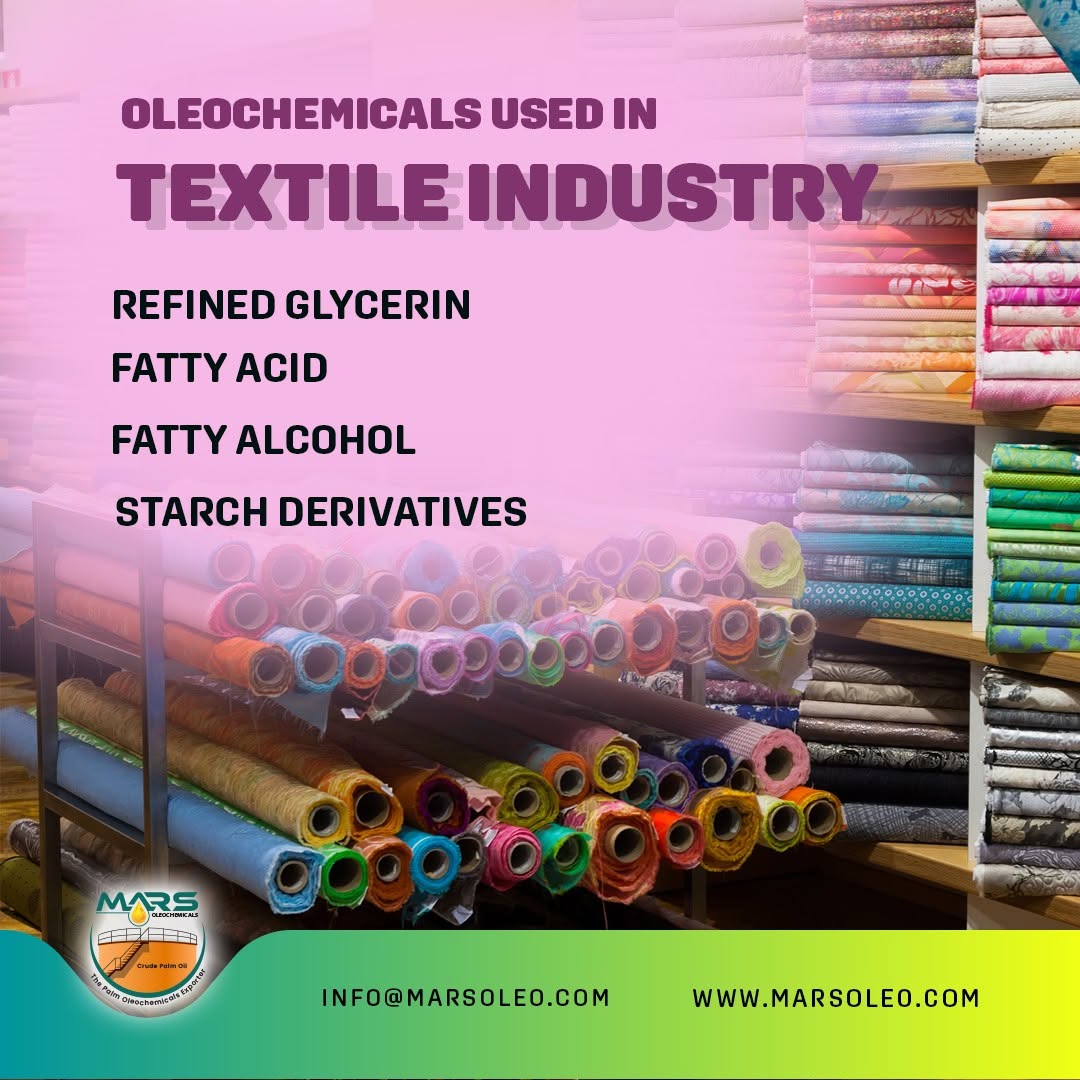
Oleochemicals derived from Palm Oil, Palm Kernel Oil and other vegetable-oil feedstocks can provide important raw materials for textile-processing chemicals and auxiliary formulations. Refined Glycerine, Fatty Acids and Fatty Alcohols can support functions related to moisture management, lubrication, emulsification, wetting and downstream surfactant manufacture.
Fatty Acids can serve as raw materials for lubricating, softening and specialty chemical systems, while Fatty Alcohols are important feedstocks for surfactants used in textile wetting, washing, emulsification and processing applications. Carbon-chain selection and product specifications influence their suitability for different downstream formulations.

Oleochemicals textile processing through lubrication, emulsification, moisture management and finishing applications worldwide.
Starch Derivatives form a separate category from oleochemicals but play an important role in textile manufacturing. Suitable starch-based materials can provide adhesion, film formation, viscosity and yarn protection during sizing, printing and other textile-processing operations.
Mars Oleochemicals manufacturers and distributors seeking oleochemical and starch-derived raw materials for textile applications. Buyers can provide the required product, specification, quantity, packing, intended textile process and destination so appropriate commercial grades can be evaluated.
What Oleochemicals are used in the textile industry? Relevant oleochemicals can include Refined Glycerine, Fatty Acids, Fatty Alcohols and their downstream derivatives.
Are Starch Derivatives Oleochemicals? No. Starch Derivatives are carbohydrate-derived materials, but suitable grades are widely used in textile sizing and processing.
Why is Glycerine used in textiles? Glycerine can provide humectant, moisture-management, solvent and formulation-support functions in selected textile-processing systems.
Are Fatty Alcohols used in textiles? Fatty Alcohols are important feedstocks for downstream surfactants used in wetting, emulsification, washing and other textile-processing applications.
What are Starch Derivatives used for in textiles? Suitable Starch Derivatives can be used in warp sizing, printing, thickening and selected textile-finishing formulations.
What is textile sizing? Textile sizing applies a protective formulation to yarn before weaving to improve strength, abrasion resistance and processing performance.
Can Oleochemicals be used in textile finishing? Suitable fatty-derived ingredients and auxiliary chemicals can support lubrication, softness, surface characteristics and finishing performance.
Does Mars Oleochemicals supply textile raw materials? Mars Oleochemicals supports commercial requirements for Refined Glycerine, Fatty Acids, Fatty Alcohols, Starch Derivatives and related products, subject to specification and availability.
How can buyers contact Mars Oleochemicals? Commercial enquiries can be sent to info@marsoleo.com.










Home :: Products :: Enquiry :: Contact Us :: Site Map
Copyright All Rights Reserved © 2025. Mars Oleochemicals :: Disclaimer :: Privacy Policy


