


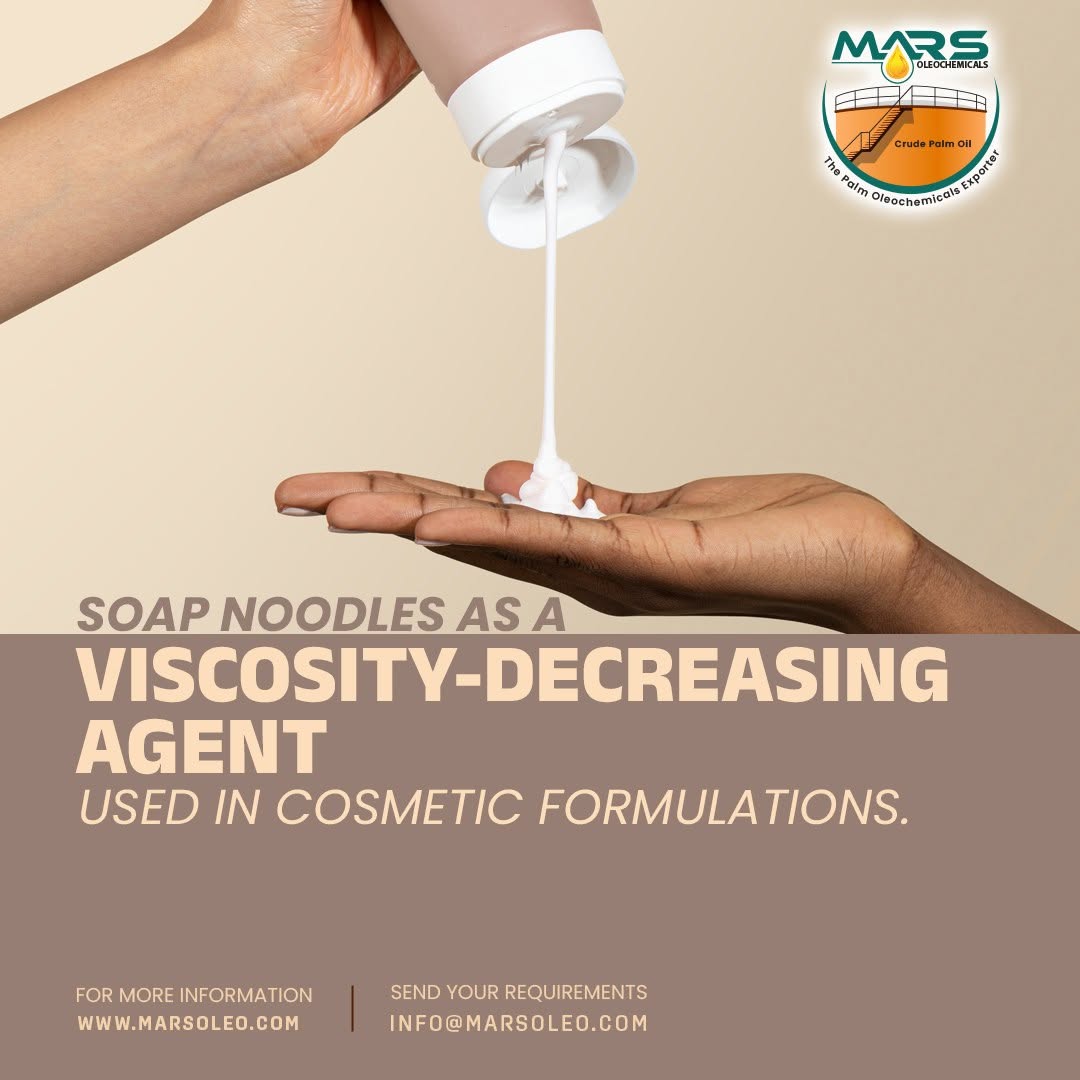
Palm-Based Soap Noodles are semi-finished soap base materials widely used in the production of toilet soaps, beauty bars, bath soaps and personal cleansing products. Manufactured through the saponification of vegetable oils or neutralization of suitable fatty acids, soap noodles consist primarily of sodium salts of fatty acids. Palm oil, palm stearin and palm kernel oil are important raw materials in the soap manufacturing industry. The composition of soap noodles influences cleansing performance, hardness, lather characteristics and finished soap quality, making them essential ingredients for manufacturers developing consistent bar soap formulations.
Soap Noodles in cosmetic and personal care manufacturing provide a versatile structural base for finished cleansing bars. Manufacturers can combine suitable soap noodles with fragrances, pigments, glycerine, emollients and other permitted ingredients to produce different types of soap bars. Standard production operations may include mixing, refining, milling, extrusion, cutting and stamping. The performance of soap noodles depends on factors such as total fatty matter, fatty acid composition, moisture content, free alkalinity and processing conditions. These characteristics help manufacturers select appropriate grades for specific soap manufacturing requirements.

Palm-based soap noodles provide versatile cleansing bases for beauty bars, toilet soaps and personal care manufacturing.
Palm-based soap noodles are commercially available in different fatty acid compositions and oil blend ratios, including formulations commonly described as 80:20 and 90:10. The 80:20 designation typically refers to a blend of palm-based and lauric oils, such as palm kernel oil or coconut oil, although exact formulations vary by manufacturer. Different grades offer distinct lather, hardness and cleansing characteristics. Unlike liquid cosmetic viscosity modifiers, soap noodles primarily function as solid soap bases and should not generally be described as viscosity-decreasing agents for lotions, creams or liquid cleansing products.
Mars Oleochemicals Sdn. Bhd., Malaysia, supports international sourcing and export inquiries for palm-based soap noodles and related oleochemical ingredients. Manufacturers, distributors and international buyers can contact Mars Oleochemicals to discuss soap noodle grades, total fatty matter specifications, palm oil and palm kernel oil blend ratios, packaging, quality documentation and international shipment requirements. Visit our website at www.marsoleo.com For product requirements, technical documentation, commercial information and international export inquiries, please email us at info@marsoleo.com.
What are Soap Noodles and what are they used for? Soap Noodles are semi-finished soap base materials composed primarily of sodium salts of fatty acids. They are used to manufacture toilet soaps, beauty bars, laundry bars and specialty cleansing products.
Are Soap Noodles used as viscosity-decreasing agents in cosmetics? Not generally. Soap Noodles primarily function as solid soap bases. Processing consistency depends on moisture, temperature, fatty acid composition and other formulation ingredients.
What are the benefits of palm-based Soap Noodles? Palm-based Soap Noodles offer cleansing functionality, versatile formulation options, adjustable hardness, customizable lather and compatibility with suitable soap manufacturing additives.
What is the difference between 80:20 and 90:10 Soap Noodles? These ratios commonly describe different blends of palm-based and lauric oil feedstocks. Soap characteristics vary with fatty acid composition and supplier specifications.
Where can manufacturers source Soap Noodles from Malaysia? Mars Oleochemicals Sdn. Bhd. supports international Soap Noodles inquiries.








Home :: Products :: Enquiry :: Contact Us :: Site Map
Copyright All Rights Reserved © 2025. Mars Oleochemicals :: Disclaimer :: Privacy Policy


