


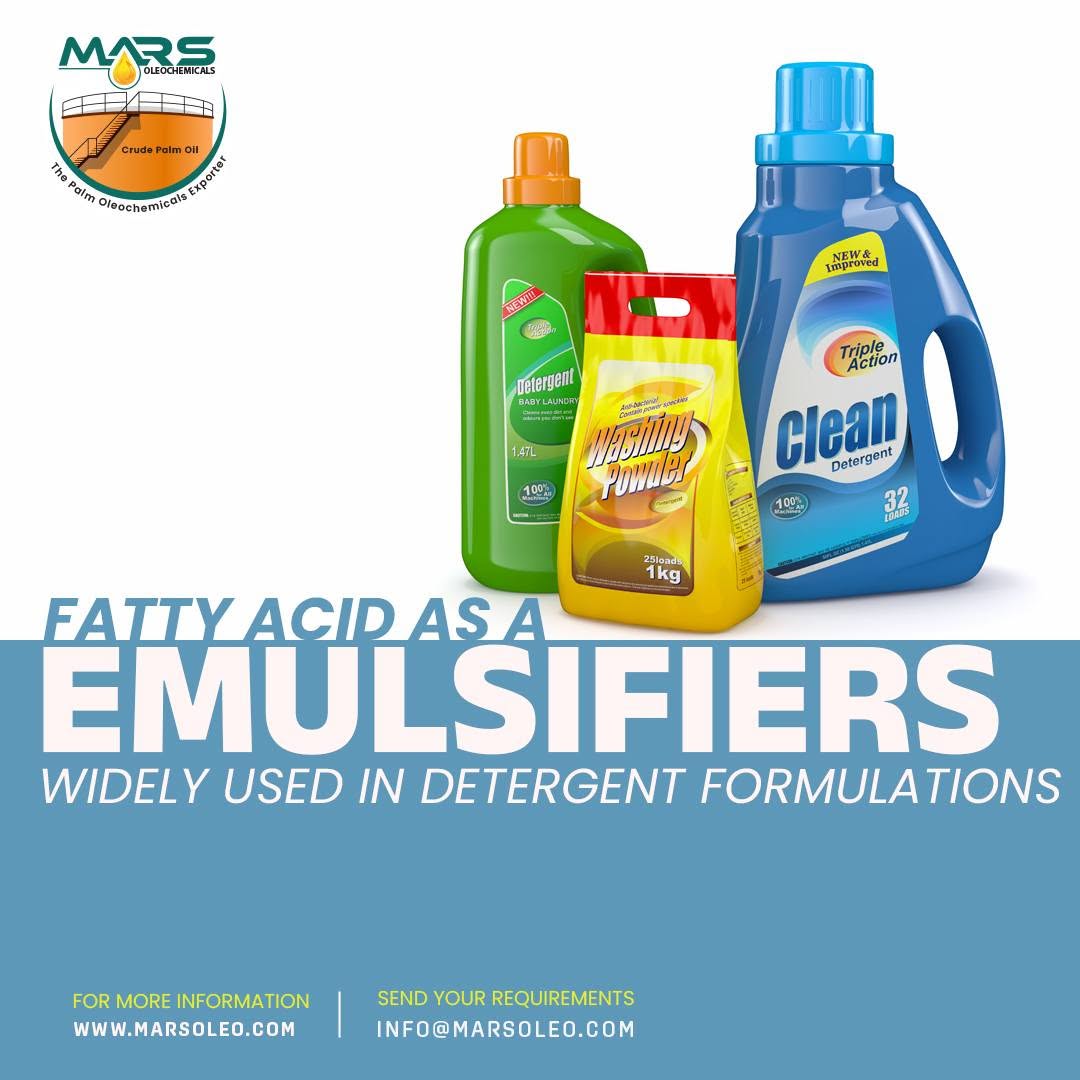
Fatty Acids are important oleochemical raw materials used in the manufacture of Soaps, Surfactants, Detergent Ingredients, Emulsifier Derivatives and Industrial Cleaning Products. Derived from vegetable oil feedstocks including Palm Oil, Palm Kernel Oil and Coconut Oil, these organic compounds form a foundation for numerous home care and personal care applications. Common commercial grades include Lauric Acid C12, Myristic Acid C14, Palmitic Acid C16, Stearic Acid C18 and Oleic Acid C18:1, as well as mixed fatty acid cuts. Their carbon-chain length, fatty acid composition and degree of unsaturation influence their industrial properties and suitability for different formulations. In detergent manufacturing, fatty acids may be converted into Sodium or Potassium Fatty Acid Salts, which function as anionic soap surfactants. These materials help remove oily substances and dirt by supporting the interaction between water and hydrophobic soils. Other fatty acid derivatives can provide emulsification, dispersing or formulation-stabilizing functions. However, free fatty acids are not universally effective standalone emulsifiers, and their functionality depends on the specific chemical form and formulation environment. Mars Oleochemicals Sdn. Bhd., a Malaysian exporter of palm-based oleochemicals, supports international buyers seeking commercially specified fatty acids for soap, detergent and specialty chemical manufacturing.
The relationship between Fatty Acids, Surfactants and Emulsifiers is central to understanding modern cleaning-product chemistry. A surfactant reduces surface or interfacial tension, helping water interact with soils or other materials. An emulsifier is a type of surface-active ingredient that helps stabilize droplets of one liquid dispersed in another. When appropriate fatty acids are neutralized, the resulting Fatty Acid Salts, commonly called soaps, can provide cleansing and emulsifying functions. For example, sodium salts are commonly associated with solid soap products, while potassium salts are used in suitable liquid soap and softer soap systems. Depending on their structure and formulation, Fatty Acid Esters, Ethoxylated Fatty Acid Derivatives and Other Oleochemical Intermediates can also contribute to emulsifier systems. Different surfactants may be combined with other ingredients to obtain targeted foaming, wetting, dispersing, grease-removal and stability characteristics. In conventional laundry detergents, soap-based ingredients may be used alongside other surfactants rather than serving as the sole cleaning component. The finished product must be designed according to the intended cleaning application, water conditions, ingredient compatibility and performance requirements. Manufacturers evaluating palm-derived fatty acid ingredients should therefore distinguish between Free Fatty Acids, Fatty Acid Salts and Chemically Modified Emulsifier Derivatives before selecting a particular raw material.

Palm-based fatty acids detergent manufacturing derived soaps and surfactants provide cleansing and emulsifying functions.
Selecting the appropriate Fatty Acid Grade for Detergent Manufacturing requires careful consideration of carbon-chain distribution, purity and formulation performance. Lauric Acid C12 is an important starting material for laurate soap salts and selected surfactant derivatives, while Myristic Acid C14 is used in soap blends and other oleochemical applications. Palmitic Acid C16 and Stearic Acid C18 can contribute to the composition and physical properties of solid soap systems, with their derived salts providing different hardness and cleansing characteristics. Oleic Acid C18:1 is relevant to oleate soap salts, emulsifier systems and industrial formulations. Mixed fatty acid grades, including Lauric–Myristic Fatty Acid C12–14 and Distilled Coconut Fatty Acid, offer additional options for manufacturers requiring specific carbon-chain profiles. These materials support the production of Laundry Soap Bars, Detergent Bars, Liquid Soap Systems, Household Cleaners, Dishwashing Products, Industrial Cleaning Agents and Specialty Surfactant Intermediates, depending on how they are processed and formulated. Key quality parameters include Acid Value, Saponification Value, Iodine Value, Fatty Acid Composition, Moisture Content, Colour, Titre and Product Purity. Formulators should also assess ingredient compatibility and application performance, particularly where hard water, alkaline conditions or specific cleaning requirements may affect the finished product. Consistent raw material specifications are important for large-scale commercial production and quality control.
Mars Oleochemicals Sdn. Bhd. supports international sourcing requirements for Palm-Based Fatty Acids, Palm Kernel Fatty Acid Derivatives, Soap Raw Materials and Related Surfactant Ingredients used in the detergent and home care industries. Its published fatty acid portfolio includes Lauric Acid C12-99%, Myristic Acid C14-99%, Palmitic Acid C16 Grades, Stearic Acid Grades, Oleic Acid Grades, Lauric–Myristic Acid C12–14 and Distilled Coconut Fatty Acid. These materials are relevant to manufacturers developing Laundry Soap, Household Cleaning Products, Soap-Based Surfactants, Industrial Detergents and Specialty Emulsifier Derivatives. Mars Oleochemicals also publishes related product groups such as Soap Noodles, Fatty Alcohols, Sodium Lauryl Ether Sulfate (SLES), Sodium Lauryl Sulfate (SLS), Cocamidopropyl Betaine (CAPB) and Other Surfactants, enabling buyers to research complementary oleochemical raw materials. Commercial procurement should consider the required Carbon-Chain Composition, Product Purity, Acid Value, Physical Form, Packaging, Order Quantity, Destination Port and Applicable Import Requirements. Buyers should request suitable Technical Data Sheets (TDS), Certificates of Analysis (COA), Safety Data Sheets (SDS) and relevant origin or certification documents, as applicable. Environmental or sustainability claims should be assessed against the documented origin and certification status of the specific material. International detergent manufacturers, chemical distributors and sourcing companies seeking Fatty Acids from Malaysia can visit our website at www.marsoleo.com For product requirements, technical documentation, commercial information and international export inquiries, please email us at info@marsoleo.com.
What are fatty acids used for in detergent manufacturing? Fatty acids are important raw materials used to manufacture soap-based surfactants, detergent ingredients and selected emulsifier derivatives. Palm-derived fatty acids such as lauric, myristic, palmitic, stearic and oleic acids may be selected according to the required formulation and processing characteristics.
Can fatty acids act as emulsifiers in liquid detergents? Certain fatty acid-based ingredients can provide emulsifying functions, but free fatty acids should not all be described as universal emulsifiers. Fatty acid salts, esters and other suitable derivatives may help stabilize emulsions or provide surface activity. Performance depends on chemical structure, pH and the complete formulation.
Which palm-based fatty acids are commonly used in soap and detergent production? Common grades include Lauric Acid C12, Myristic Acid C14, Palmitic Acid C16, Stearic Acid C18, Oleic Acid C18:1 and mixed fatty acid blends. Their fatty acid composition affects properties such as hardness, solubility, lather and cleansing performance in finished soap systems.
What is the difference between fatty acids and fatty acid salts? A fatty acid is an organic carboxylic acid that can serve as a raw material or intermediate. A fatty acid salt is formed through neutralization and may function as a soap-based anionic surfactant. Examples include sodium palmitate, sodium stearate and potassium oleate. The suitability of each ingredient depends on its intended application.
Where can international detergent manufacturers purchase palm-based fatty acids from Malaysia? Enquiries should specify the required fatty acid grade, purity, technical specifications, order quantity, packaging and destination port. Product availability and supporting technical documents should be confirmed before purchase.





Home :: Products :: Enquiry :: Contact Us :: Site Map
Copyright All Rights Reserved © 2025. Mars Oleochemicals :: Disclaimer :: Privacy Policy


