


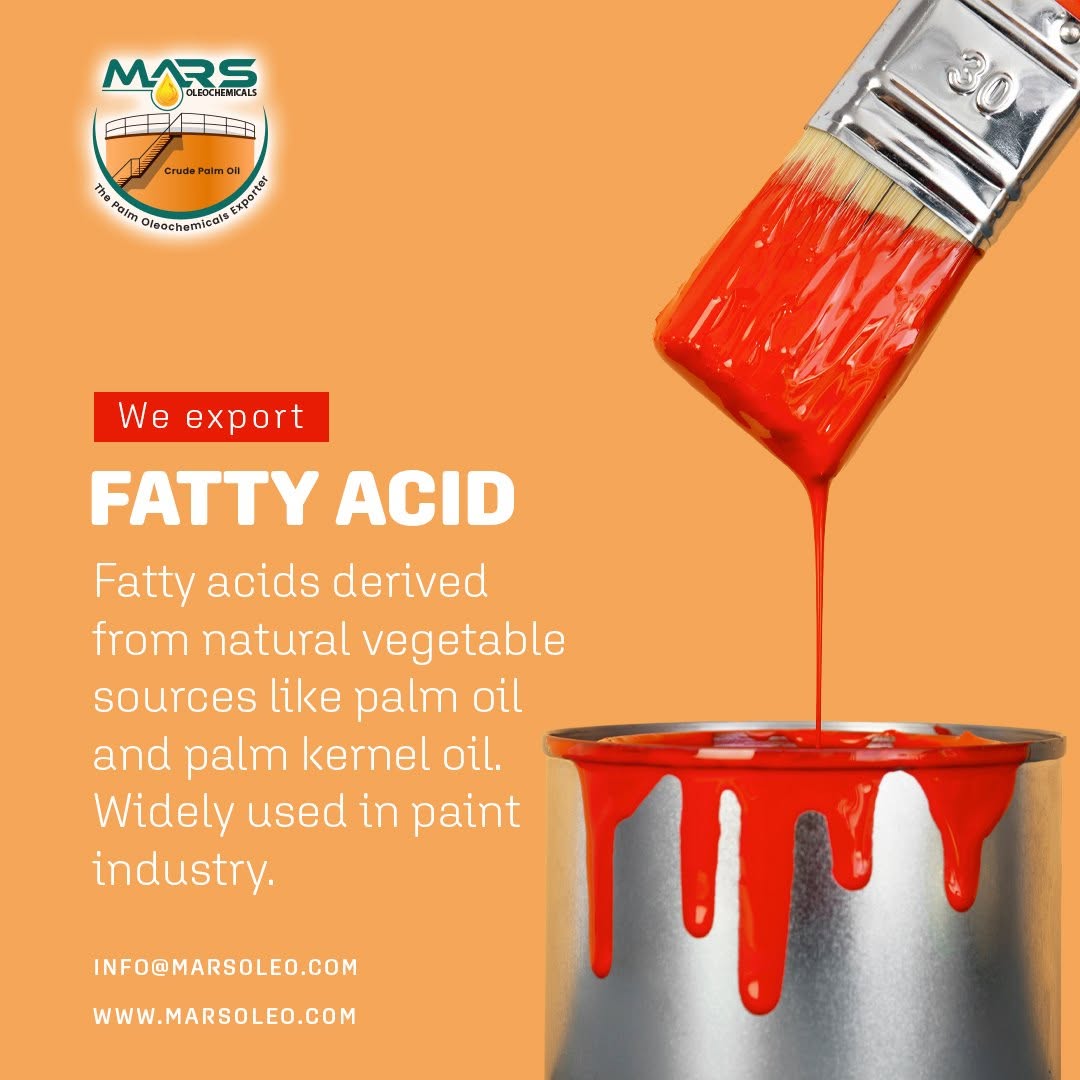
Palm-based fatty acids are versatile oleochemical ingredients derived from renewable vegetable oil feedstocks, particularly palm oil, palm stearin and palm kernel oil. These materials are produced through oil or fat splitting processes that separate triglycerides into fatty acids and glycerol, followed by purification or fractionation where required. Important commercial fatty acids include oleic acid, stearic acid, palmitic acid, lauric acid and myristic acid, each possessing different chemical and physical properties. Their carbon-chain lengths and degrees of saturation influence their suitability for downstream manufacturing. Palm-derived fatty acids are used in soaps, detergents, lubricants, chemical intermediates and selected paint and coating applications. Mars Oleochemicals Sdn. Bhd., a Malaysian exporter of palm-based oleochemicals, offers different fatty acid grades for international businesses seeking raw materials for industrial manufacturing.
Fatty acids play an important role in selected paint and coating technologies, particularly as chemical building blocks for resins and specialized additives. Alkyd resins are oil-modified polyester materials that can incorporate vegetable oils or fatty acids to achieve specific film-forming properties. Unsaturated fatty acids are particularly important in oxidative-curing alkyd systems because their carbon-carbon double bonds participate in reactions associated with film development. Saturated fatty acids, including stearic and palmitic acids, may be useful in other resin systems and derivative-based industrial formulations but do not provide the same oxidative-drying functionality. Palm-derived oleic acid and selected fatty acid blends may therefore be considered for appropriate coating chemistry, depending on formulation requirements. Manufacturers must evaluate fatty acid composition, iodine value, acid value and compatibility before selecting a grade for paint or coating production.

Palm-derived fatty acids serve as versatile for coatings, resins, soaps, lubricants and industrial chemicals.
Vegetable-derived fatty acids offer valuable chemical functionality for manufacturers developing industrial ingredients, specialty resins, additives and oleochemical derivatives. In coating-related applications, suitable fatty acids or their derivatives can contribute to resin modification, pigment wetting, dispersibility and other formulation characteristics. Fatty acids also serve as intermediates for producing metallic soaps, esters, lubricants and specialty processing aids. Their performance depends on molecular structure, saturation, concentration and compatibility with the finished formulation. Oleic acid, for example, provides unsaturated C18 chemistry relevant to selected chemical intermediates and coating applications, while stearic acid is commonly used in manufacturing metallic stearates and other industrial derivatives. Choosing an appropriate fatty acid grade is essential for maintaining quality, processing consistency and product performance.
Mars Oleochemicals Sdn. Bhd. supports international procurement of palm-derived fatty acids for manufacturers, chemical distributors and industrial businesses. Its published product range includes oleic acid, stearic acid, palmitic acid, lauric acid, myristic acid and other distilled or fractionated fatty acid grades. Buyers sourcing ingredients for paints, coatings, chemical intermediates, lubricants or related industrial applications should assess the required fatty acid composition, product specifications, analytical documentation, packaging and destination-market requirements. Important technical documents include the Technical Data Sheet (TDS), Safety Data Sheet (SDS) and batch-specific Certificate of Analysis (COA). Mars Oleochemicals provides commercial information for businesses evaluating Malaysian palm-based raw materials and international supply opportunities. For fatty acid specifications and export inquiries, visit www.marsoleo.com or info@marsoleo.com with the required grade, quantity, packaging preference and destination port.
What are palm-based fatty acids, and how are they produced? Palm-based fatty acids are organic compounds obtained from palm oil, palm kernel oil and their derivatives. They are commonly produced through splitting or hydrolysis of oils and fats, followed by purification and fractionation. Commercial examples include oleic acid, stearic acid, palmitic acid, lauric acid and myristic acid.
How are fatty acids used in paints and coatings? Selected fatty acids are used as chemical building blocks for alkyd resins and specialty coating ingredients. Unsaturated fatty acids can contribute to oxidative curing in certain alkyd formulations, while other fatty acids and their derivatives serve different resin and additive functions. Suitability depends on composition and formulation requirements.
What is the difference between oleic acid, stearic acid and palmitic acid? Oleic acid is a monounsaturated C18:1 fatty acid, while stearic acid is a saturated C18:0 fatty acid and palmitic acid is a saturated C16:0 fatty acid. These structural differences influence their physical properties, chemical reactivity and potential industrial applications.
Are all palm-based fatty acids suitable for alkyd resin manufacturing? No. Different alkyd resin systems require particular fatty acid compositions. Unsaturated fatty acids are relevant to oxidative-curing alkyd resins, whereas saturated fatty acids may be used in selected non-oxidatively cured or modified resin systems. Manufacturers should evaluate iodine value, fatty acid profile and resin specifications.
How can international buyers purchase fatty acids from Mars Oleochemicals? International buyers can contact Mars Oleochemicals through www.marsoleo.com or info@marsoleo.com. Buyers should provide the required fatty acid type, grade, composition, quantity, packaging preference, intended application and destination port when requesting product information or an export quotation.








Home :: Products :: Enquiry :: Contact Us :: Site Map
Copyright All Rights Reserved © 2025. Mars Oleochemicals :: Disclaimer :: Privacy Policy


