


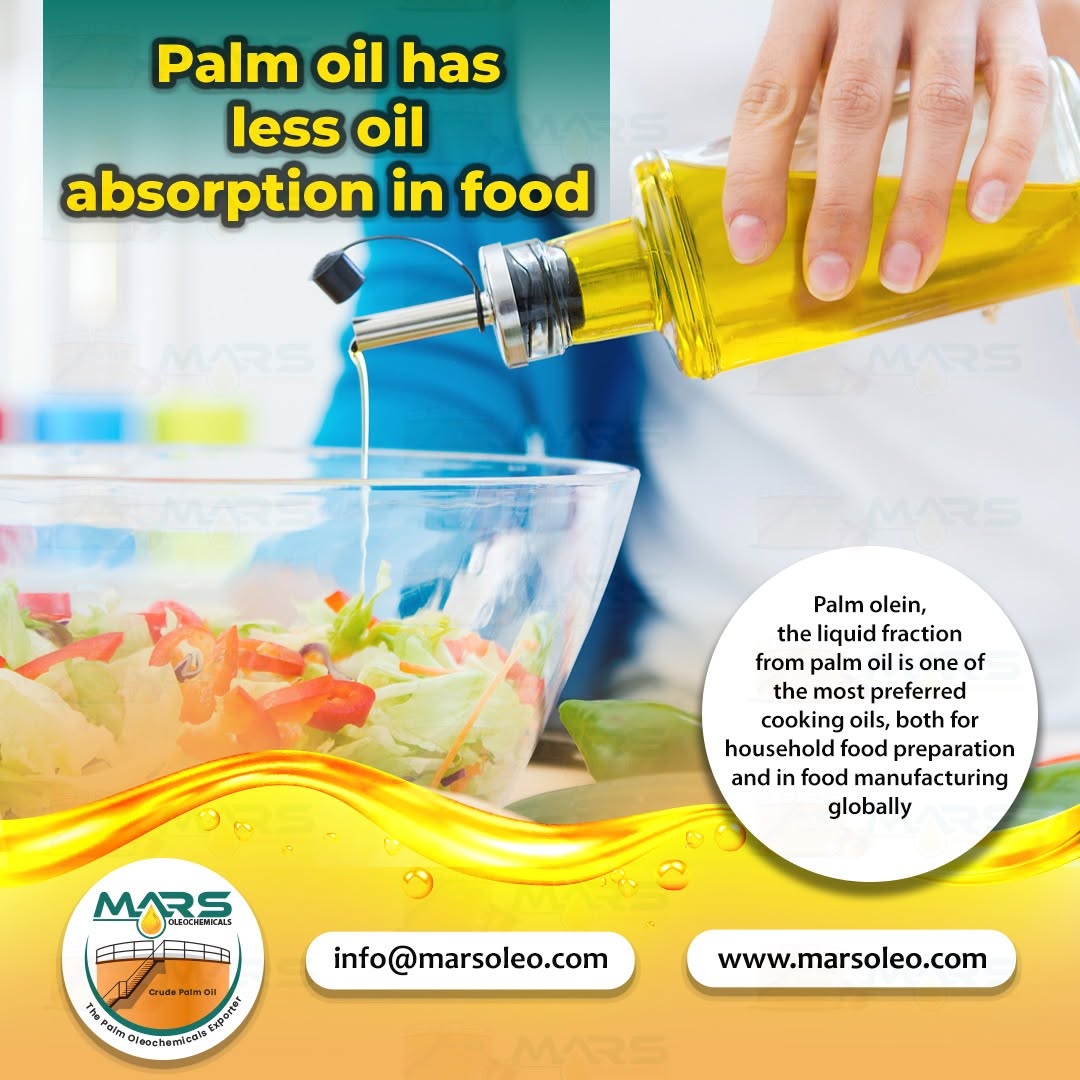
Malaysian Palm Olein is a widely used vegetable cooking oil obtained through the fractionation of palm oil, which separates the relatively liquid Palm Olein from the higher-melting Palm Stearin. Following refining, bleaching and deodorisation, RBD Palm Olein becomes an important edible oil ingredient for household cooking, commercial kitchens and industrial food manufacturing. The Malaysian Palm Oil Board (MPOB) recognizes palm olein as a well-established frying oil because of its useful oxidative stability and functional characteristics. It is commonly used in Cooking Oil Production, Commercial Deep Frying, French Fries Manufacturing, Fried Chicken Processing, Snack Foods and Instant Noodle Production. Palm olein also offers a relatively neutral flavor when properly refined, allowing manufacturers to develop food products without introducing a pronounced oil flavor. Its performance depends on the specific grade, processing conditions and quality specifications. RBD Palm Olein CP10, CP8 and CP6 are commercial options with different cloud-point characteristics that can be selected according to storage conditions and application requirements. Unlike Crude Palm Oil (CPO), which generally requires additional refining before conventional food use, suitable refined palm olein grades are intended for edible oil applications.
Palm Oil Absorption in Food is an important technical subject for commercial food processors, frying oil manufacturers and food-service operators. During deep frying, moisture escapes from food as steam, and the surface gradually develops a crust. Oil can adhere to this surface and enter pores created during moisture loss, particularly as the fried food cools after removal from the fryer. Scientific research demonstrates that Oil Absorption During Frying is influenced by several factors, including Food Moisture Content, Surface Porosity, Frying Temperature, Frying Duration, Oil Viscosity, Frying Oil Condition and Post-Frying Drainage. Palm oil and palm olein have been associated with favorable oil-absorption performance in certain frying applications, but it is not scientifically accurate to claim that palm oil always produces less oil absorption than every competing vegetable oil. The final oil content of fried food depends on the combined effects of the cooking oil, food formulation and processing method. Manufacturers seeking to reduce excess oil uptake should evaluate suitable frying conditions, food preparation, coating formulation, oil filtration and drainage practices. Controlled production trials are essential when comparing RBD Palm Olein with other edible oils for specific food applications.

Palm olein is a versatile cooking oil; food absorption depends on frying conditions and preparation.
RBD Palm Olein is valued for its useful oxidative stability, processing versatility and established use in commercial frying. Its fatty acid composition includes substantial proportions of Oleic Acid (C18:1) and Palmitic Acid (C16:0), together with smaller amounts of polyunsaturated fatty acids. These characteristics contribute to its resistance to oxidative deterioration under suitable frying conditions. However, all edible oils gradually undergo chemical changes during prolonged or repeated heating, and commercial users must monitor oil quality and replace deteriorated frying oil as required. Malaysian Palm Olein for Cooking is used in households, restaurants, hotels, catering operations and industrial manufacturing facilities. Common applications include Fried Chicken, French Fries, Potato Chips, Fried Seafood, Battered Foods, Instant Noodles, Snack Foods and Prepared Frozen Foods. Suitable palm olein grades may also be used in edible oil blends, food dressings and certain cold-prepared products, depending on the required clarity and temperature conditions. Food manufacturers should consider Free Fatty Acid (FFA), Peroxide Value (PV), Moisture and Impurities (M&I), Iodine Value (IV), Cloud Point and Colour when selecting an appropriate grade. Finished-product testing is important for evaluating frying performance, oil absorption, sensory characteristics and storage stability.
Mars Oleochemicals Sdn. Bhd. is a Malaysia-based palm oil and oleochemicals exporter supporting international sourcing enquiries for Crude Palm Oil (CPO), RBD Palm Oil, RBD Palm Olein CP10, RBD Palm Olein CP8, RBD Palm Olein CP6, RBD Palm Stearin and related palm oil products. These materials serve different requirements across food manufacturing, edible oil processing and selected industrial applications. Businesses researching Malaysian Palm Oil Suppliers, RBD Palm Olein Cooking Oil, Palm Oil Absorption in Food, Industrial Frying Oils and Palm Olein Exporters Malaysia should identify the appropriate commercial grade and technical specification before placing an enquiry. International buyers are encouraged to provide their required Product Name, Grade, Cloud Point, Technical Specifications, Purchase Quantity, Packaging, Destination Port and Delivery Terms. Product assessment may include available Technical Data Sheets (TDS), Certificates of Analysis (COA), Safety Data Sheets (SDS) where applicable, and relevant food-grade, origin or sustainability documentation. Suitable cooking oil selection should be based on actual quality requirements, processing compatibility and regulatory compliance rather than general health or oil-absorption claims. Mars Oleochemicals supports international buyers evaluating Malaysian palm-based oils for household cooking products and food-processing applications. For product requirements, commercial quotations and export enquiries, visit our website at www.marsoleo.com For product requirements, technical documentation, commercial information and international export inquiries, please email us at info@marsoleo.com.
Does Palm Oil reduce oil absorption in fried foods? Palm oil and palm olein may show favorable oil-absorption performance in certain frying applications. However, lower oil absorption is not guaranteed for every food or cooking method. Final oil content depends on food structure, moisture, frying temperature, frying duration, oil quality and drainage conditions.
What is Malaysian Palm Olein, and how is it used in cooking? Malaysian Palm Olein is the relatively liquid fraction obtained from palm oil through fractionation. Refined grades such as RBD Palm Olein CP10 are widely used in household cooking, commercial frying, restaurant food preparation and industrial food manufacturing.
Why does food absorb oil during deep frying? Oil absorption occurs as moisture escapes from the food and pores develop in its surface structure. Oil can adhere to the food during frying and enter these pores, particularly during cooling. The amount absorbed depends on cooking conditions, food characteristics and oil properties.
What are the main applications of RBD Palm Olein? RBD Palm Olein is used in household cooking oils, commercial deep frying, French fries, fried chicken, potato chips, instant noodles, snack foods, food-service operations and selected edible oil blends. The appropriate grade depends on processing and storage requirements.
How can international buyers purchase Malaysian RBD Palm Olein from Mars Oleochemicals? Enquiries should specify the required RBD Palm Olein grade, cloud point, product specifications, quantity, packaging, destination port and delivery terms. Commercial availability and quality documentation should be confirmed before purchase.











Home :: Products :: Enquiry :: Contact Us :: Site Map
Copyright All Rights Reserved © 2025. Mars Oleochemicals :: Disclaimer :: Privacy Policy


