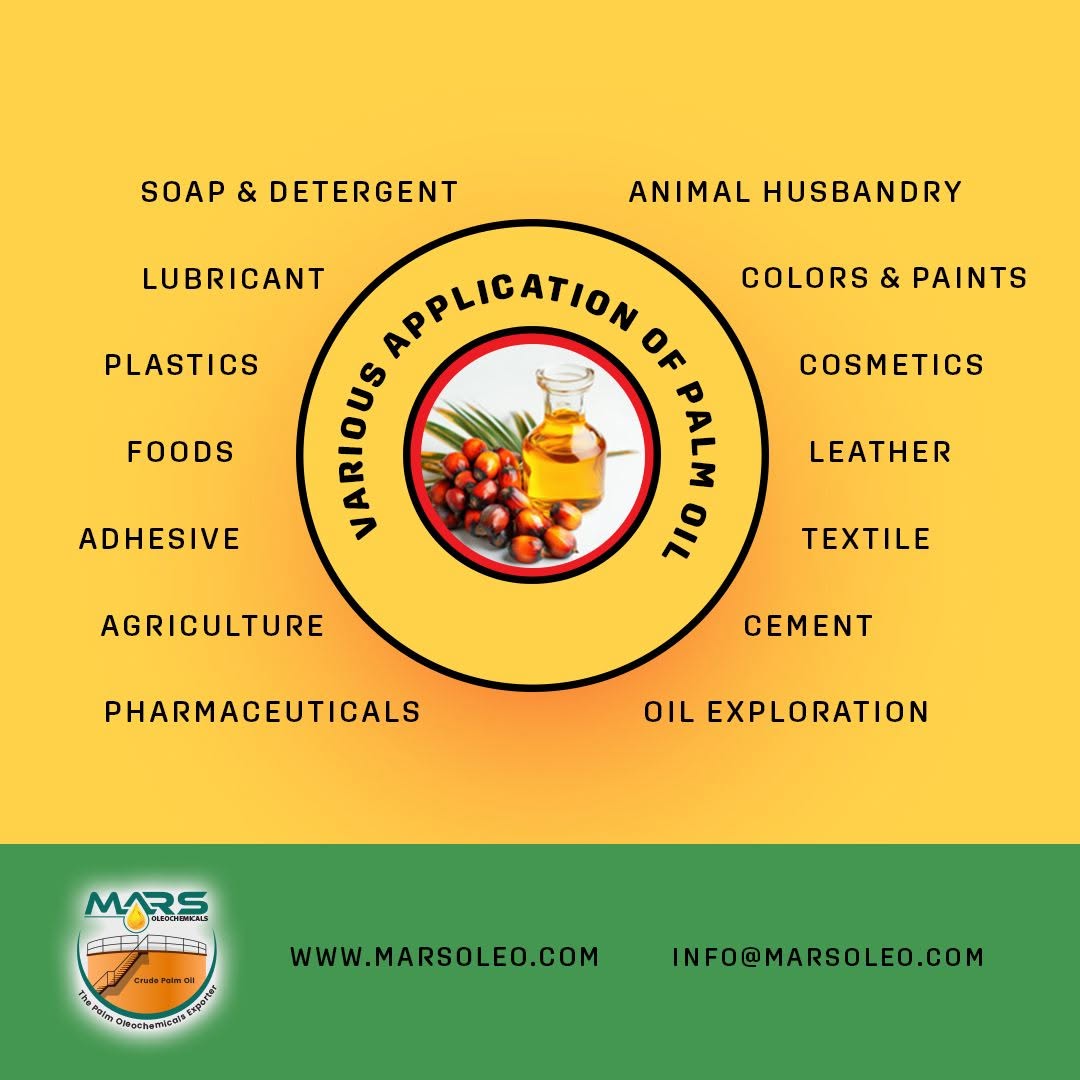
Palm oil is widely recognized as an important food oil, but its industrial significance extends much further. Through refining, fractionation and oleochemical processing, palm and palm-kernel oils can be transformed into a broad family of ingredients used across food manufacturing, detergents, personal care, industrial chemicals and specialty applications.
Palm-based oleochemical production can generate fatty acids, fatty alcohols, glycerine, esters and surfactant intermediates. These downstream products have properties very different from the original vegetable oil and serve industries including soap manufacturing, household cleaning, cosmetics, lubricants, textiles and leather processing.

Palm oil and its derivatives support food, soap, cosmetics, lubricants, textiles, agriculture and industrial manufacturing.
Further downstream processing allows palm-derived chemistry to support applications in plastics, paints, coatings, adhesives, agriculture and specialty industrial formulations. Animal-nutrition products based on palm fatty acids represent another important category. Each application requires a product manufactured to the appropriate technical specification.
Industrial buyers should identify the required end use before selecting a palm-based material. Food manufacturers may require RBD Palm Oil, Palm Olein or Palm Stearin, while chemical manufacturers may need specific Fatty Acids, Fatty Alcohols, Glycerine, Esters or Surfactants. Matching product chemistry and grade to the application is essential for reliable performance.
What are the main applications of palm oil? Palm oil is widely used in cooking, frying, margarine, shortening, bakery fats and other food applications, while its downstream derivatives serve many industrial sectors.
Is palm oil used in cosmetics? Palm-derived ingredients are widely used in cosmetics, including glycerine, fatty acids, fatty alcohols, esters and surfactants.
Is palm oil used in soap? Palm oil and palm-kernel-derived fatty materials are major feedstocks for soap and Soap Noodle manufacturing.
Is palm oil used in detergents? Palm-derived fatty alcohols and surfactants are widely used in detergent and cleaning formulations.
Is palm oil used in lubricants? Palm-derived fatty acids and esters can be incorporated into selected lubricant and metalworking formulations.
Is palm oil used in textiles? Palm-derived oleochemicals can be used in textile lubricants, wetting agents, surfactants and processing auxiliaries.
Is palm oil used in leather? Oleochemical derivatives such as Oleic Acid can be incorporated into suitable leather-conditioning and fatliquoring systems.
Is palm oil used in pharmaceuticals? Appropriate pharmaceutical-compliant palm-derived ingredients such as Glycerine and certain fatty-acid derivatives may be used in pharmaceutical formulations.
Is palm oil used in animal feed? Specialized palm-derived feed fats and fatty-acid products can be incorporated into suitable animal-nutrition formulations.
Is palm oil used in plastics? Palm-derived lubricants, esters and other oleochemical derivatives can be used in selected polymer-processing applications.
Is palm oil used in paints? Palm-derived surfactants, fatty acids and specialty derivatives may be incorporated into paint and coating systems.
Is crude palm oil directly used in all these industries? No. Many industrial applications use processed palm fractions or downstream oleochemicals rather than crude palm oil itself.
What palm-based products does Mars Oleochemicals supply? Mars Oleochemicals portfolio includes palm oil products, Refined Glycerine, Soap Noodles, Fatty Acids, Fatty Alcohols, Surfactants, Esters and specialty palm-derived products.
How can buyers request palm-based products? Buyers can send the required product, grade, specification, quantity, packaging, application and destination to info@marsoleo.com.







Home :: Products :: Enquiry :: Contact Us :: Site Map
Copyright All Rights Reserved © 2025. Mars Oleochemicals :: Disclaimer :: Privacy Policy