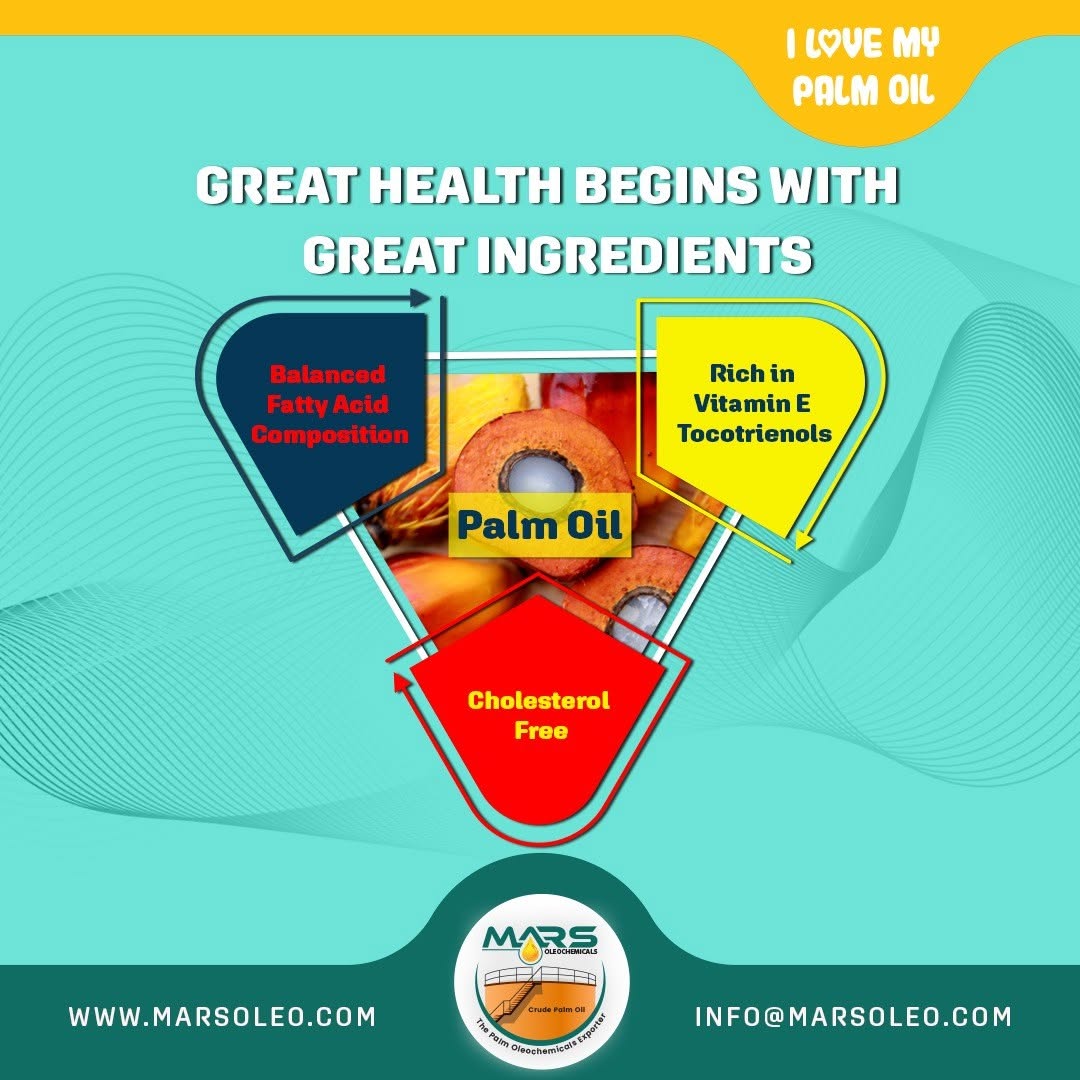
Palm oil has a distinctive fatty-acid composition comprising approximately 50% saturated fatty acids and 50% unsaturated fatty acids. The unsaturated portion consists primarily of oleic acid and linoleic acid, while palmitic acid and stearic acid form most of the saturated fraction. Typical values are around 44-45% palmitic acid, 39-40% oleic acid, approximately 10% linoleic acid and about 4-5% stearic acid, although exact composition varies by origin and product grade.
Yes. Palm oil naturally contains vitamin E compounds from both the tocopherol and tocotrienol families. MPOB reports significant levels of these compounds in crude palm oil, although concentrations in finished products depend on refining, fractionation, storage and product specification. This is why commercial nutrient claims should be based on the relevant grade and Certificate of Analysis rather than assumed for every palm-oil product.

Palm oil contains balanced fatty acids, natural vitamin E compounds, and no dietary cholesterol naturally.
Palm oil is obtained from plant material and therefore naturally contains no dietary cholesterol. This characteristic applies to the oil itself; if palm oil is incorporated into a finished food containing other ingredients, any “cholesterol-free” claim for that final product should comply with the applicable labelling regulations and complete formulation.
Palm oil's composition gives it a useful balance between liquid and solid fat characteristics. It can be fractionated into products such as Palm Olein and Palm Stearin, providing manufacturers with different melting profiles for frying oils, bakery products, margarine, shortening, confectionery and specialty fats. Its oxidative stability and year-round availability also contribute to its importance in commercial food production.
Does palm oil have a balanced fatty-acid composition? Palm oil contains approximately 50% saturated and 50% unsaturated fatty acids. Its principal fatty acids include palmitic, oleic, linoleic and stearic acids.
What are the main fatty acids in palm oil? The main fatty acids are palmitic acid, oleic acid, linoleic acid and stearic acid. Typical proportions are approximately 44-45%, 39-40%, 10% and 4-5% respectively.
Does palm oil contain vitamin E? Yes. Palm oil naturally contains vitamin E compounds, including tocopherols and tocotrienols.
What are tocotrienols? Tocotrienols are members of the vitamin E family. Palm oil is a notable natural source of several tocotrienol forms.
Is palm oil cholesterol-free? Yes. Palm oil is plant-derived and naturally contains no dietary cholesterol.
Does refined palm oil contain the same vitamin E as crude palm oil? Not necessarily. Refining and processing can alter the amount of naturally occurring vitamin E retained in the final oil, so product-specific values should come from analytical specifications.
Is palm oil completely unsaturated or completely saturated? Neither. Palm oil contains both saturated and unsaturated fatty acids in roughly equal proportions.
What is Palm Olein? Palm Olein is the more liquid fraction obtained when refined palm oil is fractionated and is widely used for cooking and frying.
What is Palm Stearin? Palm Stearin is the harder fraction of palm oil and is used in formulations requiring higher solid-fat content, including certain bakery and specialty-fat applications.












Home :: Products :: Enquiry :: Contact Us :: Site Map
Copyright All Rights Reserved © 2025. Mars Oleochemicals :: Disclaimer :: Privacy Policy