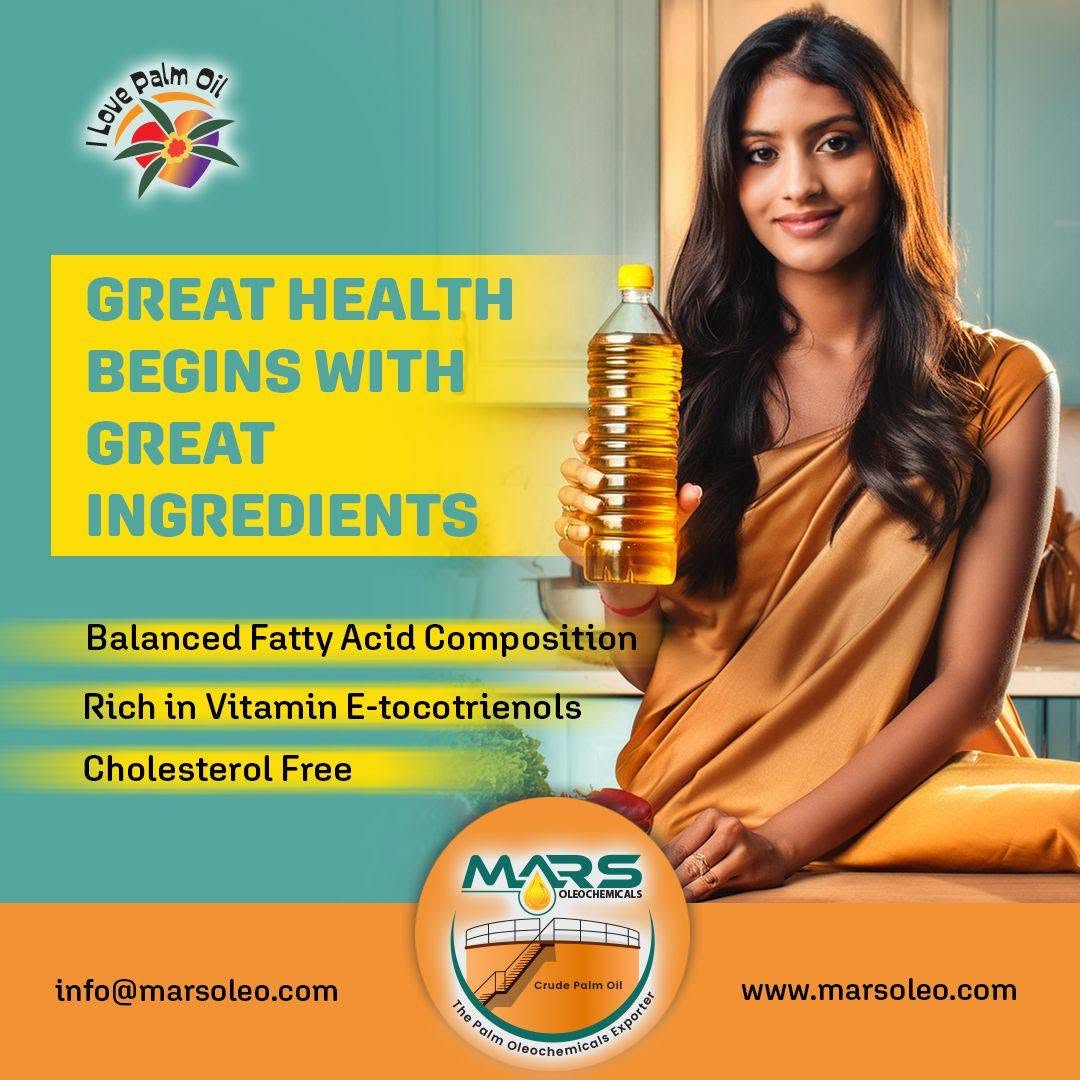
Palm oil is a plant-derived edible oil with a distinctive fatty-acid composition that supports a wide range of food-processing applications. Its fatty acids are approximately divided between saturated and unsaturated fats. The principal fatty acids include palmitic acid, oleic acid, stearic acid and linoleic acid. This composition contributes to palm oil's semi-solid texture, processing stability and suitability for frying, bakery fats, margarine, shortening and other food formulations. Malaysian Palm Oil Council materials describe the composition as approximately 50% saturated and 50% unsaturated fatty acids.
Palm oil naturally contains vitamin E compounds belonging to the tocopherol and tocotrienol families. Tocotrienols represent a significant proportion of the vitamin E naturally present in palm oil. However, the actual concentration depends on the source, oil grade and refining process. Crude palm oil and specially processed red palm oil generally retain higher levels of vitamin E and carotenoids than fully refined, bleached and deodorized palm oil. Any nutritional claim should therefore be supported by the product's specification or Certificate of Analysis.

Malaysian palm oil nutritional composition and food application information from Mars Oleochemicals.
Palm oil is derived from the fruit of the oil palm and does not naturally contain dietary cholesterol. Cholesterol occurs primarily in animal-derived foods, while plant oils may contain phytosterols instead. The phrase “cholesterol-free” should describe the oil's composition rather than suggest that consuming unlimited quantities will automatically improve health. Food manufacturers must also follow the nutritional-labelling regulations applicable in the destination market.
Mars Oleochemicals supplies Malaysian palm oil products for food manufacturers, importers, distributors and industrial buyers worldwide. Available products may include RBD Palm Oil, RBD Palm Olein, RBD Palm Stearin, red palm oil and specialty palm-based fats, subject to specification and availability. Buyers should select the appropriate grade according to the required melting profile, frying stability, texture, nutritional composition and finished-product application. For quotations, send the required grade, quantity, packing and destination port to info@marsoleo.com
Typical palm oil composition may include approximately:
Exact values vary according to the oil grade, origin and analytical specification.
1. Does palm oil have a balanced fatty-acid composition? Palm oil contains approximately equal proportions of saturated and unsaturated fatty acids. Its major fatty acids include palmitic, oleic, linoleic and stearic acids.
2. Does palm oil contain vitamin E tocotrienols? Yes. Palm oil naturally contains vitamin E compounds, including tocopherols and tocotrienols. The amount retained depends on the oil grade and refining process.
3. Is palm oil cholesterol-free? Yes. Palm oil is plant-derived and is naturally free from dietary cholesterol.
4. Does refined palm oil contain the same nutrients as red palm oil? Not necessarily. Red palm oil generally retains more carotenoids and vitamin E compounds, while refining may reduce the concentrations of some naturally occurring micronutrients.
5. Is palm oil suitable for a healthy diet? Palm oil may be consumed as part of a varied diet, but it contains saturated fat. Overall intake should follow recognised dietary guidance, including limits on saturated-fat consumption.











Home :: Products :: Enquiry :: Contact Us :: Site Map
Copyright All Rights Reserved © 2025. Mars Oleochemicals :: Disclaimer :: Privacy Policy