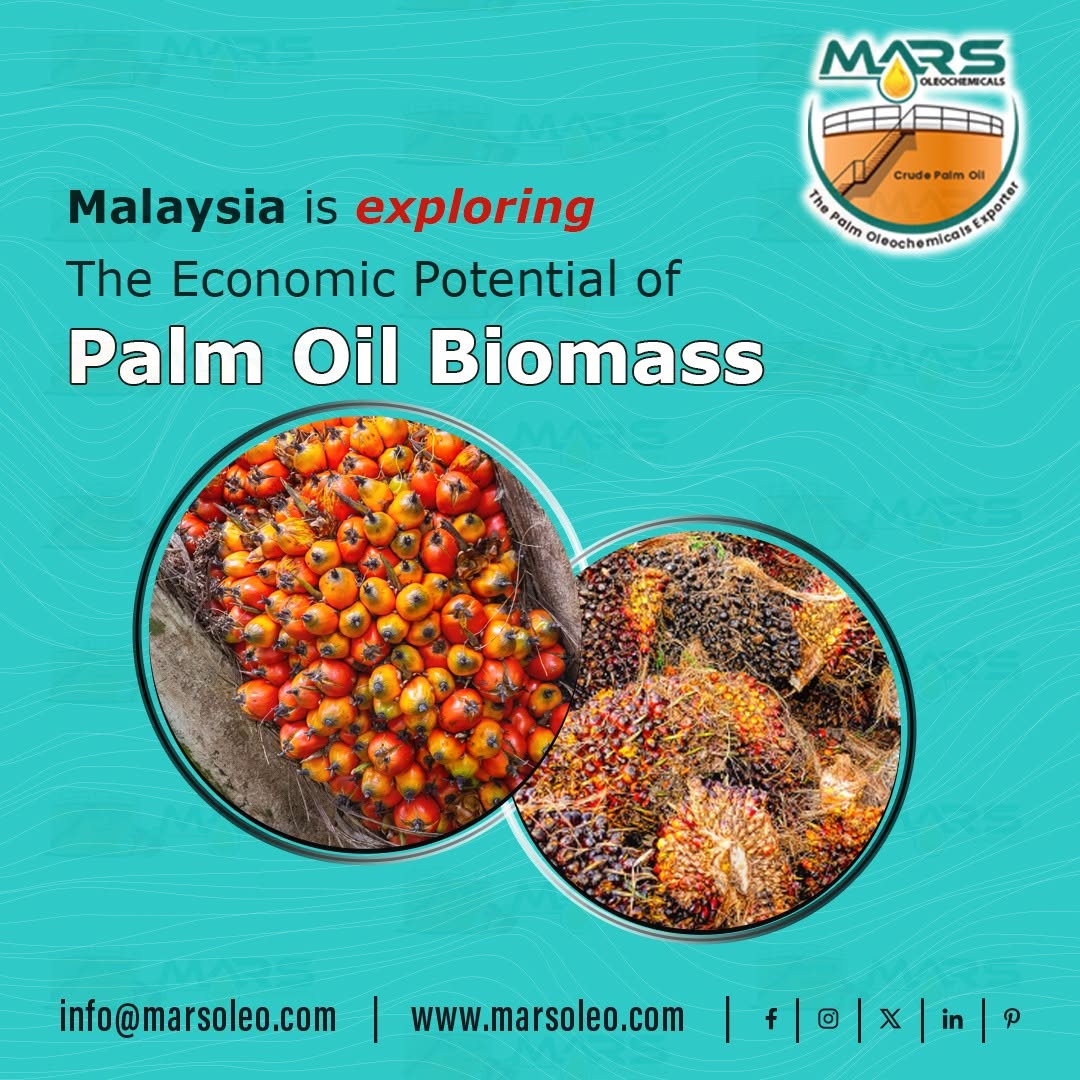
Malaysia's Palm Oil Biomass industry presents significant opportunities for renewable energy, sustainable resource management and value-added industrial development. Generated throughout oil palm plantations and palm oil milling operations, biomass includes Oil Palm Trunks (OPT), Oil Palm Fronds (OPF), Empty Fruit Bunches (EFB), Palm Kernel Shells (PKS) and Mesocarp Fibres (MF). These agricultural and processing by-products provide valuable feedstocks for Malaysia's developing bioeconomy.
Palm Oil Biomass has considerable economic potential because suitable materials can be converted into bioenergy, organic fertilizers, biochar, biomass pellets, bioplastics and bio-based chemicals. Through appropriate processing technologies, biomass resources can support electricity generation, renewable fuel production, agricultural soil improvement and industrial material manufacturing. These developments can create additional value from palm oil industry by-products while encouraging more efficient resource utilization.

Malaysia's palm oil biomass potential, renewable energy benefits, industrial applications and circular economy.
Malaysia continues to promote the development of palm-based biomass and circular-economy industries through investment, research and industrial innovation. Responsible biomass utilization can help reduce the disposal of recoverable materials, encourage renewable-resource applications and create opportunities for industrial diversification. Environmental and economic benefits depend on collection methods, processing efficiency, transportation, emissions and sustainable feedstock management.
Mars Oleochemicals Sdn. Bhd., an MPOB-licensed Malaysian exporter, supports awareness of palm oil industry developments and the growing potential of renewable palm-based resources. Through its focus on international oleochemical trade, industry knowledge and palm-derived products, Mars Oleochemicals contributes to connecting Malaysia's established palm oil industry with evolving global market opportunities.
Visit our website at www.marsoleo.com For product requirements, technical documentation, commercial information and international export inquiries, please email us at info@marsoleo.com.
What are the main advantages of Palm Oil Biomass in Malaysia? Palm oil biomass provides renewable agricultural feedstocks, broad industrial application potential and opportunities to convert palm oil industry by-products into valuable commercial resources.
How does Palm Oil Biomass support renewable energy production? Suitable palm biomass materials, including empty fruit bunches, mesocarp fibres and palm kernel shells, can be used as feedstocks for biomass energy systems. Palm oil mill effluent can also support biogas production through appropriate treatment.
What are the economic benefits of utilizing Palm Oil Biomass? Palm oil biomass utilization can create additional value from agricultural by-products, encourage biomass processing investments, support industrial diversification and develop new bio-based product markets.
What are the major industrial applications of Palm Oil Biomass? Major applications include biomass fuel, biochar, compost, organic fertilizers, fibreboard, activated carbon, renewable energy and selected bio-based chemicals and materials.
How does Palm Oil Biomass contribute to the circular economy? Palm oil biomass supports circular-economy practices by recovering useful materials from plantation and milling operations and converting them into industrial products, agricultural inputs and renewable energy resources.









Home :: Products :: Enquiry :: Contact Us :: Site Map
Copyright All Rights Reserved © 2025. Mars Oleochemicals :: Disclaimer :: Privacy Policy