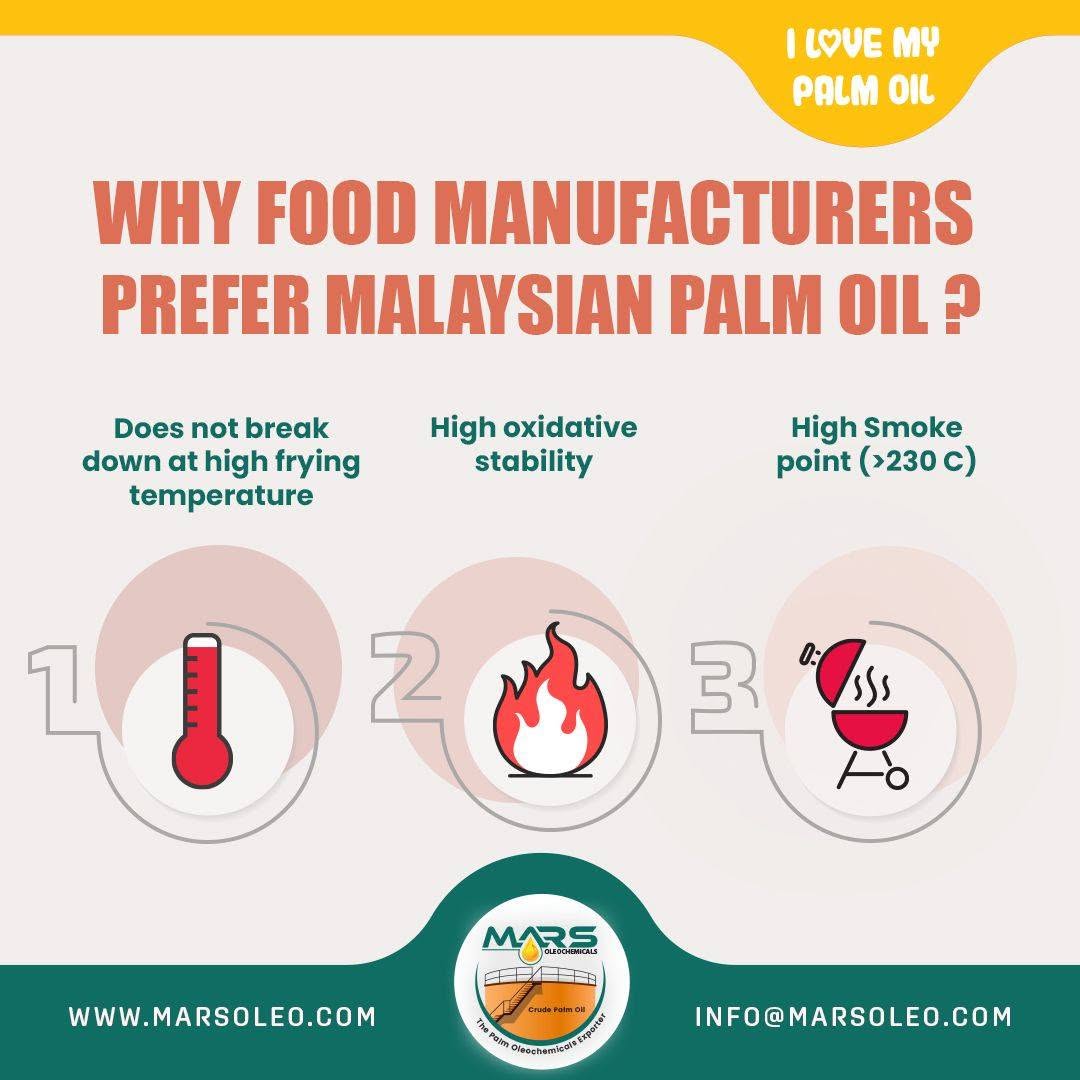
Palm oil and palm olein have a fatty-acid composition that gives them useful resistance to oxidative deterioration compared with many highly polyunsaturated oils. MPOB research reports substantially higher oxidative-stability-index values for palm oil and palm olein than soybean, sunflower and several other vegetable oils under the tested conditions. This helps explain their long-standing use in commercial frying and industrial food production.
Oxidative stability describes how well an oil resists chemical deterioration when exposed to oxygen, heat and extended processing conditions. During frying, all oils eventually undergo oxidation, hydrolysis and formation of breakdown compounds. A more stable oil generally deteriorates more slowly under comparable conditions, helping manufacturers manage frying performance, oil quality and finished-food consistency. MPOB studies have found palm-based oils to perform effectively under extended frying conditions.

Malaysian palm oil oxidative stability, frying performance and versatile functionality for industrial food manufacturing applications.
Refined palm oils can have smoke points suitable for normal commercial frying temperatures, but a single value such as “above 230°C” should not be stated for every grade. An MPOB frying study measured initial smoke points of approximately 228°C for special-quality palm olein and 208°C for standard palm olein. Smoke point decreases as oil quality deteriorates and free fatty acids increase.
Palm oil can function as a liquid oil, semi-solid ingredient or structured fat. Fractionation produces Palm Olein, commonly selected for cooking and frying, and Palm Stearin, used in firmer applications such as margarine, shortening and bakery fats. This gives manufacturers substantial flexibility in texture, melting behaviour, processing and finished-product design.
Why do food manufacturers use Malaysian palm oil? Food manufacturers use palm oil because it provides useful oxidative stability, versatile physical properties and suitability for frying, bakery, margarine, shortening and other processed-food applications.
Is palm oil stable for frying? Palm oil and palm olein have good oxidative stability compared with many highly polyunsaturated vegetable oils, making them widely used for commercial frying. Like all oils, however, they eventually deteriorate during prolonged heating.
Does palm oil break down during frying? Yes, eventually. No edible oil is completely resistant to heat degradation. Palm oil generally shows useful stability, but oxidation, hydrolysis and other changes still occur during repeated or prolonged frying.
What is the smoke point of palm oil? It depends on the grade and condition of the oil. MPOB research measured around 208°C for standard palm olein and approximately 228°C for a special-quality palm olein before frying.
Is a smoke point above 230°C guaranteed for Malaysian palm oil? No. Smoke point varies by grade, refining quality, free fatty acids, contamination and previous heating. It should not be presented as a universal specification unless supported by the specific product data.
What is RBD Palm Olein used for? RBD Palm Olein is commonly used for cooking, commercial frying, snack-food production and instant-noodle manufacturing.
What is Palm Stearin used for? Palm Stearin is the harder fraction of palm oil and is commonly used in margarine, shortening, bakery fats, pastry fats and other products requiring greater firmness.
Why is oxidative stability important? Oxidative stability helps an oil resist deterioration during exposure to heat and oxygen, which is particularly important in commercial frying and continuous food processing.
Can palm oil be used in bakery products? Yes. Palm oil, palm stearin and palm-based specialty fats are used in bakery shortening, cakes, biscuits, pastries, fillings and other applications requiring controlled structure and melting behaviour.













Home :: Products :: Enquiry :: Contact Us :: Site Map
Copyright All Rights Reserved © 2025. Mars Oleochemicals :: Disclaimer :: Privacy Policy