


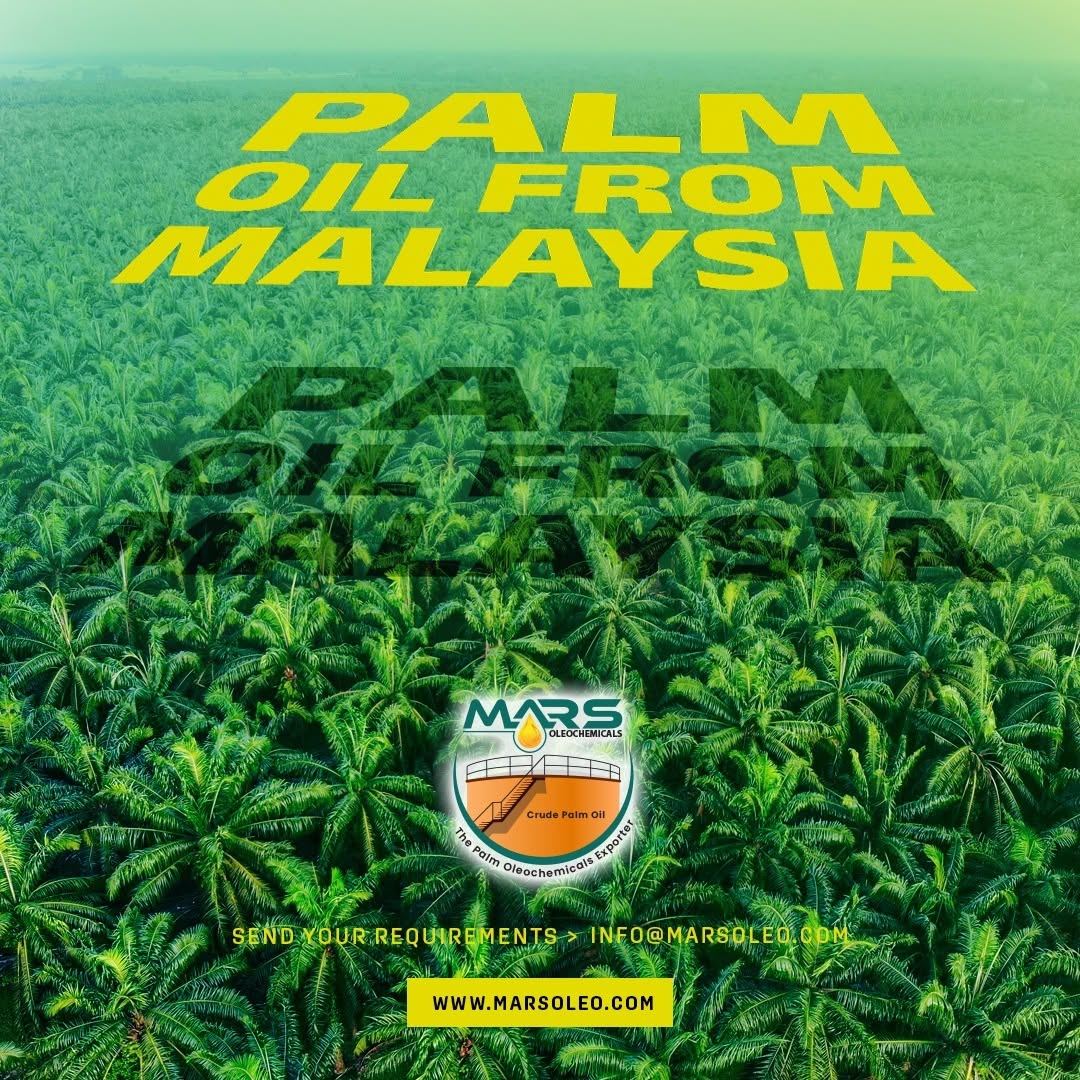
Palm Oil from Malaysia is an important agricultural and industrial commodity supporting international food manufacturing, oleochemical processing and vegetable oil distribution. Derived from the oil palm tree (Elaeis guineensis), Malaysian palm oil is produced through an established network of plantations, harvesting operations, palm oil mills, refineries and downstream processing facilities. The industry operates across Peninsular Malaysia, Sabah and Sarawak, with oil palm cultivation and processing contributing to Malaysia's agricultural economy and international commodity trade. According to the Malaysian Palm Oil Board (MPOB), Malaysia produced approximately 20.28 million metric tonnes of Crude Palm Oil (CPO) in 2025 and exported approximately 15.27 million metric tonnes of palm oil during the same year. These figures reflect the country's substantial role in global vegetable oil supply. Malaysia also manufactures and exports palm-derived ingredients used by food processors, chemical manufacturers and industrial buyers. The commercial identity of Malaysian palm oil involves more than its country of origin: product grade, processing method, quality specifications and supporting documentation are important considerations for buyers sourcing vegetable oils from Malaysia.
The production of Malaysian Palm Oil begins with harvesting Fresh Fruit Bunches (FFB) from mature oil palm trees. The harvested fruit is processed at palm oil mills, where the fleshy mesocarp is separated and its oil extracted to produce Crude Palm Oil (CPO). Palm kernels are recovered separately and processed into Palm Kernel Oil (PKO), which has a different fatty acid composition and industrial application profile. Crude Palm Oil can undergo refining, bleaching and deodorization to produce RBD Palm Oil, a refined vegetable oil suitable for various food-processing applications when appropriate food-grade specifications are met. Further fractionation separates refined palm oil into RBD Palm Olein, the more liquid fraction, and RBD Palm Stearin, the higher-melting fraction. These products have different physical characteristics, allowing food manufacturers to select suitable grades for cooking oils, industrial frying, shortening, margarine, bakery products and specialty fat formulations. Malaysian palm oil and palm kernel oil are also valuable feedstocks for downstream oleochemical processing, including the manufacture of fatty acids, fatty alcohols, glycerine and related chemical ingredients. Understanding these distinctions helps international buyers select the correct product for their technical and commercial requirements.

Malaysian palm oil originates from oil palm plantations and supports global food and oleochemical industries.
Malaysian Palm Oil Quality Assurance involves evaluating the characteristics of individual products against agreed technical specifications and appropriate industry standards. Crude Palm Oil is commonly assessed using parameters such as Free Fatty Acid (FFA) content, moisture, impurities and relevant quality indicators, while refined palm oil and its fractions may require additional specifications covering color, iodine value, melting characteristics, cloud point and other parameters. International buyers should review the relevant Technical Data Sheet (TDS), Certificate of Analysis (COA) and applicable product-origin information before confirming commercial acceptance. Sustainability and traceability are also increasingly important considerations in international palm oil sourcing. The Malaysian Sustainable Palm Oil (MSPO) certification framework covers relevant activities across the palm oil value chain, including plantations, mills, processing facilities and dealers. Certification claims must be verified against the applicable certificate holder, current validity, product scope and supply-chain documentation. Malaysian origin does not automatically establish that a particular shipment is certified sustainable or fully traceable to an individual plantation. Importers requiring certified or traceable palm oil should specify the relevant standards and documentation requirements in advance so that available products can be evaluated against their purchasing criteria.
Mars Oleochemicals Sdn. Bhd. is a Malaysia-based exporter supporting international sourcing and commercial enquiries for palm oil, palm kernel oil and palm-derived oleochemical products. Its published product portfolio includes Crude Palm Oil (CPO), RBD Palm Oil, RBD Palm Olein, RBD Palm Stearin, Crude Palm Kernel Oil (CPKO), RBD Palm Kernel Oil and related palm-based ingredients. These products serve different manufacturing requirements, including vegetable oil refining, edible oil production, specialty fats, personal care ingredients, cleaning products and downstream oleochemical manufacturing. International buyers considering Palm Oil from Malaysia should identify the exact product grade, preferred origin, technical specification, quantity, packaging, destination port and applicable delivery terms. Where a particular certification, food-grade specification or traceability requirement applies, it should be included in the initial enquiry. Commercial availability, product quality, documentation and shipment arrangements must be confirmed for the individual transaction. Businesses researching Malaysian Palm Oil Suppliers, Crude Palm Oil Exporters, RBD Palm Oil, Palm Olein, Palm Stearin and Palm Kernel Oil from Malaysia can visit our website at www.marsoleo.com For product requirements, technical documentation, commercial information and international export inquiries, please email us at info@marsoleo.com.
What is Palm Oil from Malaysia, and where is it produced? Malaysian Palm Oil is obtained from the fleshy mesocarp of oil palm fruit grown and processed within Malaysia's palm oil industry. Major producing regions include Peninsular Malaysia, Sabah and Sarawak. The industry produces Crude Palm Oil, refined palm oil and various fractions used in food manufacturing and downstream industrial applications.
What types of Malaysian palm oil products are available for international buyers? Major product categories include Crude Palm Oil (CPO), RBD Palm Oil, RBD Palm Olein, RBD Palm Stearin, Crude Palm Kernel Oil (CPKO) and Refined Palm Kernel Oil. These materials differ in their processing, chemical composition and commercial applications. The required grade and technical specifications should be confirmed before purchase.
What is the difference between Malaysian Palm Oil and Palm Kernel Oil? Palm Oil is extracted from the fleshy mesocarp of oil palm fruit, while Palm Kernel Oil is extracted from the seed inside the fruit. Their fatty acid compositions and industrial properties differ substantially. Under the international Harmonized System, non-chemically-modified palm oil generally falls under Heading 1511, while palm kernel oil falls under Heading 1513.
Is all Malaysian palm oil automatically certified sustainable? No. Malaysian origin alone does not establish sustainability certification. Buyers requiring MSPO, RSPO or another relevant certification should verify the certificate holder, validity, applicable product scope and supporting supply-chain documents. Requirements should be confirmed for the particular product and commercial transaction.
How can international buyers request Palm Oil from Malaysia through Mars Oleochemicals? The enquiry should identify the product grade, quantity, technical requirements, preferred origin, packaging, destination port, shipment period and delivery terms. Commercial availability, product documentation and any applicable certifications should be confirmed before purchase.





Home :: Products :: Enquiry :: Contact Us :: Site Map
Copyright All Rights Reserved © 2025. Mars Oleochemicals :: Disclaimer :: Privacy Policy


