


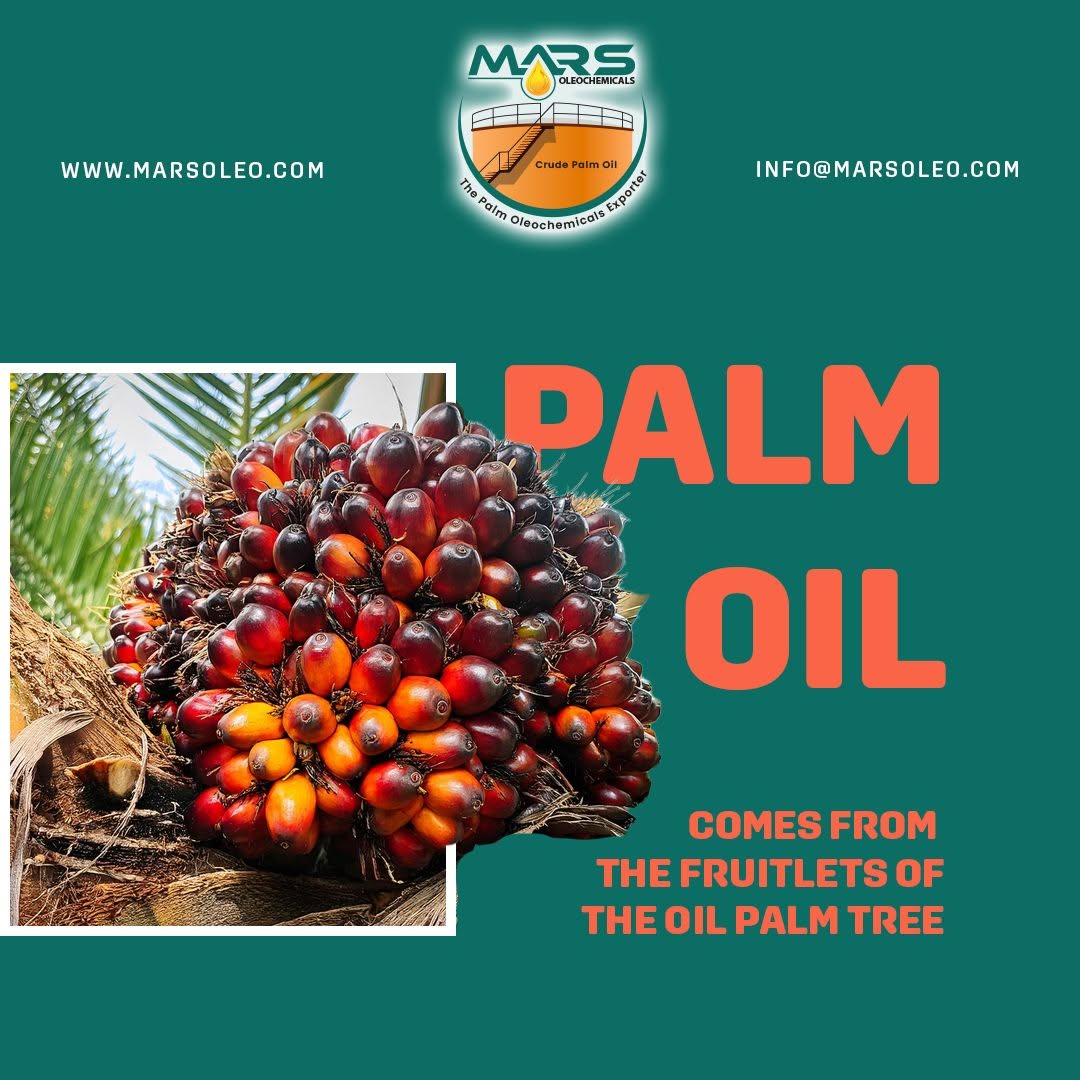
Palm oil is a widely used vegetable oil obtained from the fleshy fruitlets of the oil palm tree. The fruitlets grow in large bunches and develop distinctive reddish-orange coloring as they ripen. Crude palm oil (CPO) is extracted from the fruit's oil-rich mesocarp, while palm kernel oil is obtained separately from the seed. Palm oil is an important raw material for food processing, oleochemical manufacturing and numerous industrial applications.
Palm oil production begins with harvesting ripe fresh fruit bunches from oil palm plantations. At the processing mill, the bunches undergo sterilization, fruit separation, digestion and mechanical pressing to release crude palm oil. The extracted oil is subsequently clarified and dried before further processing or refining. Depending on the intended application, crude palm oil can be refined into RBD palm oil or processed into fractions such as palm olein and palm stearin, each offering different functional properties.

Palm oil is extracted from oil palm fruit flesh for food, cosmetics and industrial applications.
Palm oil is valued for its versatility, processing characteristics and suitability for different manufacturing requirements. Refined palm oil and its fractions are used in cooking oils, bakery products, margarines and other food applications, while palm-derived materials support the production of soaps, detergents, cosmetics and oleochemical ingredients. The oil palm is also a highly productive oil crop. Responsible production practices, traceable supply chains and credible sustainability certification can help buyers evaluate environmental and sourcing considerations.
Mars Oleochemicals supports international business interest in palm-derived oils and oleochemical products associated with Malaysia's established palm oil industry. Palm oil serves as an essential input across food, personal care and industrial value chains, with product suitability determined by grade, quality specifications and processing requirements. Businesses seeking information about palm-based products and international supply opportunities can explore www.marsoleo.com or contact info@marsoleo.com for commercial inquiries.
Where does palm oil come from? Palm oil comes from the fleshy mesocarp of fruitlets growing in bunches on the oil palm tree (Elaeis guineensis). It is distinct from palm kernel oil, which comes from the seed.
How is crude palm oil extracted? Ripe fresh fruit bunches are harvested, sterilized and stripped of their fruitlets. The fruitlets are digested and mechanically pressed, and the oil is clarified and dried.
What is the difference between crude palm oil and refined palm oil? Crude palm oil is the initially extracted oil. Refining removes selected impurities and undesirable components to produce grades such as RBD palm oil for suitable food and industrial uses.
What are the main applications of palm oil? Palm oil and its refined fractions are used in cooking oils, bakery fats, margarine and processed foods. Palm-derived materials are also used in soaps, cosmetics, oleochemicals and some biofuel applications.
Is all palm oil sustainably produced? No. Sustainability depends on how palm oil is produced and sourced. Buyers can assess traceability, environmental practices and applicable third-party certification rather than assuming all palm oil has the same sustainability status.









Home :: Products :: Enquiry :: Contact Us :: Site Map
Copyright All Rights Reserved © 2025. Mars Oleochemicals :: Disclaimer :: Privacy Policy


