


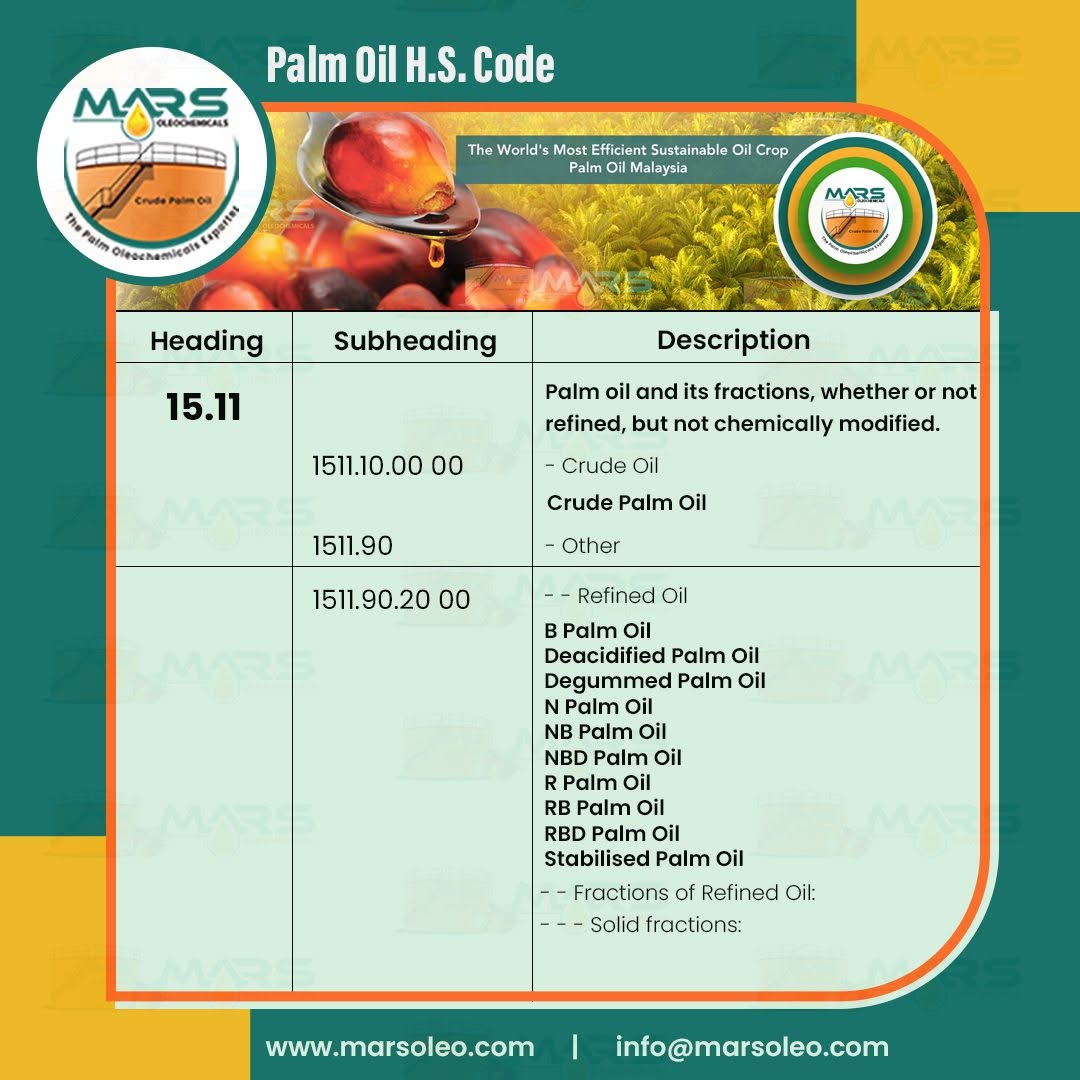
Palm Oil HS Codes are internationally recognized customs classification numbers used to identify palm oil and its fractions in cross-border trade. The Harmonized Commodity Description and Coding System, administered by the World Customs Organization (WCO), establishes a standardized classification framework used by customs authorities across international markets. Under this system, HS Heading 1511 covers palm oil and its fractions, whether or not refined, provided they have not been chemically modified. The international six-digit classifications distinguish Crude Palm Oil under 1511.10 from other palm oil and fractions under 1511.90. These classifications are relevant to Malaysian palm oil exporters, international importers, freight forwarders, customs agents and commodity traders. Accurate HS classification helps businesses identify applicable tariff measures, import or export restrictions, customs documentation requirements and trade statistics. Mars Oleochemicals Sdn. Bhd., a Malaysia-based palm oil and oleochemical exporter, provides commercial product information for crude and refined palm oil used in international manufacturing and trading activities.
Malaysia applies more detailed national tariff classifications within the internationally harmonized HS framework. Crude Palm Oil (CPO) is classified under Malaysian tariff code 1511.10.00.00, while Refined Palm Oil appears under 1511.90.20.00 in the Malaysian Customs tariff schedule. Other products, including refined palm olein, refined palm stearin and unrefined palm oil fractions, may require different tariff codes according to their physical characteristics, iodine value, packaging and processing status. For example, the Malaysian tariff schedule includes separate subdivisions for solid fractions of refined palm oil, liquid fractions of refined palm oil and fractions of unrefined oil. These distinctions are important because RBD Palm Oil, RBD Palm Olein and RBD Palm Stearin are commercially different products. Palm kernel oil is classified separately under HS Heading 1513 rather than Heading 1511. International buyers should verify the applicable customs classification for each product and should not assume that Malaysian national tariff codes are identical to those used by importing countries.

Palm oil uses HS heading 1511, with separate classifications for crude oil and other fractions.
Correct palm oil customs classification is essential when evaluating import duties, export duties and applicable international trade requirements. Although the first six digits of an HS code follow an international standard, individual countries may introduce additional tariff subdivisions and apply different customs duty rates. Import duty is normally determined by the importing country's applicable tariff schedule, while Malaysian export duties depend on the specific commodity and relevant regulations. Crude Palm Oil export duty in Malaysia can change according to official reference-price arrangements, and published monthly rates should be checked before shipment. Importers must also consider possible preferential tariffs, rules of origin, value-added taxes and other applicable charges. Common international shipping documents include a Commercial Invoice, Packing List and Bill of Lading, together with a Certificate of Origin, Certificate of Analysis or other documentation where required. The product description, HS code, quantity and other declaration details should be consistent across the relevant commercial and customs records. Proper classification and documentation help reduce the risk of customs disputes, avoidable delays and incorrect tariff treatment.
Mars Oleochemicals Sdn. Bhd. supports international sourcing and export enquiries for Malaysian palm oil, palm-derived oleochemicals and related industrial ingredients. Its published portfolio includes Crude Palm Oil, RBD Palm Oil, RBD Palm Olein, RBD Palm Stearin and other palm-based products used in refining, food manufacturing and downstream industrial processing. Businesses importing these products should identify the required commercial grade, technical specifications, packaging arrangement, destination country and applicable customs classification before finalizing procurement. Buyers should also confirm any relevant import restrictions, licensing requirements, product certification, quality documentation and shipping conditions. The exact tariff classification and duty treatment should be verified against current official customs information for both countries involved. International manufacturers, importers and distributors researching Palm Oil HS Codes, Malaysian Customs Tariffs and Palm Oil Export Requirements can visit our website at www.marsoleo.com For product requirements, technical documentation, commercial information and international export inquiries, please email us at info@marsoleo.com.












Home :: Products :: Enquiry :: Contact Us :: Site Map
Copyright All Rights Reserved © 2025. Mars Oleochemicals :: Disclaimer :: Privacy Policy


