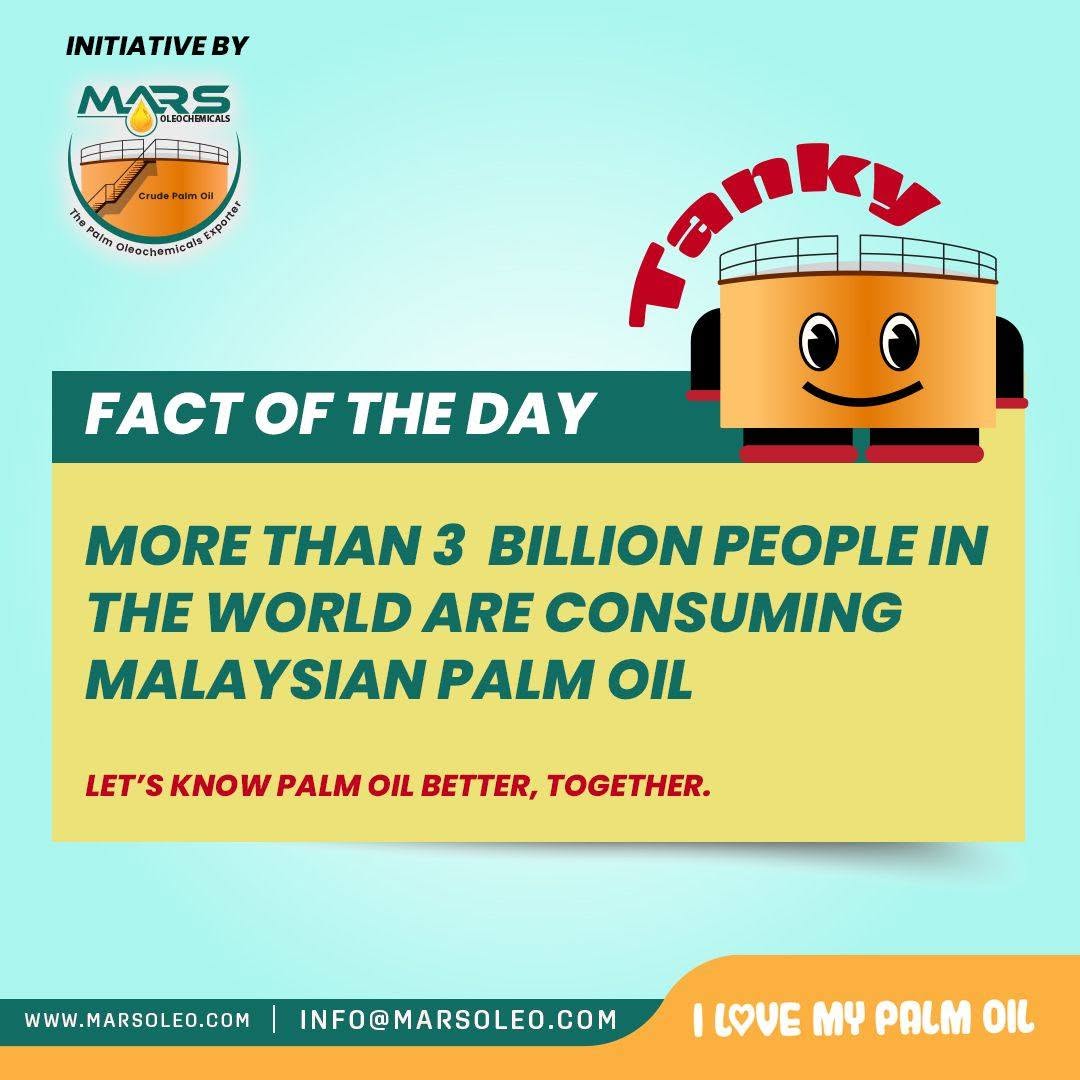
Palm oil has become one of the world's most widely used vegetable oils. Malaysian Palm Oil Council materials state that it serves as a major dietary fat for more than 3 billion people in approximately 150 countries. This figure describes the global reach of palm oil generally and should not be interpreted as meaning that every one of those consumers specifically uses Malaysian-origin palm oil.
Palm oil's commercial importance comes partly from its versatility. Different palm oil fractions can be used across cooking oils, food fats and numerous downstream formulations, while palm-derived feedstocks are also important to the oleochemical industry. This enables palm-based raw materials to serve manufacturers across food, home care, personal care and industrial markets.

Palm oil's global reach, versatility and applications across food, personal care, oleochemicals and industry.
Malaysia is an important producer, processor and exporter of palm oil and palm-based products serving international markets. Malaysian palm oil is supplied into food, specialty-fat and oleochemical value chains, while downstream palm-derived ingredients are used in a broad range of consumer and industrial products.
Beyond direct food applications, palm and palm-kernel feedstocks can be converted into fatty acids, fatty alcohols, glycerine, surfactants, esters and other oleochemical derivatives. This downstream versatility helps explain why palm-based raw materials have an important role in industries ranging from cosmetics and detergents to personal care and manufacturing.
How many people worldwide consume palm oil? Malaysian Palm Oil Council materials state that palm oil is a major source of dietary fat for more than 3 billion people across approximately 150 countries.
Do more than 3 billion people specifically consume Malaysian palm oil? The available source supports the figure for palm oil globally, not specifically Malaysian-origin palm oil. For accuracy, the claim should be written as “more than 3 billion people worldwide consume palm oil.”
In how many countries is palm oil consumed? MPOC materials cite approximately 150 countries in connection with the more-than-3-billion-consumer figure.
What are the most common uses of palm oil? Palm oil is widely used in food products, cooking oils, shortenings, specialty fats, soaps, personal care products and as a feedstock for numerous oleochemical derivatives.
Is palm oil used outside the food industry? Yes. Palm-derived products are also used in cosmetics, toiletries, cleaning products and other industrial applications.
What oleochemicals can be produced from palm-based feedstocks? Palm and palm-kernel feedstocks can be processed into products such as fatty acids, fatty alcohols, glycerine, surfactants and esters.
Why is palm oil considered versatile? Palm oil can be refined, fractionated and processed into multiple products with different functional properties, allowing it to serve many food and industrial applications.
Where can I enquire about Malaysian palm oil products? Malaysian palm oil and palm-based products can be sent to Mars Oleochemicals at info@marsoleo.com.







Home :: Products :: Enquiry :: Contact Us :: Site Map
Copyright All Rights Reserved © 2025. Mars Oleochemicals :: Disclaimer :: Privacy Policy