


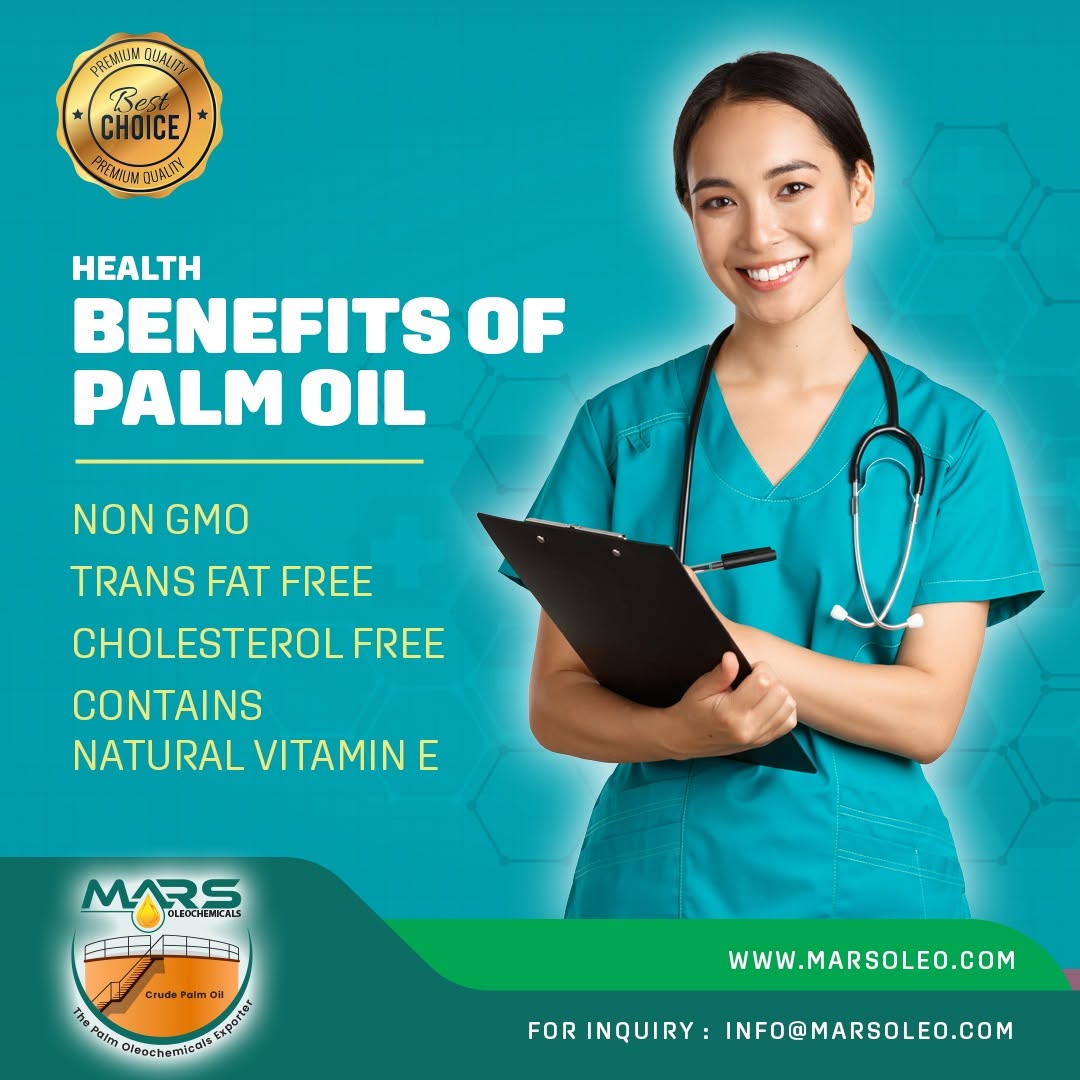
Palm oil is a widely used edible vegetable oil with a distinctive mixture of saturated and unsaturated fatty acids. As a plant-derived oil, it is naturally cholesterol-free and provides functional characteristics that make it suitable for numerous food-processing applications.
One of palm oil's notable nutritional characteristics is its natural vitamin E content. Palm-derived vitamin E includes both tocopherols and tocotrienols, with tocotrienols being an important subject of antioxidant and nutrition research. The amount retained varies depending on refining and the palm-oil grade.

Palm oil is cholesterol-free and contains vitamin E, but its saturated fat content warrants moderation.
Palm oil is naturally semi-solid, allowing food manufacturers to formulate many bakery fats, margarines and shortenings without partial hydrogenation. This is important because partially hydrogenated oils were historically a major source of industrial trans fats.
Palm oil also contains a substantial amount of saturated fat, so health messaging should consider the overall diet. WHO recommends limiting saturated-fat intake to less than 10% of total energy and prioritizing unsaturated fats where appropriate. Palm oil's strongest factual positioning is therefore its cholesterol-free plant origin, natural vitamin E content and functional food properties, rather than broad claims that it is inherently healthier than other oils.
Is palm oil cholesterol-free? Yes. As a plant-derived oil, palm oil is naturally free of dietary cholesterol.
Does palm oil contain vitamin E? Yes. Palm oil naturally contains vitamin E in both tocopherol and tocotrienol forms.
What are tocotrienols? Tocotrienols are members of the vitamin E family naturally present in palm oil and studied for antioxidant properties.
Is Malaysian palm oil GMO-free? Malaysian Palm Oil Council describes Malaysian palm oil as GMO-free. Commercial buyers requiring formal Non-GMO status should request appropriate supplier documentation.
Is palm oil trans-fat-free? Palm oil does not require partial hydrogenation to become semi-solid. Exact trans-fat-free labeling should comply with product analysis and applicable regulations.
Does palm oil contain unsaturated fat? Yes. Palm oil contains substantial oleic acid together with linoleic acid.
Is palm oil automatically healthy because it contains no cholesterol? No. Palm oil is cholesterol-free, but it also contains saturated fat. Overall dietary fat quantity and quality should be considered.
Can palm oil be part of a balanced diet? Palm oil can be included in a varied diet, while saturated-fat intake and overall dietary fat quality should follow applicable nutrition guidance.











Home :: Products :: Enquiry :: Contact Us :: Site Map
Copyright All Rights Reserved © 2025. Mars Oleochemicals :: Disclaimer :: Privacy Policy


