


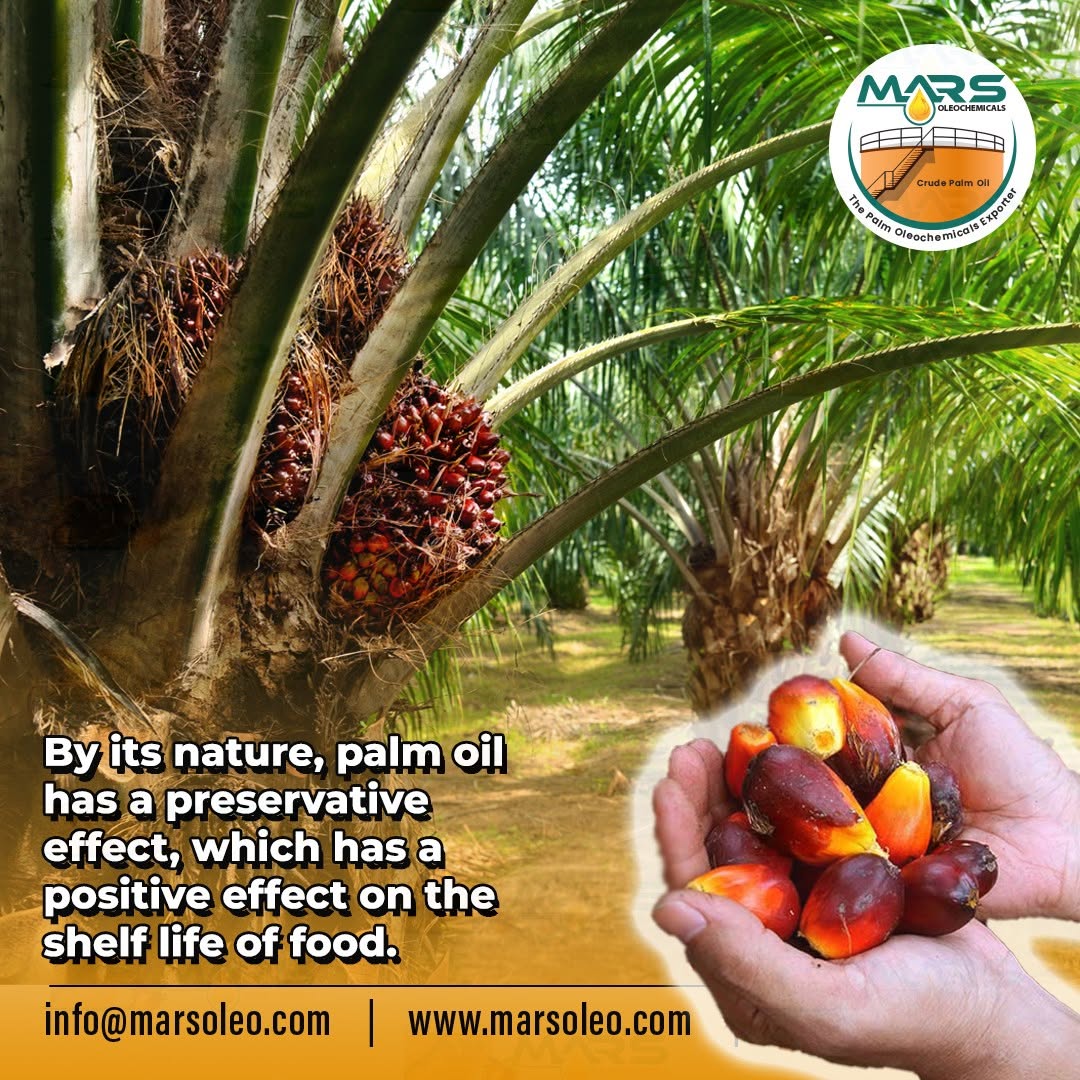
Palm Oil is a commercially important vegetable oil widely used in food processing, edible oil manufacturing and palm-based oleochemical production. One of its useful technical characteristics is its relatively high oxidative stability compared with many highly polyunsaturated vegetable oils. Palm oil contains a combination of saturated and unsaturated fatty acids, particularly palmitic acid and oleic acid, which contribute to its physical and chemical properties. This fatty acid composition can help reduce susceptibility to oxidation in suitable applications, making palm oil a practical ingredient for manufacturers evaluating oil stability and finished-product quality.
Palm Oil and Food Shelf Life are closely connected through the process of lipid oxidation. When oils and fats are exposed to oxygen, heat, light and certain other conditions, chemical reactions can gradually produce undesirable flavours, odours and quality changes. This process, often associated with oxidative rancidity, can influence the quality and storage life of fat-containing foods. Palm oil's comparatively favourable oxidative stability may help slow this form of deterioration in selected formulations. However, palm oil is not a universal food preservative, and it does not replace microbiological controls, safe processing, packaging or appropriate storage conditions.

Palm oil's natural oxidative stability food quality, frying performance and shelf life in suitable formulations.
Natural Antioxidants in Palm Oil include vitamin E compounds such as tocopherols and tocotrienols. Crude palm oil also contains naturally occurring carotenoids that contribute to its characteristic reddish-orange colour. These minor components may influence the oxidative characteristics of the oil. However, their concentrations change during refining, heating and storage. Manufacturers should therefore distinguish between Crude Palm Oil, Refined Bleached and Deodorised (RBD) Palm Oil, Palm Olein and other palm fractions when evaluating antioxidant retention and product stability.
Palm Oil in Food Manufacturing is used in edible cooking oils, frying applications, bakery shortenings, margarine, confectionery fats and other processed foods. Its suitability depends on the final product's fatty acid composition, desired melting behaviour, manufacturing temperatures and storage conditions. Oil quality assessments may include peroxide value, anisidine value, free fatty acid content and oxidative stability measurements. Actual shelf-life performance must be established through appropriate testing of the finished food product rather than assumptions based solely on the oil's general characteristics.
Mars Oleochemicals Sdn. Bhd., Malaysia, supports international sourcing and export inquiries for Crude Palm Oil, refined palm oil products, palm olein, palm stearin and related palm-based oleochemicals. Manufacturers, importers, distributors and international buyers can contact Mars Oleochemicals to discuss product availability, technical specifications, packaging, quality documentation and international supply requirements. Visit our website at www.marsoleo.com For product requirements, technical documentation, commercial information and international export inquiries, please email us at info@marsoleo.com.
Does palm oil act as a natural food preservative? Palm oil has natural oxidative stability that can help slow lipid oxidation in certain foods. It is not a general antimicrobial preservative and does not automatically prevent food spoilage.
Why does palm oil have good oxidative stability? Palm oil has a relatively low proportion of polyunsaturated fatty acids and contains naturally occurring antioxidant compounds, including tocopherols and tocotrienols, depending on processing.
Can palm oil help extend the shelf life of food products? Palm oil may support oxidative shelf-life performance in suitable foods. Actual shelf life depends on formulation, storage, packaging, processing and microbiological safety.
What is the difference between Crude Palm Oil and RBD Palm Oil in antioxidant content? Crude Palm Oil contains naturally occurring carotenoids and vitamin E compounds. Refining reduces or removes some minor components, and their remaining concentrations depend on the refining process.
Where can manufacturers source Malaysian palm oil for food and industrial applications? Mars Oleochemicals Sdn. Bhd. handles international inquiries for palm oil and related products.











Home :: Products :: Enquiry :: Contact Us :: Site Map
Copyright All Rights Reserved © 2025. Mars Oleochemicals :: Disclaimer :: Privacy Policy


