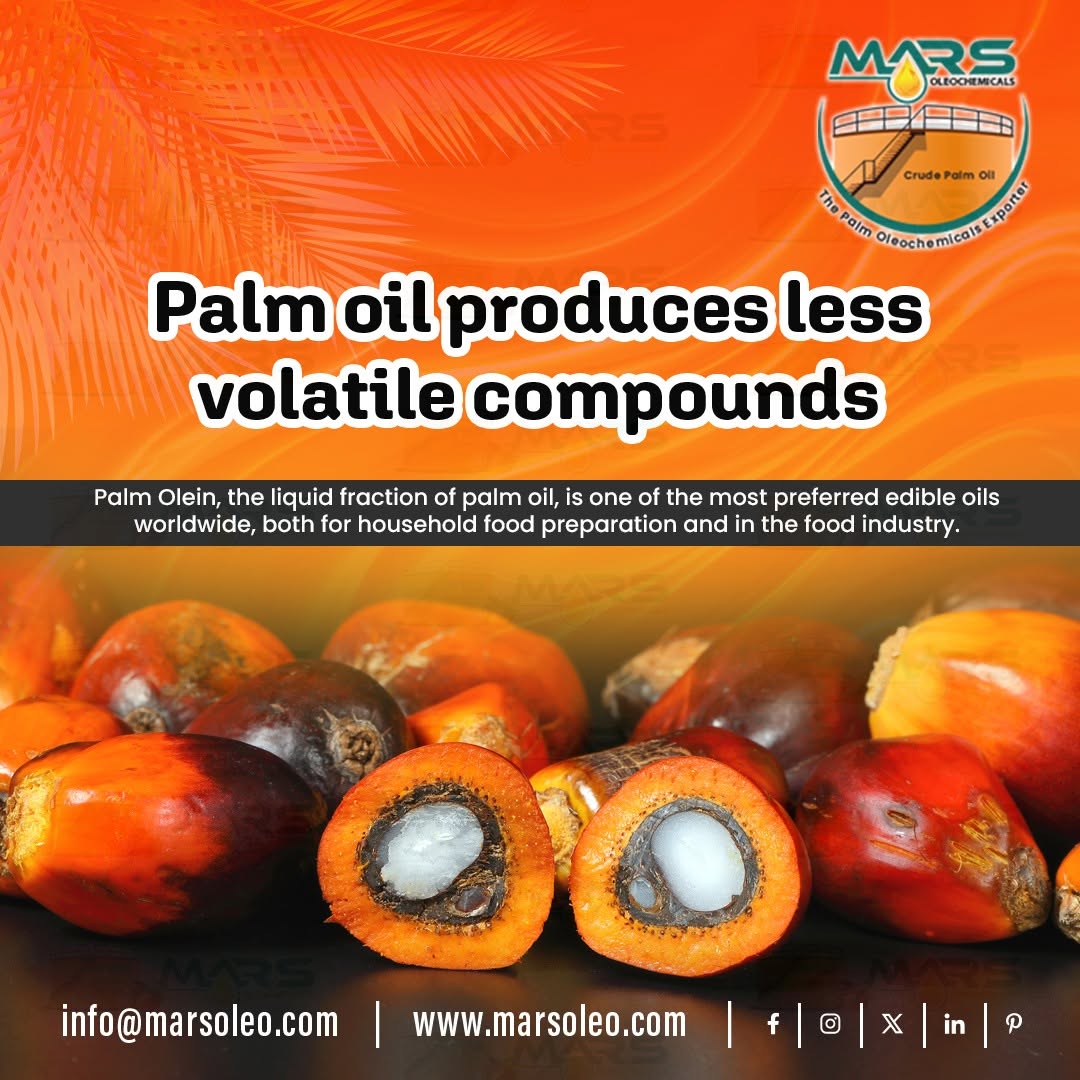
Palm Olein, the liquid fraction of palm oil, is a widely used edible vegetable oil valued for its functional properties, versatility and suitability for household cooking and commercial food processing. Derived from refined palm oil through fractionation, palm olein offers a balanced fatty acid composition that contributes to its performance in various cooking and frying applications.
One important characteristic of Palm Oil and Palm Olein is their oxidative stability under suitable processing conditions. Compared with some more highly polyunsaturated vegetable oils, palm olein may form lower amounts of certain oxidation products during comparable frying conditions. However, the formation of volatile compounds depends on frying temperature, heating duration, oil quality, food composition and repeated oil usage.

Mars Oleochemicals featuring fresh oil palm fruits and cut palm fruits, palm olein frying stability and volatile compound formation.
Malaysian Palm Olein is used in household cooking, restaurant kitchens, industrial frying, snack manufacturing and commercial food production. Its relatively neutral flavour when properly refined, established supply availability and functional frying properties make it a practical choice for manufacturers seeking consistent cooking oil performance.
Mars Oleochemicals Sdn. Bhd., an MPOB-licensed Malaysian exporter, supplies palm-based oils and oleochemical products to international markets. We support global food and industrial manufacturers with reliable vegetable oil solutions, product specifications and export services.
Visit our website at www.marsoleo.com For product requirements, technical documentation, commercial information and international export inquiries, please email us at info@marsoleo.com.
Why is palm olein widely used for frying? Palm olein is valued for its oxidative stability, relatively neutral flavour, commercial availability and suitability for household cooking and industrial food processing.
Does palm oil produce fewer volatile compounds than other vegetable oils? Under certain comparable frying conditions, palm oil can produce lower levels of some volatile oxidation compounds than more highly polyunsaturated oils. However, results vary with oil type, temperature and heating duration.
What are the main advantages of palm olein? Palm olein offers good frying stability, versatile cooking applications, an established supply chain and suitability for commercial food processing.
What are the major applications of Malaysian palm olein? Malaysian palm olein is widely used in household cooking, restaurant frying, snack manufacturing, instant noodles, food processing and vegetable oil blends.
What factors influence volatile compound formation during frying? The main factors include fatty acid composition, oil quality, frying temperature, exposure to oxygen, moisture, duration of heating and repeated use of cooking oil.











Home :: Products :: Enquiry :: Contact Us :: Site Map
Copyright All Rights Reserved © 2025. Mars Oleochemicals :: Disclaimer :: Privacy Policy