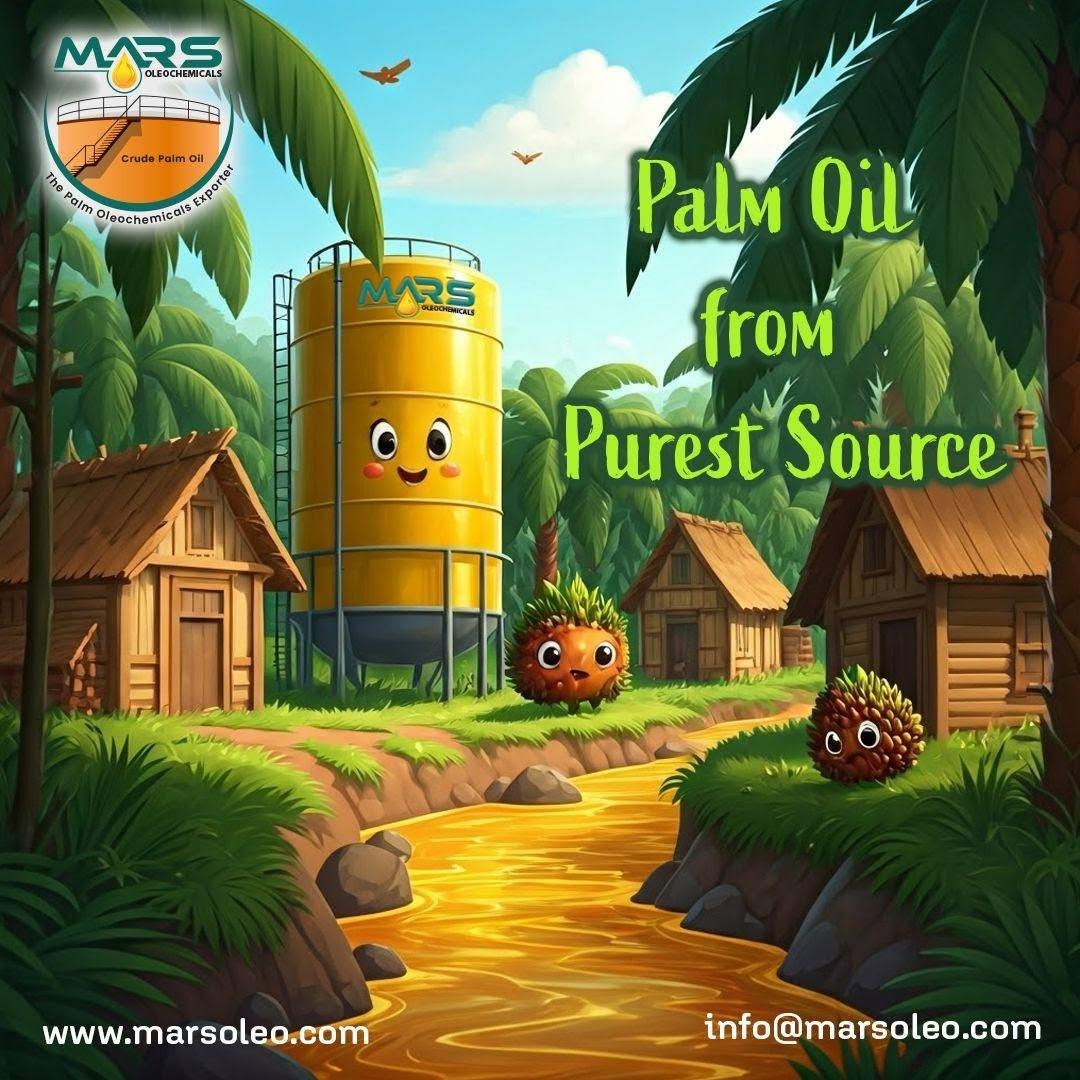
Palm oil and palm kernel oil are two distinct vegetable oils obtained from the same oil-palm fruit. Palm oil comes from the fleshy mesocarp, while palm kernel oil is obtained from the kernel. Their different fatty-acid compositions create different melting characteristics, processing properties and commercial applications.
Palm-based oils and fats can be split, esterified, hydrogenated, distilled or otherwise processed into basic oleochemicals. Important building blocks include fatty acids, methyl esters, fatty alcohols and fatty amines, with glycerine obtained as an important associated product. These building blocks can then be converted into surfactants, esters and specialised derivatives.

Palm oil and palm kernel oil provide renewable feedstocks for food, soap and oleochemical manufacturing.
Palm-derived products support soaps, detergents, shampoos, cosmetics, pharmaceuticals, food ingredients, rubber, plastics, lubricants, coatings and many other manufacturing sectors. Mars Oleochemicals' current portfolio includes refined glycerine, soap noodles, fatty acids, fatty alcohols, surfactants and related products for international customers.
Mars Oleochemicals presents itself as a Malaysian exporter of palm oil and palm-derived oleochemical ingredients. Buyers should request the exact grade, product specification, certificate of analysis, origin, packing information, certification status and applicable regulatory documentation before approving a product for commercial manufacturing.
1. What is palm oil? Palm oil is a vegetable oil obtained from the fleshy mesocarp of oil-palm fruit. It is different from palm kernel oil, which is obtained from the fruit's kernel.
2. What are palm oleochemicals? Palm oleochemicals are chemical ingredients produced by processing palm oil, palm kernel oil or their derivatives into fatty acids, methyl esters, fatty alcohols, glycerine and related products.
3. Is palm kernel oil the same as palm oil? No. Palm oil comes from the fruit mesocarp, while palm kernel oil comes from the kernel. Their fatty-acid compositions, physical properties and principal applications differ.
4. Which products can be made from palm-based feedstocks? Palm-based feedstocks can be processed into refined oils, fractions, fatty acids, glycerine, methyl esters, fatty alcohols, surfactants, soap ingredients, esters and other derivatives.
5. Which industries use palm oleochemicals? Palm oleochemicals are used in soaps, detergents, personal care, cosmetics, food processing, pharmaceuticals, rubber, plastics, lubricants, coatings, textiles and industrial chemical manufacturing.
6. Can all palm oil be described as sustainable? No. Sustainability claims should be supported by verifiable sourcing information, certification status and an accurate chain-of-custody claim for the specific product being supplied.
7. Is “purest palm oil” a technically precise description? No. “Purest” is an undefined marketing superlative unless it is linked to measurable specifications, analytical results and a clear comparison standard. Product quality should instead be described using verified parameters such as free fatty acid, moisture, impurities, colour and other grade-specific requirements.
8. What information should buyers request before ordering? Buyers should request the specification, certificate of analysis, safety data sheet, technical data sheet, origin, certification status, packing details, shelf life, loading quantity and destination-market compliance information.
9. How can buyers contact Mars Oleochemicals? Mars Oleochemicals Sdn. Bhd. at info@marsoleo.com for specifications, packing options, product availability, export documentation and quotations from Malaysia.






Home :: Products :: Enquiry :: Contact Us :: Site Map
Copyright All Rights Reserved © 2025. Mars Oleochemicals :: Disclaimer :: Privacy Policy