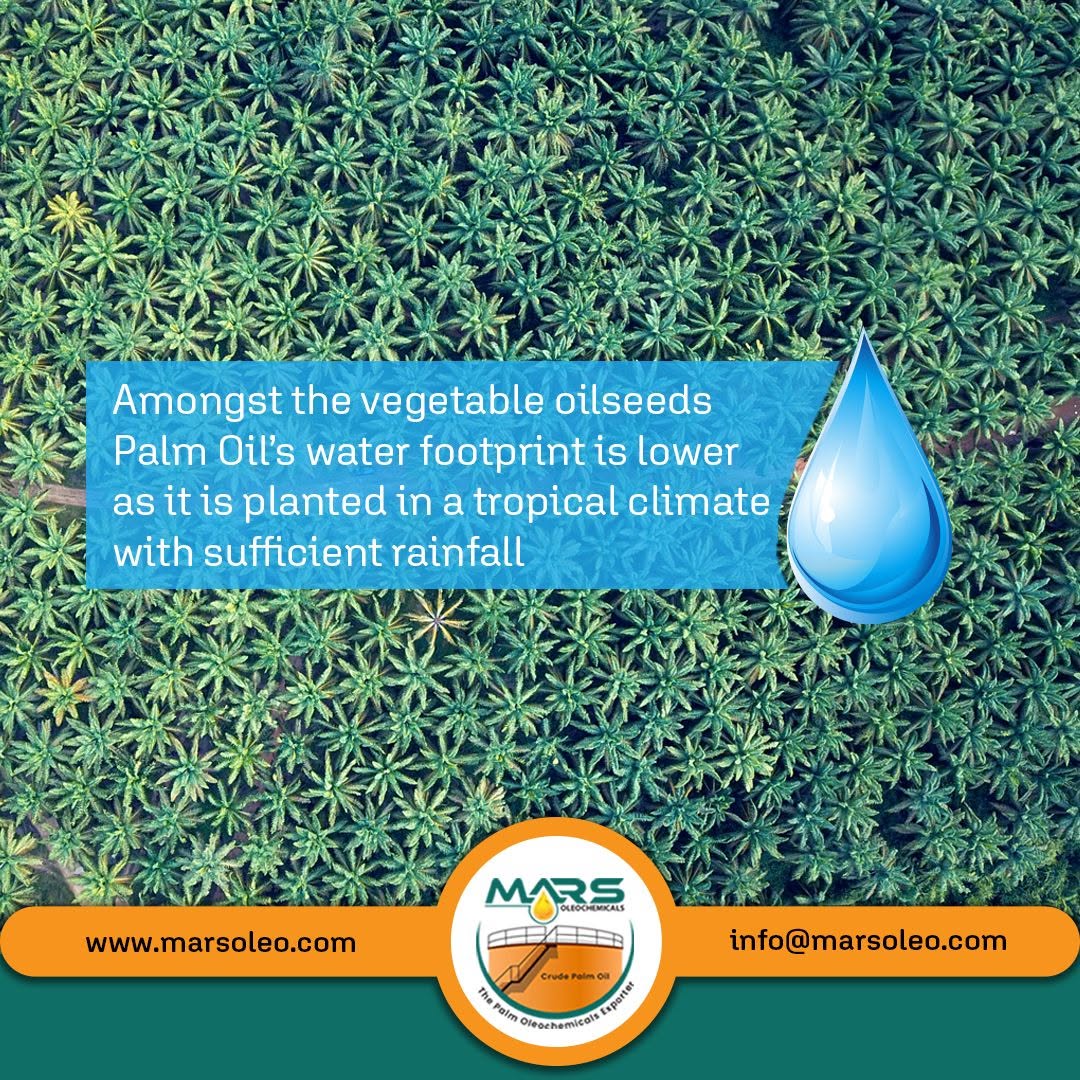
Oil palm is predominantly grown in humid tropical regions where rainfall plays an important role in supporting crop development. In many established oil-palm-growing areas, plantations have traditionally depended largely on rainfall rather than irrigation. However, water use varies by country, climate, soil, plantation management and production system, so broad claims about a universally low water footprint should be made carefully.
A water footprint is commonly divided into green water, blue water and grey water. Green water refers to rainwater stored in soil and used by plants, blue water refers to surface water or groundwater consumed through irrigation or other withdrawals, and grey water represents the freshwater volume theoretically required to assimilate pollutants. This distinction is important because rainfall-dependent agriculture and irrigation-dependent agriculture can place very different pressures on freshwater resources.

Oil palm is predominantly grown in tropical climates where abundant rainfall can reduce reliance on irrigation in suitable production regions.
Some comparative studies show oil palm performing efficiently in certain water-footprint metrics, particularly when assessed per unit of energy output, but results depend heavily on methodology, geography, yield, climate and whether green, blue or grey water is being compared. For example, Water Footprint Network research found oil-palm biodiesel among the more water-efficient biofuel crops in the particular metric studied, alongside rapeseed and groundnut. Therefore, the safest professional wording is that oil palm can benefit from substantial tropical rainfall and may require relatively limited irrigation in suitable regions, rather than claiming it always has the lowest overall water footprint among vegetable oils.
At Mars Oleochemicals, we are passionate about delivering high-quality Palm Oil and Palm Oleochemicals worldwide. We support manufacturers, traders, distributors and industrial buyers with product information, technical specifications, commercial quotations, export documentation and global shipment coordination for a broad range of palm-based products.
1. Does oil palm use mainly rainfall or irrigation? In many established tropical oil-palm-growing regions, plantations have traditionally relied largely on rainfall. However, actual irrigation requirements vary with location, climate, soil, plantation age and management practices.
2. What is green water in a water-footprint assessment? Green water is rainwater stored in the soil and used by plants during crop growth. It is different from blue water, which comes from rivers, reservoirs, lakes or groundwater.
3. Does Palm Oil have the lowest water footprint among all vegetable oils? It is better not to make that universal claim without specifying the measurement method, country and water-footprint category. Some studies find oil palm efficient under particular metrics, but results vary according to geography, yield, climate and methodology.
4. Why can tropical rainfall benefit oil palm cultivation? Regular rainfall can supply much of the water required by oil palm in suitable tropical climates, reducing the need for irrigation in some production regions. Actual conditions vary by plantation and location.
5. How can I request Palm Oil or Palm Oleochemicals from Mars Oleochemicals? Send your required product name, grade, quantity, destination port, packaging preference and technical specification request to info@marsoleo.com for quotation and worldwide export support.







Home :: Products :: Enquiry :: Contact Us :: Site Map
Copyright All Rights Reserved © 2025. Mars Oleochemicals :: Disclaimer :: Privacy Policy