


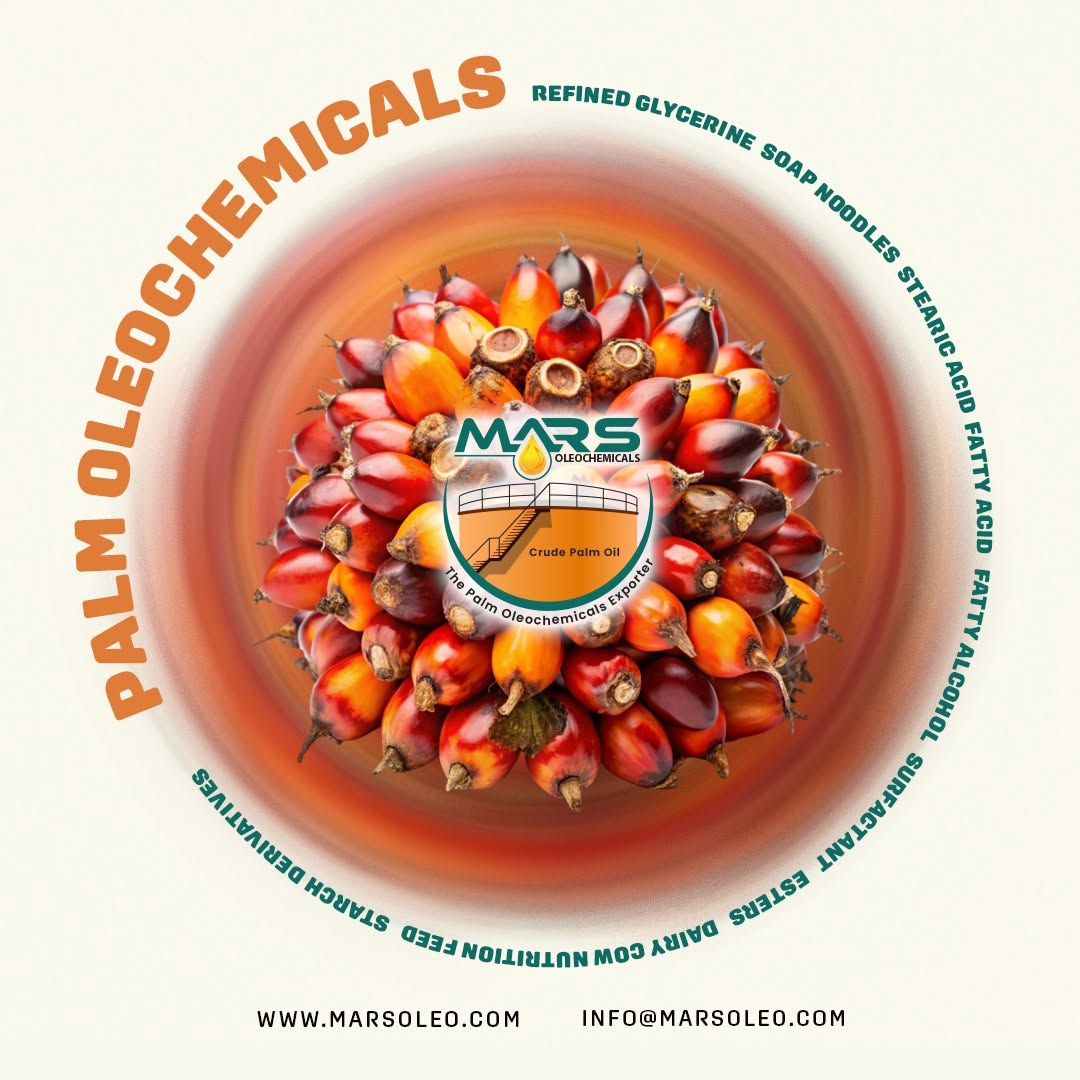
Palm and palm-kernel-based feedstocks provide the foundation for a broad downstream oleochemical value chain. Through refining, splitting, fractionation, hydrogenation, esterification and other processing routes, these feedstocks can be transformed into functional ingredients used across personal care, detergents, soaps, food processing, industrial chemicals and specialty applications.
Core product categories include Refined Glycerine, Soap Noodles and Fatty Acids. Glycerine serves personal care, pharmaceutical and industrial formulations, while soap noodles provide a ready base for bar-soap manufacturing. Fatty acids such as stearic, lauric, myristic, palmitic and oleic acids support applications ranging from cosmetics and detergents to rubber, lubricants and industrial processing.

Palm oleochemicals transform palm-based glycerine, fatty acids, alcohols, surfactants, esters and specialty products.
Palm-based fatty alcohols and their derivatives are important raw materials for personal care, detergent and industrial formulations. Product categories can include Lauryl Alcohol, Myristyl Alcohol, Cetyl Alcohol, Stearyl Alcohol, SLES, SLS, CAPB, CDEA, fatty alcohol ethoxylates and specialty esters such as Isopropyl Palmitate and Isopropyl Myristate.
Mars Oleochemicals offers customers access to a broad portfolio of palm-based oleochemicals and related specialty products from Malaysia. Buyers can enquire about available grades, product specifications, technical documentation, packaging options and commercial requirements across multiple product categories through one coordinated supply source.
What are palm oleochemicals? Palm oleochemicals are chemical ingredients and intermediates produced from palm oil, palm kernel oil or their derivatives through downstream processing.
What are the main palm oleochemical products? Major palm oleochemical product categories include fatty acids, fatty alcohols, glycerine, surfactants, esters and soap-making raw materials.
What fatty acids are available from palm-based feedstocks? Common products include Stearic Acid, Lauric Acid, Myristic Acid, Palmitic Acid and Oleic Acid, along with mixed fatty-acid grades.
What fatty alcohols are used in oleochemical manufacturing? Common fatty alcohols include Lauryl Alcohol, Myristyl Alcohol, Cetyl Alcohol, Stearyl Alcohol and mixed C12-C14 fatty alcohol grades.
What surfactants can be produced from oleochemical feedstocks? Oleochemical-related surfactant categories include SLES, SLS, MES, CAPB, Cocamide DEA and Fatty Alcohol Ethoxylates.
What are fatty acid esters? Fatty acid esters are products formed by reacting fatty acids with suitable alcohols or other compounds. Examples include Isopropyl Palmitate and Isopropyl Myristate.
What industries use palm oleochemicals? Palm oleochemicals are used in personal care, cosmetics, soaps, detergents, pharmaceuticals, food processing, lubricants, rubber, textiles and industrial manufacturing.
What is refined glycerine used for? Refined glycerine is used across personal care, cosmetics, pharmaceuticals, food and industrial formulations depending on grade and specification.
What are soap noodles used for? Soap noodles are primarily used as a base material for producing toilet soaps, beauty bars and laundry soap products.







Home :: Products :: Enquiry :: Contact Us :: Site Map
Copyright All Rights Reserved © 2025. Mars Oleochemicals :: Disclaimer :: Privacy Policy


