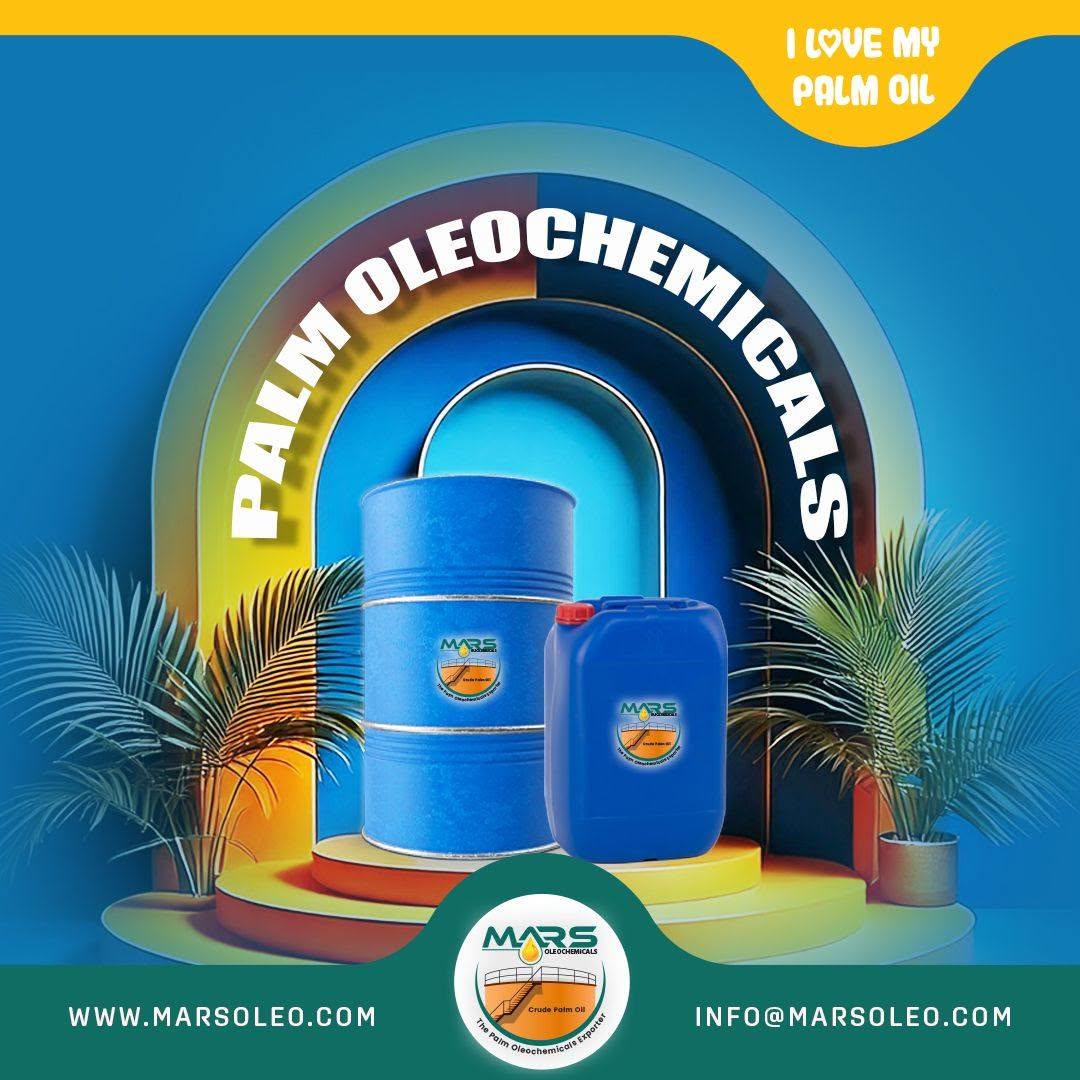
Palm oleochemicals are chemical ingredients manufactured by processing vegetable-oil feedstocks such as palm oil and palm kernel oil or their intermediates. Basic oleochemical building blocks include fatty acids, fatty alcohols, methyl or fatty esters and glycerine. These materials can undergo additional chemical reactions to produce surfactants, specialty esters and numerous other functional derivatives for consumer and industrial applications.
Palm oil and palm kernel oil have different fatty-acid profiles, giving manufacturers access to different carbon-chain distributions and functional properties. Both can therefore serve as valuable raw materials for oleochemical production. Their derivatives can be selected according to required chain length, purity, physical form and formulation performance, which makes palm-based feedstocks useful across a wide spectrum of downstream industries.

Palm and palm-kernel-based provide versatile chemical building blocks for consumer products and industrial manufacturing worldwide.
Palm oleochemicals are used throughout home and personal care, cosmetics, soaps, detergents, pharmaceuticals, selected food applications, rubber, plastics, textiles, coatings, lubricants and industrial chemical manufacturing. Different grades serve different functions, so manufacturers should confirm the relevant specification, purity, regulatory status and technical suitability before selecting a product for a particular application. Mars’ current portfolio lists refined glycerine, soap noodles, fatty acids, fatty alcohols, surfactants and esters among its core categories.
Malaysia has an established palm-oil refining and oleochemical manufacturing base, giving international buyers access to a broad range of palm-derived ingredients and downstream products. Mars Oleochemicals currently markets Malaysian supply of refined glycerine, soap noodles, fatty acids, fatty alcohols, surfactants, esters and related palm-based products. Buyers should evaluate each grade using the product specification, Certificate of Analysis, SDS, TDS, packing information and destination-market requirements rather than relying on a general portfolio-level purity claim.
What are palm oleochemicals? Palm oleochemicals are chemical ingredients derived by processing palm oil, palm kernel oil or related intermediates into products such as fatty acids, fatty alcohols, glycerine, esters and surfactants.
What are the main types of palm oleochemicals? Important categories include fatty acids, fatty alcohols, glycerine, fatty or methyl esters, surfactants and specialised downstream derivatives.
Are palm oleochemicals made from palm oil only? No. Both palm oil and palm kernel oil can serve as important oleochemical feedstocks because their different fatty-acid compositions provide different chemical chain distributions.
Which industries use palm oleochemicals? They are used across soaps, detergents, personal care, cosmetics, pharmaceuticals, selected food applications, rubber, plastics, lubricants, coatings, textiles and other industrial sectors.
What palm oleochemicals does Mars Oleochemicals supply? Mars currently lists refined glycerine, soap noodles, stearic acid, fatty acids, fatty alcohols, surfactants, esters and related palm-based products.
Are all palm oleochemicals suitable for food or pharmaceutical use? No. Suitability depends on the specific grade, purity, specification, regulatory status and intended application. Buyers should confirm the appropriate documentation before use.
What documents should buyers request for palm oleochemicals? Buyers should typically review the specification, Certificate of Analysis, Safety Data Sheet, Technical Data Sheet, packing details, shelf life, origin and relevant certifications or compliance documentation. Mars’ current global-markets page specifically recommends this product-level evaluation.
Are palm oleochemicals the same as palm oil? No. Palm oil is primarily a triglyceride vegetable oil, while palm oleochemicals are chemical ingredients produced by further processing oils and their derivatives into materials such as fatty acids, glycerine and fatty alcohols.
Why is Malaysia important in the palm oleochemical industry? Malaysia has an established palm-oil and oleochemical processing industry, providing access to palm and palm-kernel-derived raw materials and numerous downstream chemical products.






Home :: Products :: Enquiry :: Contact Us :: Site Map
Copyright All Rights Reserved © 2025. Mars Oleochemicals :: Disclaimer :: Privacy Policy