


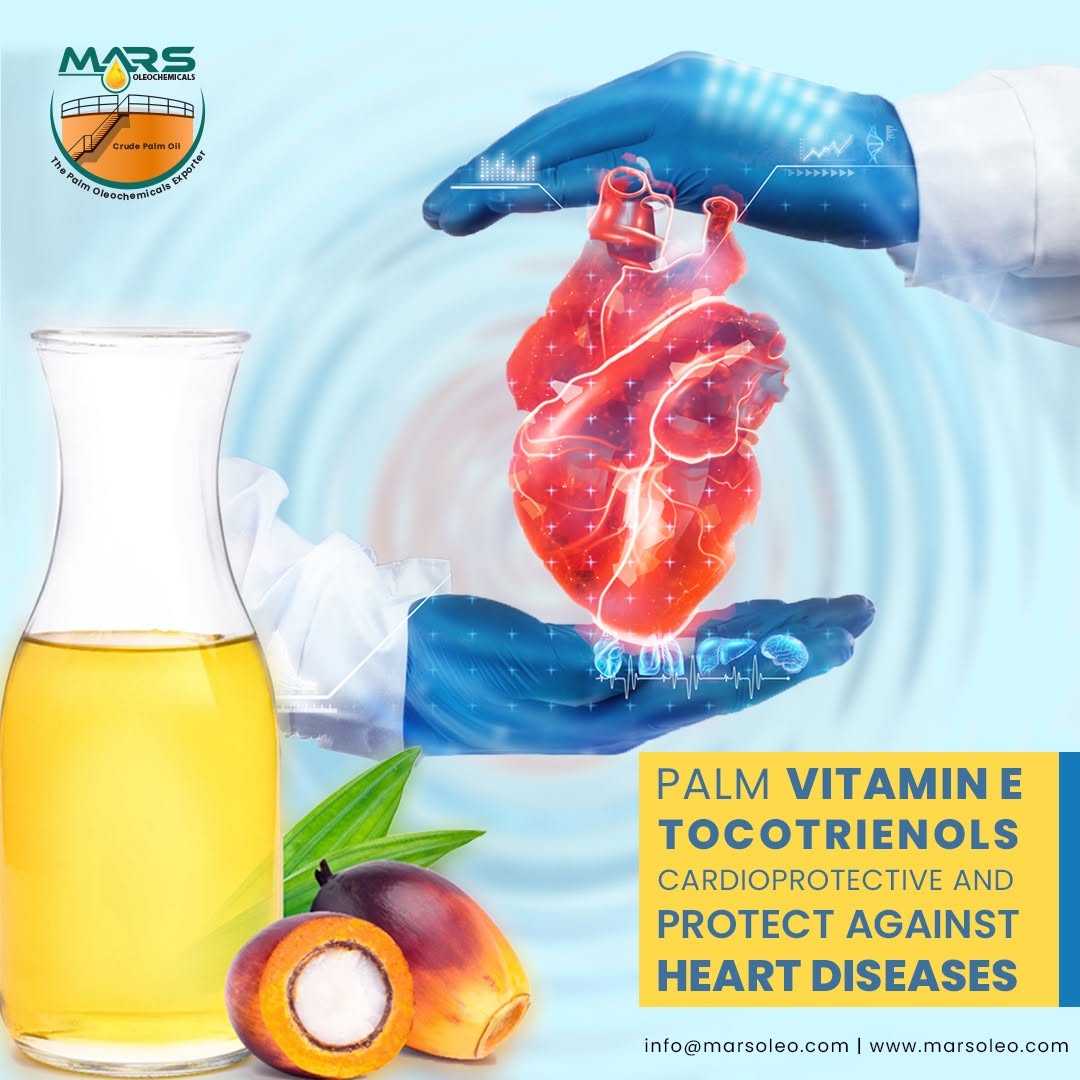
Malaysian palm oil is a natural source of vitamin E tocotrienols, a family of fat-soluble compounds recognized for their antioxidant properties and growing importance in nutritional research. Tocotrienols belong to the vitamin E family and occur in four forms: alpha (α), beta (β), gamma (γ), and delta (δ). Palm oil also contains tocopherols, another group of vitamin E compounds. These naturally occurring phytonutrients are present in crude palm oil, while their concentrations in finished products depend on extraction, refining and processing conditions. Palm-derived tocotrienols have attracted scientific attention because of their biological properties and potential applications in specialty nutritional ingredients, functional food research and cardiovascular health studies.
Palm vitamin E tocotrienols are being investigated for their potential influence on oxidative stress, inflammation and biological processes associated with cardiovascular health. Laboratory studies suggest that certain tocotrienols can interact with mechanisms involved in lipid oxidation and cellular antioxidant activity. Human clinical studies have also examined their effects on blood lipid measurements, inflammatory biomarkers and other cardiovascular risk factors. However, findings remain mixed, and improvements in selected biomarkers do not establish prevention of heart attacks or cardiovascular disease. Further well-designed clinical trials are necessary to determine whether tocotrienol supplementation produces meaningful long-term cardiovascular benefits. These compounds therefore represent a promising subject for scientific investigation rather than a proven heart disease prevention treatment.

Palm tocotrienols are vitamin E compounds studied for antioxidant activity and potential cardiovascular health effects.
Palm-derived tocotrienols are of commercial interest because they can be extracted, purified and concentrated into tocotrienol-rich fractions (TRF) for specialized applications. Manufacturers and ingredient researchers investigate these compounds for nutraceutical formulations, dietary supplements, functional foods and antioxidant ingredient development. Their chemical structure and biological activity also make them relevant to research involving oxidative stress, lipid metabolism and cellular protection mechanisms. Product suitability depends on tocotrienol composition, concentration, purity, stability and regulatory requirements. Concentrated palm vitamin E extracts should be distinguished from ordinary refined palm oil because their tocotrienol contents and intended uses can differ substantially.
Malaysia's palm oil industry provides an established foundation for the study and development of palm-derived oils, oleochemicals and valuable minor components, including carotenoids, tocopherols and tocotrienols. Mars Oleochemicals Sdn. Bhd. is a Malaysian exporter specializing in palm-based oils and oleochemical products for international markets. Educational research into palm phytonutrients highlights the broader value of oil palm resources beyond conventional food and industrial applications. Businesses exploring Malaysian palm-derived materials should evaluate raw material specifications, available product documentation, relevant quality standards and sourcing requirements. For information about the company's palm-based product portfolio and international trade activities, visit www.marsoleo.com or info@marsoleo.com.
What are palm vitamin E tocotrienols? Palm vitamin E tocotrienols are naturally occurring fat-soluble compounds found in palm oil. They belong to the vitamin E family and include alpha, beta, gamma and delta forms. These compounds are recognized for their antioxidant activity and are studied for possible nutritional and biological applications.
How are palm tocotrienols related to cardiovascular health? Researchers are investigating tocotrienols for their potential effects on oxidative stress, lipid metabolism and inflammatory processes associated with cardiovascular health. Some human studies have reported changes in selected cardiovascular risk markers, but the evidence remains insufficient to establish reliable clinical benefits.
Can vitamin E tocotrienols prevent heart disease? There is currently insufficient clinical evidence to conclude that palm-derived tocotrienols prevent heart disease, heart attacks or other cardiovascular events. Although laboratory and clinical research has identified potentially useful biological effects, larger long-term studies are required to establish their clinical effectiveness.
What is the difference between palm oil and tocotrienol-rich fraction (TRF)? Palm oil is a vegetable oil extracted from oil palm fruit, naturally containing several minor components, including vitamin E compounds. Tocotrienol-rich fraction (TRF) is a specialized extract prepared to concentrate tocotrienols and related vitamin E components. The concentration and composition of TRF differ from those of ordinary palm oil.
What are the potential industrial applications of palm-derived tocotrienols? Palm-derived tocotrienols are researched and developed for nutraceutical ingredients, dietary supplements, functional foods, antioxidant formulations, cosmetics and specialty phytonutrient products. Commercial suitability depends on product concentration, purity, stability, intended application and regulatory compliance.












Home :: Products :: Enquiry :: Contact Us :: Site Map
Copyright All Rights Reserved © 2025. Mars Oleochemicals :: Disclaimer :: Privacy Policy


